
Regular Polygon Transformation
Loading the math board and drawing, please wait…
In collections
Congruence (CO) Cluster
Congruence (Vol 1)
Congruence (Vol 1) Over 80 Resources
Geometry (Congruence) Volume 1
CCSS High School: Geometry (Congruence) Volume 1 S N ATTAR
CCSS High School: Geometry (Congruence) Volume 1
CCSS High School: Geometry (Congruence) Volume 1
CCSS High School: Geometry (Congruence) Volume 1
CCSS High School: Geometry (Congruence) Volume 1
CCSS High School: Geometry (Congruence) Volume 1
CCSS High School: Geometry (Congruence) Volume 1
CCSS High School: Geometry (Congruence) Volume 1
CCSS High School: Geometry (Congruence) Volume 1
CCSS High School: Geometry (Congruence) Volume 1
CCSS High School: Geometry (Congruence) Volume 1
Polygons & Angles
Polygons & Angles
Polygons & Angles ( s n attar)
Parallel Lines and Planes
Polygons & Angles
Congruence: Volume 1 - Chapter 1
Congruence: Volume 1 - Chapter 1
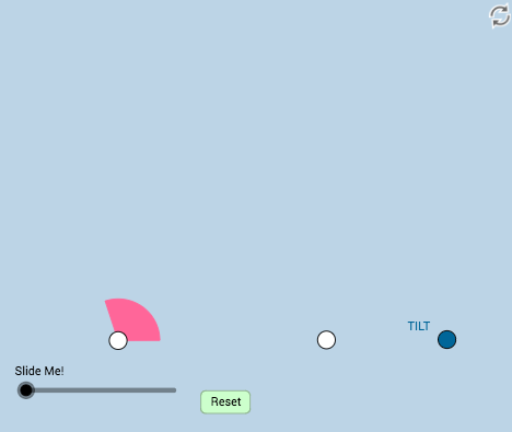
This example demonstrates the quick interactive definition of regular polygons. It involves key mathematical concepts such as geometric transformations, angles, and polygons. Using GeoGebra commands like Rotate, Translate, and Polygon, it dynamically shows the rotation and translation of regular polygons. Suitable for middle school and above students to learn about geometric transformations and polygon properties.
GeoGebra Commands & Parameters
Rotate(A, 108°, B) → A'Ray(B, A') → gRay(B, A) → fPoint(f) → CSegment(C, B) → nCircle(C, n) → d_1Rotate(B, (-(108°)), C) → B'Ray(C, B') → hIntersect(d_1, h, 1) → GCircle(G, n) → e_1Point(h) → DRotate(C, (-(108°)), D) → C'Ray(D, C') → iPoint(i) → ERotate(D, (-(108°)), E) → D'Ray(E, D') → jIntersect(g, j) → FSegment(F, E) → kSegment(E, D) → lLine(G, l) → g_1Intersect(e_1, g_1, 1) → JLine(J, k) → h_1Intersect(h_1, g) → KAngle(A, B, A') → αAngle(B', C, B) → βAngle(C', D, C) → γAngle(D', E, D) → δSegment(D, C) → mSegment(B, F) → pMin(list) → aCircle(B, (0.2 * n)) → qIntersect(q, p) → H,Intersect(q, n) → I,CircleSector(B, I, H) → rDilate(B, If[0 < o ≤ 1, 1 - o, 0], C) → B'_1Vector(B, B'_1) → uTranslate(r, u) → r'Rotate(r', If[1 < o ≤ 2, (((o - 1) * 2) * π / 5), (2 * π / 5)], C) → r''Dilate(C, If[2 < o ≤ 3, 3 - o, 0], G) → C'_1Vector(C, C'_1) → vTranslate(r'', v) → r'''Rotate(r''', If[3 < o ≤ 4, (((o - 3) * 2) * π / 5), (2 * π / 5)], G) → sDilate(G, If[4 < o ≤ 5, 5 - o, 0], J) → D'_1Vector(G, D'_1) → wTranslate(s, w) → s'Rotate(s', If[5 < o ≤ 6, (((o - 5) * 2) * π / 5), (2 * π / 5)], J) → s''Dilate(J, If[6 < o ≤ 7, 7 - o, 0], K) → E'Vector(J, E') → tTranslate(s'', t) → s'''Circle(J, n) → k_1Rotate(s''', If[7 < o ≤ 8, (((o - 7) * 2) * π / 5), (2 * π / 5)], K) → c_1Segment(B, B'_1) → bSegment(C, C'_1) → cSegment(G, D'_1) → dSegment(J, E') → eDilate(K, If[8 < o ≤ 9, 9 - o, 0], B) → K'Segment(K, K') → f_1Polygon(B, C, G, J, K) → poly1, b_1, c_2, g_2, j_1, k_2Rotate(B, If[9 < o ≤ 10, ((-(o - 9)) * α), (-α)], C) → B'_2Rotate(B'_1, If[9 < o ≤ 10, ((-(o - 9)) * α), (-α)], C) → LSegment(B'_2, L) → b'Rotate(B'_2, If[10 < o ≤ 11, ((-(o - 10)) * α), (-α)], G) → MRotate(L, If[10 < o ≤ 11, ((-(o - 10)) * α), (-α)], G) → L'Segment(M, L') → b''Rotate(M, If[11 < o ≤ 12, ((-(o - 11)) * α), (-α)], J) → M'Rotate(L', If[12 < o ≤ 13, ((-(o - 12)) * α), (-α)], J) → L''Segment(M', L'') → b'''Rotate(M', If[12 < o ≤ 13, ((-(o - 12)) * α), (-α)], K) → M''Rotate(L'', If[12 < o ≤ 13, ((-(o - 12)) * α), (-α)], K) → L'''Segment(M'', L''') → i_1