
Modeling 4 Glasses Using Transformational Geometry
Loading the math board and drawing, please wait…
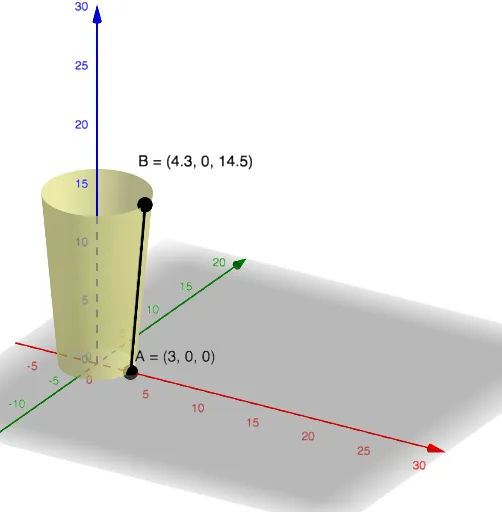
This example models four glasses using transformational geometry. It demonstrates concepts such as rotation and translation. Using commands like Segment, Rotate, Surface, and Translate, the model of four glasses is constructed. Suitable for high school math education or learning.
GeoGebra Commands & Parameters
Segment(A, B) → fRotate(A, n, zAxis) → A'Rotate(B, n, zAxis) → B'Segment(A', B') → f'Surface(f, n, zAxis) → aTranslate(a, Vector[((2 * k) * Vector[(4.3, 0, 0)])]) → a'Translate(a, Vector[((4 * k) * Vector[(4.3, 0, 0)])]) → a'_1Translate(a, Vector[((6 * k) * Vector[(4.3, 0, 0)])]) → a'_2
AI Drawing Prompt Reference
Draw a model of four glasses using rotational and translational transformation geometry, start by drawing a line segment, then rotate it around the Z-axis, rotate the segment again, draw a new line segment, generate a surface, and finally translate the surface along the X-axis three times to get four identical glass shapes.
The prompt above was compiled from the original drawing commands and is for reference only.