
Vector Components on Rotated Axes
Loading the math board and drawing, please wait…
In collections
Vector Mechanics & Statics
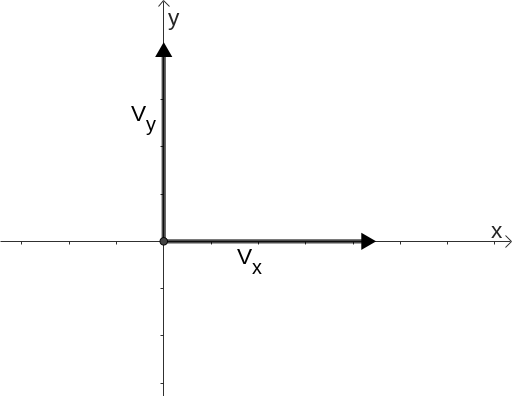
This example demonstrates how a single vector’s components change when the coordinate axes rotate. It visually connects the rotation angle with the geometric decomposition of the vector into components along the rotated directions. Key concepts include vector representation, decomposition into components, and the projection-like geometric construction driven by right angles and the angle between the original and rotated axes. Construction-wise, it uses Intersect and Point to locate key intersections, Segment and Ray to build directional elements, OrthogonalLine to enforce perpendicular projections for the component decomposition, Angle to mark the rotation angle (α), and Vector to create the original vector and its components along the rotated axes defined by the constructed lines/objects. Suitable for middle and high school vector/geometry instruction and for introductory coordinate-geometry explorations.
GeoGebra Commands & Parameters
Intersect(xAxis, yAxis) → APoint(xAxis) → BPoint(yAxis) → CSegment(A, B) → lSegment(A, C) → mRay(A, D) → fOrthogonalLine(A, f) → gAngle(B, A, D) → αPoint(g) → EOrthogonalLine(C, f) → hIntersect(h, f) → GSegment(C, G) → jVector(A, G) → aOrthogonalLine(C, g) → iIntersect(g, i) → FSegment(F, C) → kVector(A, F) → wOrthogonalLine(B, f) → pIntersect(f, p) → HSegment(B, H) → qVector(A, H) → vOrthogonalLine(B, g) → nIntersect(g, n) → ISegment(B, I) → rVector(A, I) → u
AI Drawing Prompt Reference
Draw a vector component decomposition on rotated axes. Start by drawing the x and y axes with their intersection at the origin. From the origin, draw a vector. Then, draw two rays starting from the origin, one parallel to the x-axis and the other to the y-axis. Form angles with the vector using these rays, marking one as angle α. Use perpendicular lines to find and draw the components of the vector along the rotated axes. Indicate the original vector and its two components with arrows.
The prompt above was compiled from the original drawing commands and is for reference only.