
Diagonal of a Rectangular Prism by Tim Brzezinski (2)
Loading the math board and drawing, please wait…
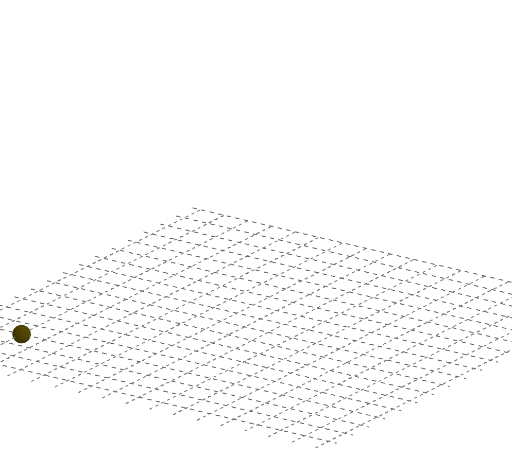
This example demonstrates the construction of the diagonal of a rectangular prism. Key mathematical concepts include the properties of diagonals in solid geometry and the Pythagorean theorem. Using GeoGebra commands such as PointIn, Circle, Line, and Rotate, the length of the diagonal can be dynamically shown. Suitable for middle school and above students to learn solid geometry and the Pythagorean theorem.
GeoGebra Commands & Parameters
Textfield(a) → InputBox1Textfield(b) → InputBox2Textfield(c) → InputBox3Textfield(d) → InputBox4Textfield(f) → InputBox5Textfield(g) → InputBox6If(Length[Mode[l1]] ≟ 0, "No digits repeat!", "Repeated digits exist.") → text4Textfield(h) → InputBox7PointIn(Plane[(0, 0, 0), (1, 0, 0), (1, 1, 0)]) → DCircle(D, (10 * a) + b, zAxis) → ePoint(e) → ELine(D, E) → iRotate(D, ((-π)) / 2, E, Plane[(0, 0, 0), (1, 0, 0), (1, 1, 0)]) → D'Line(D', E) → jSegment(D, E) → kCircle(E, d, Line[E, E + (0, 0, 1)]) → pIntersect(j, p) → F, HSegment(E, H) → lAngle(H, E, D) → αSegment(D, H) → mLine(H, H + (0, 0, 1)) → nSphere(H, c) → oIntersect(n, o) → I, JSegment(H, J) → qSegment(J, D) → rPolygon(D, E, H) → t1, h_1, d_1, e_1Polygon(D, H, J) → t2, j_1, d_2, h_2OrthogonalLine(J, Vector[J, D], Vector[J, H]) → sLine(H, J) → tCircle(J, sqrt((100 * f) + (10 * g) + h), s) → c_1Point(c_1) → KSegment(J, K) → f_1Line(E, E + (0, 0, 1)) → g_1Sphere(E, Radius[c_1]) → uSphere(E, c) → vIntersect(g_1, v) → L, MLine(D, d_1) → i_1Sphere(D, d) → wIntersect(i_1, w) → N, OTranslate(O, Vector[E, M]) → O'Translate(D, Vector[E, M]) → D'_{1}Polygon(D, O, O', D'_{1}) → q1, d_3, o_1, o', d'_{1}Polygon(D'_{1}, M, E, D) → q2, k_1, m_1, e_2, d_4Polygon(M, J, H, E) → q3, m_2, j_2, h_3, e_3Polygon(H, J, O', O) → q4, h_4, j_3, l_1, o_2Polygon(D'_{1}, M, J, O') → q5, n_1, m_3, j_4, p_1Segment(O', D'_{1}) → q_1Segment(D'_{1}, D) → r_1Segment(D, O) → s_1Segment(O, O') → t_1Segment(E, M) → a_1Segment(M, D'_{1}) → b_1Segment(M, J) → f_2Segment(J, O') → g_2Segment(H, O) → i_2Angle(J, H, D) → β
AI Drawing Prompt Reference
Draw a rectangular prism and show its space diagonal. First, construct the three adjacent faces of the prism. Then, draw the diagonals connecting each vertex of one face to the opposite vertex of the adjacent face. Next, calculate and draw the space diagonal of the prism, labeling its length. Finally, differentiate the diagonals with different colors or styles and display the 3D effect of the prism.
The prompt above was compiled from the original drawing commands and is for reference only.