
Volume of a Triangular Prism by Mark Willis
Loading the math board and drawing, please wait…
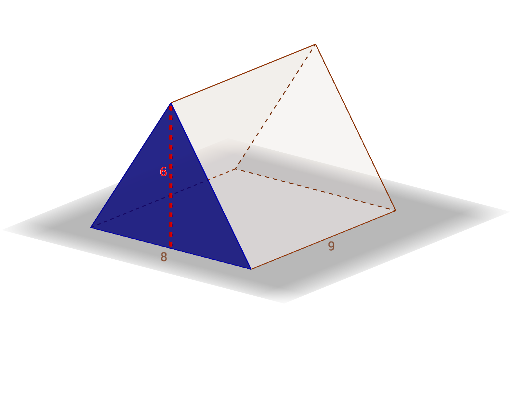
This example demonstrates the volume calculation of a triangular prism. Key mathematical concepts include the volume calculation in solid geometry. Using GeoGebra commands such as Polygon and Prism, a triangular prism can be constructed and its volume calculated. Suitable for middle school and above students learning solid geometry.
GeoGebra Commands & Parameters
Intersect(xAxis, zAxis) → BPoint(yAxis) → APoint(xAxis) → DPolygon(A, E, C) → poly1, c, a, ePrism(poly1, 0) → b, F, edgeCH, edgeFG, edgeGH, edgeFH, G, H, faceAEGF, faceCEGH, faceACHF, faceFGH, edgeAF, edgeEGPrism(faceFGH, -9) → d, I, edgeHK, edgeIJ, edgeJK, edgeIK, J, K, faceFGJI, faceGHKJ, faceFHKI, faceIJK, edgeFI, edgeGJPolygon(L, N, M) → poly2, m, l, nIntersect(edgeJK, edgeIJ) → PSegment(O, P) → g
AI Drawing Prompt Reference
Draw a triangular prism by first plotting the three coordinate axes, finding their intersections, and selecting a point on the y-axis. Connect these three points to form a triangle, which serves as the base for the prism. Then, take one of the triangles from the base, translate it downward by 9 units to create another prism. Finally, connect the corresponding vertices of the top faces of the two prisms to complete the shape.
The prompt above was compiled from the original drawing commands and is for reference only.