
Time Travel
Loading the math board and drawing, please wait…
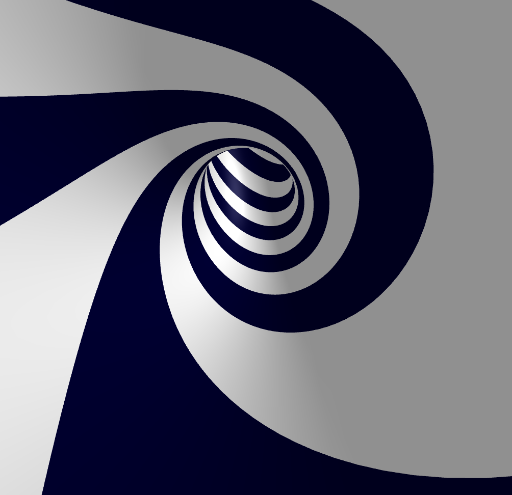
This example demonstrates the concept of time travel through transformations and rotations. It involves integral calculus, integers, and arithmetic mean. Using GeoGebra commands such as Translate, Rotate, Line, and Sequence, dynamic geometric figures are constructed. Suitable for high school and above students to learn calculus and geometric transformations.
GeoGebra Commands & Parameters
Translate(O, Vector[O, (R, 0, 0)]) → O1Rotate(O1, ((-π)) / 2, yAxis) → O2Line(O2, xAxis) → l1Sequence(Rotate[Rotate[Surface[fx(u, v), fy(u, v), fz(u, v), u, 0, (2 * π), v, i + π / n, i + (2 * π / n)], ((-π)) / 2, yAxis], (-t), l1], i, 0, (2 * π), (2 * π / n)) → W1Sequence(Rotate[Rotate[Surface[fx(u, v), fy(u, v), fz(u, v), u, 0, (2 * π), v, i, i + π / n], ((-π)) / 2, yAxis], (-t), l1], i, 0, (2 * π), (2 * π / n)) → B1
AI Drawing Prompt Reference
First set a coordinate reference with a line through the origin and a vertical rotation axis. Construct a shifted copy of the origin along a given horizontal direction to get a second point, then rotate that point by a fixed angle around the vertical axis and use it to draw a reference line through the rotated point and along the x-axis. Next, build two sequences of space curves by sampling a parametric surface whose 3D coordinates are given by functions fx(u,v), fy(u,v), and fz(u,v) over u from 0 to 2π and over v in two phase-shifted ranges v=i+π/n and v=i+(2π/n). For each i across 0 to 2π with step 2π/n, apply the same rotations and include the parameter -t along the reference line, producing two related rotated curve sequences that together suggest a time-travel transformation effect.
The prompt above was compiled from the original drawing commands and is for reference only.