
Stretching Exponential Functions: Linking Transformations, Graphs, and Equations
Loading the math board and drawing, please wait…
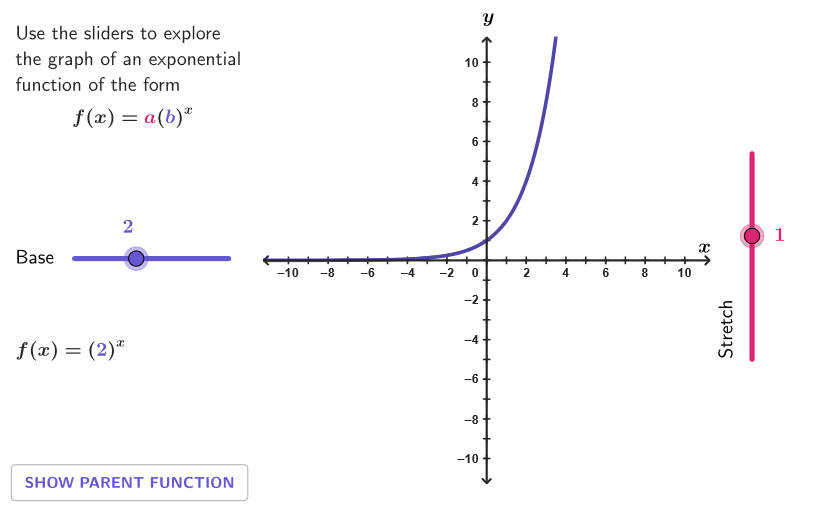
This example demonstrates how dilating (stretching) an exponential function changes its graph and the corresponding equation relative to the parent function. It focuses on the roles of the base (0<b<1 vs. b>1) and the stretch factor, using function notation to connect algebraic parameters with visible geometric effects. The construction incorporates multiple GeoGebra commands and objects—Mirror, Sequence, Point, Segment, Polygon, circle, Shuffle, Element, and VerticalText—along with rich on-screen text/labels (e.g., textQuestion, textBase, textFun, textNotDef, labelX/labelY) to guide interpretation. Interactive parameters (such as k, h, f, par, and toggles like showParent) and grid references (bigGrid) support dynamic comparison between the transformed function and its parent. Suitable for grades 9–12, classroom exploration, and homework activities on transformations of nonlinear parent functions via function notation, algebraic equations, or graphs.
GeoGebra Commands & Parameters
Mirror(P1, yAxis) → P2Mirror(P2, xAxis) → P3Sequence(Sequence[(j, k), j, -10, 10, 1], k, -10, 10, 1) → bigGrid, {{(-10, -10), (-9, -10), (-8, -10), (-7, -10), (-6, -10), (-5, -10), (-4, -10), (-3, -10), (-2, -10), (-1, -10), (0, -10), (1, -10), (2, -10), (3, -10), (4, -10), (5, -10), (6, -10), (7, -10), (8, -10), (9, -10), (10, -10)}, {(-10, -9), (-9, -9), (-8, -9), (-7, -9), (-6, -9), (-5, -9), (-4, -9), (-3, -9), (-2, -9), (-1, -9), (0, -9), (1, -9), (2, -9), (3, -9), (4, -9), (5, -9), (6, -9), (7, -9), (8, -9), (9, -9), (10, -9)}, {(-10, -8), (-9, -8), (-8, -8), (-7, -8), (-6, -8), (-5, -8), (-4, -8), (-3, -8), (-2, -8), (-1, -8), (0, -8), (1, -8), (2, -8), (3, -8), (4, -8), (5, -8), (6, -8), (7, -8), (8, -8), (9, -8), (10, -8)}, {(-10, -7), (-9, -7), (-8, -7), (-7, -7), (-6, -7), (-5, -7), (-4, -7), (-3, -7), (-2, -7), (-1, -7), (0, -7), (1, -7), (2, -7), (3, -7), (4, -7), (5, -7), (6, -7), (7, -7), (8, -7), (9, -7), (10, -7)}, {(-10, -6), (-9, -6), (-8, -6), (-7, -6), (-6, -6), (-5, -6), (-4, -6), (-3, -6), (-2, -6), (-1, -6), (0, -6), (1, -6), (2, -6), (3, -6), (4, -6), (5, -6), (6, -6), (7, -6), (8, -6), (9, -6), (10, -6)}, {(-10, -5), (-9, -5), (-8, -5), (-7, -5), (-6, -5), (-5, -5), (-4, -5), (-3, -5), (-2, -5), (-1, -5), (0, -5), (1, -5), (2, -5), (3, -5), (4, -5), (5, -5), (6, -5), (7, -5), (8, -5), (9, -5), (10, -5)}, {(-10, -4), (-9, -4), (-8, -4), (-7, -4), (-6, -4), (-5, -4), (-4, -4), (-3, -4), (-2, -4), (-1, -4), (0, -4), (1, -4), (2, -4), (3, -4), (4, -4), (5, -4), (6, -4), (7, -4), (8, -4), (9, -4), (10, -4)}, {(-10, -3), (-9, -3), (-8, -3), (-7, -3), (-6, -3), (-5, -3), (-4, -3), (-3, -3), (-2, -3), (-1, -3), (0, -3), (1, -3), (2, -3), (3, -3), (4, -3), (5, -3), (6, -3), (7, -3), (8, -3), (9, -3), (10, -3)}, {(-10, -2), (-9, -2), (-8, -2), (-7, -2), (-6, -2), (-5, -2), (-4, -2), (-3, -2), (-2, -2), (-1, -2), (0, -2), (1, -2), (2, -2), (3, -2), (4, -2), (5, -2), (6, -2), (7, -2), (8, -2), (9, -2), (10, -2)}, {(-10, -1), (-9, -1), (-8, -1), (-7, -1), (-6, -1), (-5, -1), (-4, -1), (-3, -1), (-2, -1), (-1, -1), (0, -1), (1, -1), (2, -1), (3, -1), (4, -1), (5, -1), (6, -1), (7, -1), (8, -1), (9, -1), (10, -1)}, {(-10, 0), (-9, 0), (-8, 0), (-7, 0), (-6, 0), (-5, 0), (-4, 0), (-3, 0), (-2, 0), (-1, 0), (0, 0), (1, 0), (2, 0), (3, 0), (4, 0), (5, 0), (6, 0), (7, 0), (8, 0), (9, 0), (10, 0)}, {(-10, 1), (-9, 1), (-8, 1), (-7, 1), (-6, 1), (-5, 1), (-4, 1), (-3, 1), (-2, 1), (-1, 1), (0, 1), (1, 1), (2, 1), (3, 1), (4, 1), (5, 1), (6, 1), (7, 1), (8, 1), (9, 1), (10, 1)}, {(-10, 2), (-9, 2), (-8, 2), (-7, 2), (-6, 2), (-5, 2), (-4, 2), (-3, 2), (-2, 2), (-1, 2), (0, 2), (1, 2), (2, 2), (3, 2), (4, 2), (5, 2), (6, 2), (7, 2), (8, 2), (9, 2), (10, 2)}, {(-10, 3), (-9, 3), (-8, 3), (-7, 3), (-6, 3), (-5, 3), (-4, 3), (-3, 3), (-2, 3), (-1, 3), (0, 3), (1, 3), (2, 3), (3, 3), (4, 3), (5, 3), (6, 3), (7, 3), (8, 3), (9, 3), (10, 3)}, {(-10, 4), (-9, 4), (-8, 4), (-7, 4), (-6, 4), (-5, 4), (-4, 4), (-3, 4), (-2, 4), (-1, 4), (0, 4), (1, 4), (2, 4), (3, 4), (4, 4), (5, 4), (6, 4), (7, 4), (8, 4), (9, 4), (10, 4)}, {(-10, 5), (-9, 5), (-8, 5), (-7, 5), (-6, 5), (-5, 5), (-4, 5), (-3, 5), (-2, 5), (-1, 5), (0, 5), (1, 5), (2, 5), (3, 5), (4, 5), (5, 5), (6, 5), (7, 5), (8, 5), (9, 5), (10, 5)}, {(-10, 6), (-9, 6), (-8, 6), (-7, 6), (-6, 6), (-5, 6), (-4, 6), (-3, 6), (-2, 6), (-1, 6), (0, 6), (1, 6), (2, 6), (3, 6), (4, 6), (5, 6), (6, 6), (7, 6), (8, 6), (9, 6), (10, 6)}, {(-10, 7), (-9, 7), (-8, 7), (-7, 7), (-6, 7), (-5, 7), (-4, 7), (-3, 7), (-2, 7), (-1, 7), (0, 7), (1, 7), (2, 7), (3, 7), (4, 7), (5, 7), (6, 7), (7, 7), (8, 7), (9, 7), (10, 7)}, {(-10, 8), (-9, 8), (-8, 8), (-7, 8), (-6, 8), (-5, 8), (-4, 8), (-3, 8), (-2, 8), (-1, 8), (0, 8), (1, 8), (2, 8), (3, 8), (4, 8), (5, 8), (6, 8), (7, 8), (8, 8), (9, 8), (10, 8)}, {(-10, 9), (-9, 9), (-8, 9), (-7, 9), (-6, 9), (-5, 9), (-4, 9), (-3, 9), (-2, 9), (-1, 9), (0, 9), (1, 9), (2, 9), (3, 9), (4, 9), (5, 9), (6, 9), (7, 9), (8, 9), (9, 9), (10, 9)}, {(-10, 10), (-9, 10), (-8, 10), (-7, 10), (-6, 10), (-5, 10), (-4, 10), (-3, 10), (-2, 10), (-1, 10), (0, 10), (1, 10), (2, 10), (3, 10), (4, 10), (5, 10), (6, 10), (7, 10), (8, 10), (9, 10), (10, 10)}}Point(bigGrid) → AMirror(P3, yAxis) → P4Polygon(P1, P2, P3, P4) → peep, p1, p1', p1'', p1'''Shuffle(Sequence[t, t, -18, 18]) → allA, {9, 8, -7, -13, -4, -2, 18, 6, -18, 17, 0, -9, -16, -11, -1, 14, 10, 3, -5, 1, 16, 11, 4, -8, -10, 5, -15, 13, -12, 12, -3, -14, -6, -17, 2, 15, 7}Element(allA, Mod[countQuestion, Length[allA]] + 1) → valAcirclePixels(A, 7 + (7 * pulsing), Corner[1], Corner[3], Corner[5]) → pulsingObjectVerticalText("\textsf{Stretch}") → labelStretchSequence((0, k), k, -10, 10, 1) → yTicksSequence((k, 0), k, -10, 10, 1) → xTicksSegment((x(P1) + 0.05, 0), ((-x(P1)) - 0.05, 0)) → fakeXSegment((0, y(P1) + 0.05), (0, (-y(P1)) - 0.05)) → fakeY
AI Drawing Prompt Reference
Draw a graph containing a grid, a point, a polygon, a circle, a text label, axis tick marks, and dashed lines. First create a grid from -10 to 10, marking point A on the grid. Then generate four points via mirroring to form a polygon p1. Add a circle and a text label "Stretch" to indicate transformation. Draw axis tick marks xTicks and yTicks, and dashed lines fakeX and fakeY to represent symmetry axes. Finally combine all elements to show the effect of transformation.
The prompt above was compiled from the original drawing commands and is for reference only.