
Prime and Composite Numbers
Loading the math board and drawing, please wait…
In collections
Prime and Composite Numbers
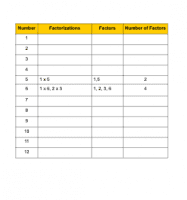
This example illustrates the concepts of prime and composite numbers. A prime number is a natural number greater than 1 that has no positive divisors other than 1 and itself, while a composite number has more than two positive divisors. By dynamically adjusting the numbers, one can observe which numbers are prime and which are composite. The core mathematical concepts involved include the definition of prime and composite numbers in number theory. The construction involves using slider animations to dynamically show the factorization process of numbers. Suitable for high-grade elementary to middle school students to help them understand the basic concepts of prime and composite numbers.
AI Drawing Prompt Reference
Create a dynamic illustration showing prime and composite numbers, featuring a slider to adjust numbers and display the factorization process for different values, visually distinguishing prime numbers (only 1 and itself as factors) from composite numbers (multiple factors), suitable for elementary students learning basic number theory concepts.
The prompt above was compiled from the original drawing commands and is for reference only.