
Polyhedron Nets and Euler's Formula
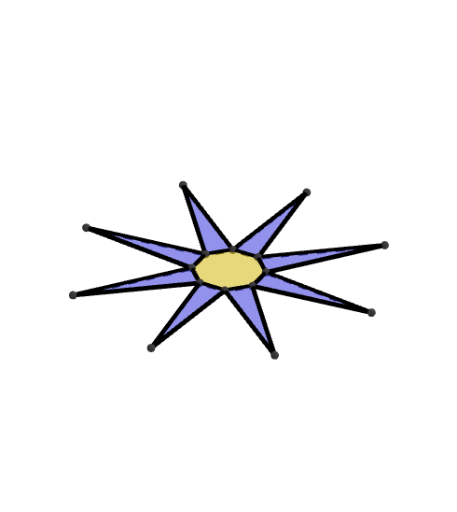
Loading the math board and drawing, please wait…
This example demonstrates the nets of polyhedra and Euler's formula. Using GeoGebra commands such as Intersect, Ray, Point, etc., the net of a polyhedron can be constructed. Key mathematical concepts include solid geometry and Euler's formula. Suitable for middle school and above students.
GeoGebra Commands & Parameters
Intersect(xAxis, yAxis) → ARay(A, (x(A), y(A), 40)) → hPoint(yAxis) → BCircle(A, B) → cPoint(c) → CRay(C, (x(C), y(C), 40)) → gSequence(Rotate[C, ((t * 2) * pi / n), A], t, 1, n) → vertPolygon(vert) → polyOrthogonalLine(C, xOyPlane) → fPoint(g) → EPrism(poly, Segment[C, E]) → a, F, face3, face4, face5, face6, face2, face13, face15, faceFGHIJK, edge1, edge2, G, edge3, edge4, edge5, edge6, edge13, edge16, edgeFG, edgeGH, edgeHI, edgeIJ, H, edgeJK, edgeFK, edge14, edge17, I, J, K, L, M, face1Point(h) → DPyramid(poly, D) → b, face7, edge8, edge9, edge10, edge11, edge12, edge15, edge18, face9, face10, face11, face12, face8, face14, face16, edge7Net(a, (-open)) → prismNet, N, W, Z, A_1, B_1, C_1, D_1, E_1, F_1, G_1, H_1, O, I_1, J_1, K_1, L_1, M_1, N_1, O_1, P_1, Q_1, R_1, P, S_1, face17, face18, face19, face20, face21, face22, face23, face24, face34, Q, face35, edge19, edge20, edge21, edge22, edge23, edge24, edge25, edge26, edge27, R, edge28, edge29, edge30, edge31, edge32, edge33, edge34, edge35, edge36, edge37, S, edge38, edge39, edge40, edge41, edge42, edge43, edge44, edge45, edge70, edge71, T, edge72, edge73, edge74, edge75, edge76, edge77, edge78, edge79, edge80, edge81, U, VNet(b, (-open)) → pyrNet, T_1, E_2, F_2, G_2, H_2, I_2, J_2, K_2, face25, face26, face27, U_1, face28, face29, face30, face31, face32, face33, edge46, edge47, edge48, edge49, V_1, edge50, edge51, edge52, edge53, edge54, edge55, edge56, edge57, edge58, edge59, W_1, edge60, edge61, edge62, edge63, edge64, edge65, edge66, edge67, edge68, edge69, Z_1, A_2, B_2, C_2, D_2Random(1, 2) → choiceRandom(3, 8) → nRand
AI Drawing Prompt Reference
Draw the nets of a prism and a pyramid, showing how they fold into solid shapes. Start by plotting the axes and finding their intersection, then draw rays and a circle from the intersection point. Rotate the resulting shape to create a polygon. Use this polygon to form a prism and a pyramid from a different vertex, then depict their nets to illustrate how they fold into three-dimensional figures, demonstrating Euler's formula in geometry.
The prompt above was compiled from the original drawing commands and is for reference only.