
Parametric Construction and Geometric Exploration of Cylinders
Loading the math board and drawing, please wait…
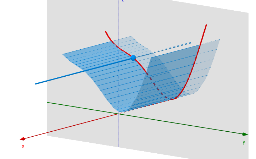
This GeoGebra example demonstrates how to build a 3D cylinder using parametric curves and surfaces, showcasing its geometric structure. The core mathematical concepts involve parametric equations of a cylinder, quadratic functions (like the circle equation) extended into three dimensions, and the role of orthogonal lines in defining the cylinder's generatrices. The construction uses CurveCartesian to define the circular base, Point to select points on the curve, OrthogonalLine to create the perpendicular direction for the lateral surface, Surface to sweep the cylinder's side, and Sequence to generate multiple cross-sections or auxiliary points. Objects a, b, A, c, d, and list1 control the radius, height, base point, direction vector, and sequence data respectively. This is ideal for high school solid geometry or college analytic geometry courses, helping students visualize parametric representations, surface generation, and dynamic spatial transformations.
GeoGebra Commands & Parameters
CurveCartesian(0, t, (0.25 * (t - 3)^(2)) + 2 + sin(t), t, -1, 7) → aPoint(a) → AOrthogonalLine(A, b) → cSurface(t, u, (0.25 * (u - 3)^(2)) + 2 + sin(u), t, -2, 5, u, -0.5, 6.5) → dSequence(CurveCartesian[t, u, (0.25 * (u - 3)^(2)) + 2 + sin(u), t, -2, 5], u, -0.5, 6.5, 0.25) → list1
AI Drawing Prompt Reference
Create a 3D cylinder whose base is a parametric curve on a horizontal plane, shaped like a parabola with sinusoidal undulation. Pick a point on this base curve, and extend a vertical line from it as the cylinder's generatrix. Using this line as a direction, sweep along the base curve to generate the lateral surface of the cylinder. Additionally, generate a series of horizontal cross-section curves inside the cylinder at different heights, each having the same shape as the base but elevated, to reveal the cylinder's internal structure. The whole figure illustrates the geometric relationship between the parametric surface and its cross-sections.
The prompt above was compiled from the original drawing commands and is for reference only.