
Investigating Properties of Parallelograms
Loading the math board and drawing, please wait…
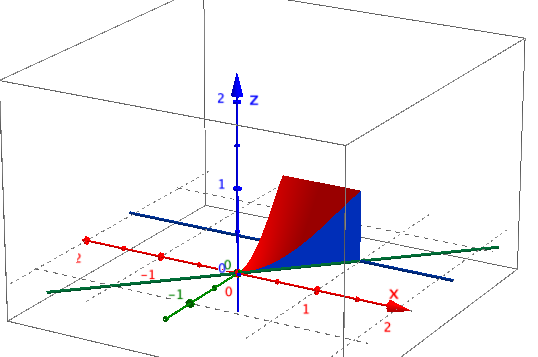
This example uses GeoGebra to demonstrate the properties of parallelograms, involving trigonometry and coordinate geometry. By adjusting parameters, one can observe changes in the side lengths, angles, and area of the parallelogram. It utilizes commands like Surface, Textfield, Element, and is suitable for high school mathematics education.
GeoGebra Commands & Parameters
Surface(xmin, (u * ymin(xmin)) + ((1 - u) * ymax(xmin)), (v * zmin(xmin, (u * ymin(xmin)) + ((1 - u) * ymax(xmin)))) + ((1 - v) * zmax(xmin, (u * ymin(xmin)) + ((1 - u) * ymax(xmin)))), u, 0, 1, v, 0, 1) → leftSurface(xmax, (u * ymin(xmax)) + ((1 - u) * ymax(xmax)), (v * zmin(xmax, (u * ymin(xmax)) + ((1 - u) * ymax(xmax)))) + ((1 - v) * zmax(xmax, (u * ymin(xmax)) + ((1 - u) * ymax(xmax)))), u, 0, 1, v, 0, 1) → rightTextfield(xmin) → textfield1Textfield(xmax) → textfield2Textfield(ymin) → textfield3Textfield(ymax) → textfield4Textfield(zmin) → textfield5Textfield(zmax) → textfield6Surface((u / 3 * xmin) + ((1 - u / 3) * xmax), ymin((u / 3 * xmin) + ((1 - u / 3) * xmax)), (v / 3 * zmin((u / 3 * xmin) + ((1 - u / 3) * xmax), ymin((u / 3 * xmin) + ((1 - u / 3) * xmax)))) + ((1 - v / 3) * zmax((u / 3 * xmin) + ((1 - u / 3) * xmax), ymin((u / 3 * xmin) + ((1 - u / 3) * xmax)))), u, 0, 3, v, 0, 3) → frontSurface((u / 3 * xmin) + ((1 - u / 3) * xmax), (v / 3 * ymax((u / 3 * xmin) + ((1 - u / 3) * xmax))) + ((1 - v / 3) * ymin((u / 3 * xmin) + ((1 - u / 3) * xmax))), zmax((u / 3 * xmin) + ((1 - u / 3) * xmax), (v / 3 * ymax((u / 3 * xmin) + ((1 - u / 3) * xmax))) + ((1 - v / 3) * ymin((u / 3 * xmin) + ((1 - u / 3) * xmax)))), u, 0, 3, v, 0, 3) → upSurface((u / 3 * xmin) + ((1 - u / 3) * xmax), ymax((u / 3 * xmin) + ((1 - u / 3) * xmax)), (v / 3 * zmin((u / 3 * xmin) + ((1 - u / 3) * xmax), ymax((u / 3 * xmin) + ((1 - u / 3) * xmax)))) + ((1 - v / 3) * zmax((u / 3 * xmin) + ((1 - u / 3) * xmax), ymax((u / 3 * xmin) + ((1 - u / 3) * xmax)))), u, 0, 3, v, 0, 3) → backSurface((u / 3 * xmin) + ((1 - u / 3) * xmax), (v / 3 * ymax((u / 3 * xmin) + ((1 - u / 3) * xmax))) + ((1 - v / 3) * ymin((u / 3 * xmin) + ((1 - u / 3) * xmax))), zmin((u / 3 * xmin) + ((1 - u / 3) * xmax), (v / 3 * ymax((u / 3 * xmin) + ((1 - u / 3) * xmax))) + ((1 - v / 3) * ymin((u / 3 * xmin) + ((1 - u / 3) * xmax)))), u, 0, 3, v, 0, 3) → downElement(vdir, faces) → Selectvec
AI Drawing Prompt Reference
Draw a parallelogram shape with four vertices, two diagonals, and a labeled text. The construction order should be: first determine the two diagonal vertices, then connect the diagonals, add the intersection point, and finally label the information on the shape. The shape should illustrate the properties of the parallelogram, such as side lengths, angles, and area, by adjusting parameters to observe changes.
The prompt above was compiled from the original drawing commands and is for reference only.