
Interpreting Systems of Piece-wise Linear Functions 3
Loading the math board and drawing, please wait…
In collections
Algebra 1
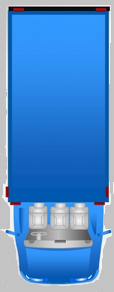
This GeoGebra example dynamically illustrates a system of piece-wise linear functions and their geometric interpretations, showing how multiple linear segments form rectangles, reflections, and median lines on a plane. The core mathematical concepts include piece-wise linear functions, intersections and region partitioning, linear transformations (rotation and reflection), and geometric objects such as rectangles and conic sections. The construction uses commands like Sequence, Segment, If, and Rotate to generate segmented lines and rotated objects, with interactive buttons (button1, button2, button3) and sliders to toggle visibility, alongside markers and road images for enhanced visualization. It is suitable for high school or early college students learning function graphs, linear programming, and geometric transformations, and serves as an interactive teaching tool for exploring systems of piece-wise linear functions.
GeoGebra Commands & Parameters
Sequence((n, f(n)), n, 0, t_1) → markers_1Sequence((n, g(n)), n, 0, t_1) → markers_2Segment((-1.9, 0), (-1.1, 0)) → line_0Sequence(i - 0.4 < x < i + 0.4, i, 0, t_1) → photo_{road}Sequence(x = i - 0.4, i, 0, t_1) → left_{road}Sequence(x = i + 0.4, i, 0, t_1) → right_{road}Sequence(x = i, i, 0, t_1) → mid_{road}If(t ≤ 7, 1, -1) → amb_{up}Segment((-1.9, 200), (-1.1, 200)) → line_{200}Sequence((n, j(n)), n, 0, t_1) → markers_3Sequence(Translate[car_p, Vector[(0, j(0)), (i - j_y(i), j(i))]], i, 0, t_1) → photo_cSequence(Translate[truck_p, Vector[(0, g(0)), (i - g_y(i), g(i))]], i, 0, t_1) → photo_rSequence((i + 0.2, 105), i, 3, t_1) → crashphotosRotate(C_1, 180°, C) → G_1Rotate(C_2, 180°, C) → G_2Rotate(C_3, 180°, C) → G_3Sequence(Translate[amb_p, Vector[(0, f(0)), (i, f(i))]], i, 0, Min[t_1, 7]) → photo_aSequence(Translate[downamb_p, Vector[(0, f(0)), (i, f(i))]], i, 8, t_1) → photo_d