
Exponential Functions Anatomy: Geometric Construction
Loading the math board and drawing, please wait…
In collections
Exponential & Logarithmic Functions
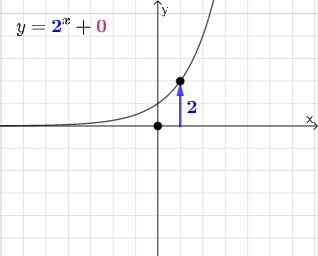
This example demonstrates the geometric construction of exponential functions, showing exponential growth and transformations. Key mathematical concepts include exponential functions, geometric transformations, and coordinate geometry. Construction involves using GeoGebra commands like Point, Vector, If, and objects such as h, k, a, b. Suitable for high school or university mathematics courses to understand function graphs and transformations.
GeoGebra Commands & Parameters
Point(Line[A + (1, 0), A + (1, 1)]) → CVector(A + (1, 0), C) → uIf(c, (y(C) - y(A))^(x - h) + k, (-(abs(y(C) - y(A)))^(x - h)) + k) → fVector((0, 0), (x(A), 0)) → vVector((x(A), 0), A) → w
AI Drawing Prompt Reference
In the coordinate plane, first establish a base point A, then construct a vertical line segment above and to the right of point A, and pick a point C on this segment. Use points A and C to create vectors representing horizontal and vertical transformations. Based on the vertical distance from C to A as the base of an exponential function, combined with horizontal shift parameter h and vertical shift parameter k, plot a conditional exponential function curve: using positive base when the condition is met, otherwise using the absolute value of a negative base. Finally, construct a horizontal vector from the origin to A's horizontal projection, and another vector from that projection to point A, completing the geometric construction.
The prompt above was compiled from the original drawing commands and is for reference only.