
Cube Construction and Surface Demo
Loading the math board and drawing, please wait…
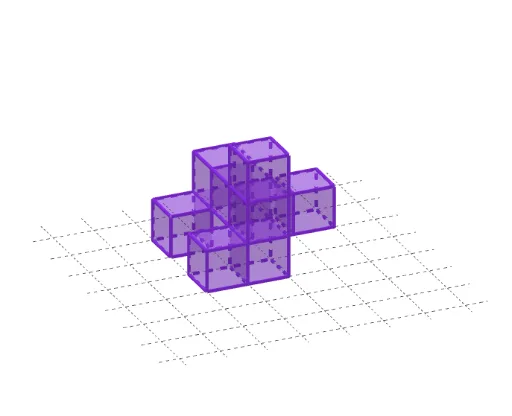
This example dynamically demonstrates the construction process and surface layout of a cube, visually showcasing the generation and decomposition of three-dimensional geometric figures. Core math concepts include solid geometry, polygonal surfaces, vector operations, and spatial coordinates. Key construction elements from the summary involve GeoGebra commands/objects like Point, Cube, face, and edge, achieving precise cube and surface modeling with interactivity. Suitable for high school students and math enthusiasts studying solid geometry construction, spatial visualization, and geometric drawing techniques.
GeoGebra Commands & Parameters
Point(Circle[B, Distance[A, B], Segment[A, B]]) → CCube(A, B, C) → a, D, faceCDHG, faceEFGH, edgeAD, edgeAB, edgeBC, edgeCD_1, edgeAE, edgeDH, edgeEH, edgeEF, E, edgeBF, edgeFG, edgeCG, edgeGH, F, G, H, faceABCD, faceADHE, faceABFE, faceBCGFPoint(Circle[C, Distance[D, C], Segment[D, C]]) → ICube(D, C, I) → b, J, faceIJNM, faceKLMN, edgeDJ, edgeCD, edgeCI, edgeIJ_1, edgeDK, edgeJN, edgeKN, edgeKL, K, edgeCL, edgeLM, edgeIM, edgeMN, L, M, N, faceCDJI, faceDJNK, faceCDKL, faceCIMLPoint(Circle[I, Distance[J, I], Segment[J, I]]) → OCube(J, I, O) → c, P, faceOPTS, faceQRST, edgeJP, edgeIJ, edgeIO, edgeOP_1, edgeJQ, edgePT, edgeQT, edgeQR, Q, edgeIR, edgeRS, edgeOS, edgeST, R, S, T, faceIJPO, faceJPTQ, faceIJQR, faceIOSRPoint(Circle[O, Distance[P, O], Segment[P, O]]) → UCube(P, O, U) → d, V, face3, face4, edgePV, edgeOP, edgeOU, edgeUV, edgePW, edge2, edge3, edgeWZ, W, edgeOZ, edge4, edge1, edge5, Z, A_1, B_1, faceOPVU, face2, faceOPWZ, face1Point(Circle[D_1, Distance[C_1, D_1], Segment[C_1, D_1]]) → E_1Cube(C_1, D_1, E_1) → e, F_1, face9, face10, edge7, edge6, edge9, edge11, edge8, edge13, edge15, edge14, G_1, edge10, edge16, edge12, edge17, H_1, I_1, J_1, face5, face7, face6, face8Point(Circle[E_1, Distance[K_1, E_1], Segment[K_1, E_1]]) → L_1Cube(K_1, E_1, L_1) → f, M_1, face15, face16, edge21, edge18, edge19, edge23, edge22, edge25, edge27, edge26, N_1, edge20, edge28, edge24, edge29, O_1, P_1, Q_1, face11, face14, face12, face13Point(Circle[G_1, Distance[P_1, G_1], Segment[P_1, G_1]]) → R_1Cube(P_1, G_1, R_1) → g, S_1, face21, face22, edge33, edge30, edge31, edge35, edge34, edge37, edge39, edge38, T_1, edge32, edge40, edge36, edge41, U_1, V_1, W_1, face17, face20, face18, face19Point(Circle[J_1, Distance[O_1, J_1], Segment[O_1, J_1]]) → Z_1Cube(O_1, J_1, Z_1) → h, A_2, face27, face28, edge45, edge42, edge43, edge47, edge46, edge49, edge51, edge50, B_2, edge44, edge52, edge48, edge53, C_2, D_2, E_2, face23, face26, face24, face25Point(Circle[Z, Distance[R, Z], Segment[R, Z]]) → F_2Cube(R, Z, F_2) → i, G_2, face33, face34, edge54, edgeRZ, edge56, edge58, edge55, edge60, edge62, edge61, H_2, edge57, edge63, edge59, edge64, I_2, J_2, K_2, face29, face31, face30, face32Point(Circle[C_2, Distance[B_2, C_2], Segment[B_2, C_2]]) → L_2Cube(B_2, C_2, L_2) → j, M_2, face39, face40, edge66, edge65, edge68, edge70, edge67, edge72, edge74, edge73, N_2, edge69, edge75, edge71, edge76, O_2, P_2, Q_2, face35, face37, face36, face38