
Angle-driven geometric construction for solids and functions
Loading the math board and drawing, please wait…
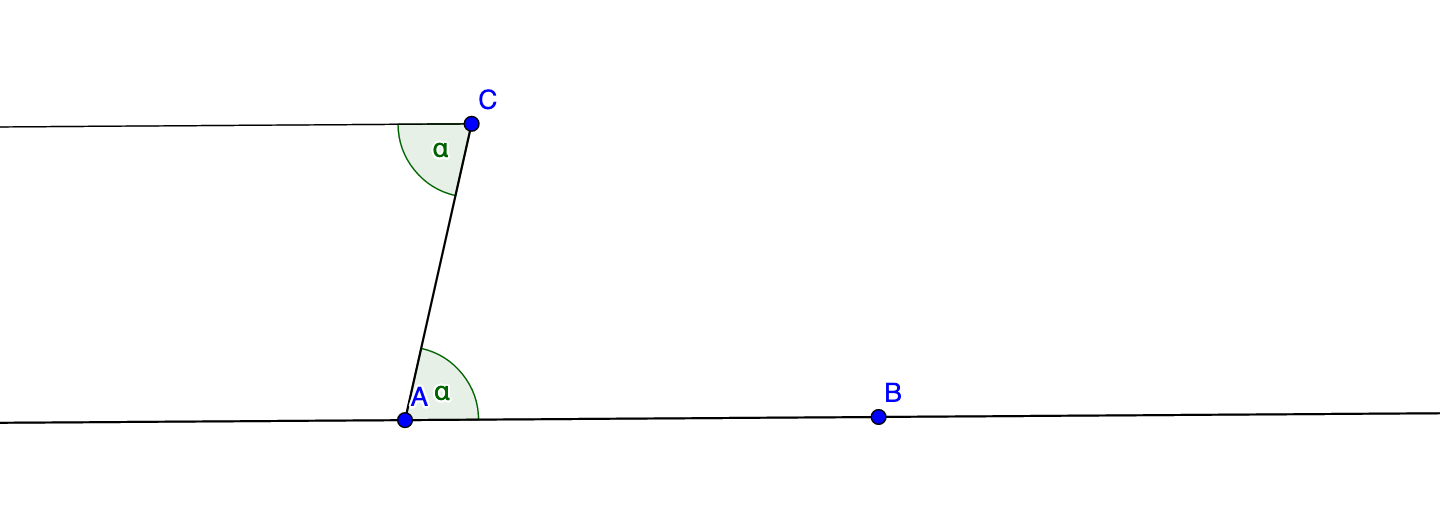
This GeoGebra exercise demonstrates how geometric relationships—especially angle constraints—can be used to build and connect a solid/section-like configuration in a dynamic way. It highlights the interplay between key points and segments, angle measurement/control, and function-based relationships (e.g., polynomial/function objects) to support reasoning about the resulting figure. Core concepts include solid-geometry construction ideas, angle definition and interactive angle motion, and using functions to encode or relate geometric behavior. Construction-wise, it uses Line and Segment to form the structural skeleton, Angle to define the critical angles, AngleMoverCW to make the configuration respond to clockwise angle changes, and Point to specify and control key locations; the objects/parameters A, B, C, D, f, g, α, i, i_2, and β organize the geometry and the underlying parameters/relations. Suitable for high-school to early university students studying geometry-construction, dynamic geometry, and geometry–function connections.
GeoGebra Commands & Parameters
Line(A, B) → fSegment(A, C) → gAngle(B, A, C) → αAngleMoverCW(B, A, C, C, A) → i, i_2Point(i) → DAngle(D, C, A) → β
AI Drawing Prompt Reference
Draw a geometric construction featuring two segments and two angles. Start with one segment connecting two points, then add a second segment connecting one of these points to a third point, forming an angle. Allow the angle to be dynamically adjusted, causing a fourth point to move along a specific path. Show the angle relationships involving this fourth point and the other two points. The construction should highlight dynamic changes driven by angle adjustments and include a function that illustrates the connection between geometry and functions based on the angle's motion.
The prompt above was compiled from the original drawing commands and is for reference only.