
A Cube Passing Through Flatland
Loading the math board and drawing, please wait…
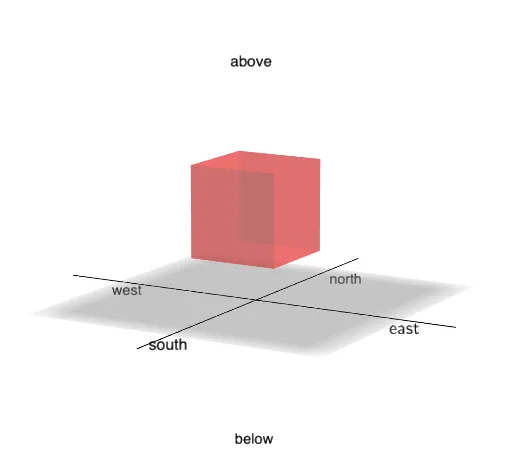
This example demonstrates the geometric phenomenon of a cube passing through a plane, combining solid geometry with planar geometry. Key mathematical concepts include spatial transformation, projection, and trajectory. Construction involves GeoGebra commands like Plane, Cube, IntersectPath, and Line to create the cube and intersection points. Suitable for high school students or college freshmen to understand geometric transformations and spatial visualization.
GeoGebra Commands & Parameters
Plane((0, 0, 0), (1, 0, 0), (0, 1, 0)) → pCube(A, B, C) → acube, D, faceCDHG, faceEFGH, edgeAD, edgeAB, edgeBC, edgeCD, edgeAE, edgeDH, edgeEH, edgeEF, E, edgeBF, edgeFG, edgeCG, edgeGH, F, G, H, faceABCD, faceADHE, faceABFE, faceBCGFIntersectPath(p, acube) → cubsec_{1}, M, n, r, i, N, O, Q, U, W, k, l, mLine((0, 0), (1, 0)) → fLine((0, 0), (0, 1)) → g
AI Drawing Prompt Reference
Draw a cube passing through a horizontal plane, highlighting the intersection points between the cube and the plane, along with the cube's faces and edges. Construct the cube and mark its intersection with the plane. Add two reference lines for orientation, showcasing the projection and spatial transformation of the cube on the plane.
The prompt above was compiled from the original drawing commands and is for reference only.