
3D Vectors and Symmetry in Equilateral Triangles
Loading the math board and drawing, please wait…
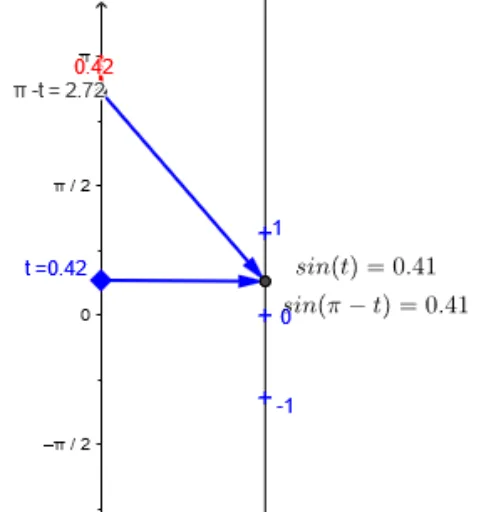
This example demonstrates the relationship between 3D vectors, equilateral triangles, and symmetry in three-dimensional space using GeoGebra. It involves core mathematical concepts such as 3D vectors, equilateral triangle construction, symmetry analysis, and trigonometric applications. The construction utilizes commands and objects like Point, Element, Intersect, Circle, Segment, Angle, OrthogonalLine, CircleArc, and Vector for precise geometric modeling and dynamic visualization. Suitable for high school and advanced learners to understand spatial geometry, vector operations, and symmetry principles.
GeoGebra Commands & Parameters
Point(yAxis) → EElement(fnl, function) → gIntersect(xAxis, yAxis) → ACircle(A, B) → cSegment(A, C) → aSegment(B, A) → bAngle(B, A, C) → αOrthogonalLine(C, yAxis) → dIntersect(d, yAxis) → DCircleArc(A, B, C) → eVector(C, D) → uVector(E, F) → vSegment(D, A) → hSegment(H, B) → iVector(t, C) → wOrthogonalLine(C, b) → jIntersect(j, i) → IVector(C, I) → zVector(I, J) → kVector(E, K) → lVector(L, K) → nSegment(S, U) → b_1Segment(P, Q) → c_1Segment(R, T) → a_1Vector(M, V) → pVector(C_1, W) → v_1Segment(V, A) → g_1Vector(L, A_1) → mElement(fnnl, function) → fnnVector(C_1, W) → u_1Vector(V, Z) → z_1Vector(C, W) → h_1Vector(V, Z) → j_1Segment(A, V) → k_1CircleArc(A, V, H) → p_1Segment((0, π), L) → rSegment((-1.5, π), M) → qVector(V, (x(V), 0)) → w_1Vector(E_1, C_1) → z_2Vector(I, F_1) → l_1Vector(F_1, G_1) → m_1Vector(C, G_1) → i_1