
几何图案——伊西斯项目:构造与谜题
几何画板及绘图内容加载中,请稍等……
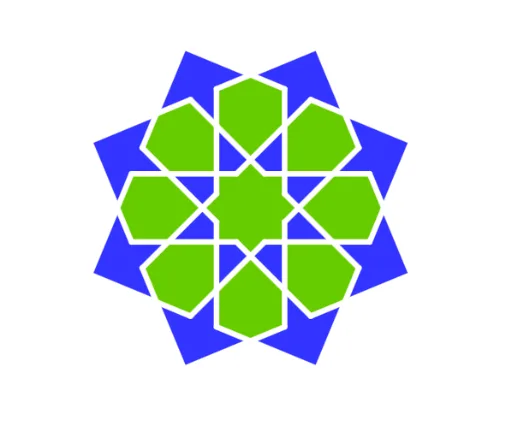
① 本范例演示了通过一系列几何作图命令生成复杂几何图案的过程,并配有谜题式探索,展示几何变换与构造的视觉美感。② 核心数学概念包括几何变换(平移、相似三角形)、切线函数、中线、正交线以及多边形与圆的组合关系,涉及解析几何与三角函数的交叉应用。③ 作图要点:从构造摘要可见,使用了GeoGebra的Intersect(交点)、Point(点)、Circle(圆)、OrthogonalLine(正交线)、Segment(线段)、Line(直线)、Polygon(多边形)等命令,创建了A、B、C、D、E、F、G、H、I、J、K、L、M、N、O、P、Q、R、S等大量对象,以及辅助线c、d、e、f、g、h、i、j、k、l、m、n、p、q、r、s、t、a、b、f_1、g_1,通过交点与正交关系构建出对称且富有规律的图案。④ 适合中学高年级至大学低年级的几何课程,也可用于数学艺术设计或几何谜题挑战,帮助学生理解几何构造逻辑与变换性质。
GeoGebra 命令及参数
Intersect(xAxis, yAxis) → APoint(xAxis) → BCircle(A, B) → cCircle(B, Segment[A, B]) → dIntersect(c, xAxis, 2) → CCircle(C, Segment[A, B]) → eOrthogonalLine(A, xAxis) → fIntersect(c, f, 1) → DIntersect(c, f, 2) → ECircle(D, Segment[A, B]) → gCircle(E, Segment[A, B]) → hIntersect(e, h, 1) → FIntersect(d, g, 1) → GIntersect(d, h, 2) → HIntersect(e, g, 2) → ISegment(I, H) → iSegment(F, G) → jSegment(F, H) → kSegment(H, G) → lSegment(G, I) → mSegment(I, F) → nIntersect(c, j, 1) → JIntersect(c, i, 2) → KIntersect(c, j, 2) → LIntersect(c, i, 1) → MLine(J, K) → pLine(M, L) → qLine(L, K) → rLine(J, M) → sSegment(D, C) → tSegment(C, E) → aSegment(E, B) → bSegment(B, D) → f_1Intersect(h, r, 1) → NIntersect(d, p, 1) → OIntersect(e, a, 1) → PIntersect(h, a, 1) → QIntersect(g, t, 1) → RIntersect(d, q, 1) → SLine(P, A) → g_1Line(O, A) → h_1Line(N, A) → i_1Intersect(g, f_1, 1) → TLine(T, A) → j_1Intersect(e, h_1, 2) → UIntersect(g_1, m) → VCircle(V, Segment[V, D]) → c_1Intersect(c_1, g_1, 1) → WCircle(A, Segment[A, W]) → d_1Intersect(d_1, g_1, 1) → ZIntersect(d_1, h_1, 1) → A_1Intersect(d_1, i_1, 1) → B_1Line(A, B) → k_1Intersect(d_1, j_1, 1) → C_1Intersect(d_1, h_1, 2) → D_1Intersect(d_1, i_1, 2) → E_1Intersect(d_1, j_1, 2) → F_1Line(Z, D_1) → l_1Line(W, A_1) → m_1Line(F_1, B_1) → n_1Line(C_1, E_1) → p_1Line(F_1, W) → q_1Line(C_1, Z) → r_1Line(A_1, E_1) → s_1Line(D_1, B_1) → t_1Line(B, K) → a_1Line(K, E) → b_1Line(E, J) → e_1Line(J, C) → f_2Line(C, M) → g_2Line(M, D) → h_2Line(D, L) → i_2Line(L, B) → j_2Intersect(l_1, h_2) → G_1Intersect(j_2, h_2) → H_1Segment(G_1, H_1) → k_2Intersect(i_1, f_2) → I_1Intersect(h_2, t_1) → J_1Segment(J_1, I_1) → l_2Intersect(h_1, g_2) → K_1Intersect(j_1, a_1) → L_1Intersect(i_2, q_1) → M_1Segment(M_1, L_1) → m_2Intersect(m_1, i_2) → N_1Segment(N_1, K_1) → n_2Intersect(i_1, b_1) → O_1Intersect(p_1, j_2) → P_1Segment(O_1, P_1) → p_2Intersect(r_1, j_2) → Q_1Segment(Q_1, H_1) → q_2Intersect(s_1, b_1) → R_1Segment(R_1, O_1) → r_2Intersect(m_1, b_1) → S_1Intersect(g_1, b_1) → T_1Segment(T_1, S_1) → s_2Intersect(l_1, e_1) → U_1Intersect(h_1, e_1) → V_1Segment(V_1, U_1) → t_2Intersect(r_1, e_1) → W_1Intersect(j_1, e_1) → Z_1Segment(W_1, Z_1) → a_2Intersect(n_1, a_1) → A_2Segment(A_2, L_1) → b_2Intersect(t_1, a_1) → B_2Segment(B_2, V_1) → c_2Intersect(n_1, f_2) → C_2Intersect(f_2, q_1) → D_2Segment(T_1, D_2) → d_2Segment(C_2, I_1) → e_2Intersect(s_1, g_2) → E_2Segment(K_1, E_2) → f_3Intersect(p_1, g_2) → F_2Segment(Z_1, F_2) → g_3Intersect(h_1, p_1) → G_2Intersect(g_1, p_1) → H_2Segment(F_2, G_2) → h_3Segment(H_2, P_1) → i_3Intersect(s_1, g_1) → I_2Intersect(h_1, r_1) → J_2Segment(C_2, I_2) → j_3Segment(J_2, A_2) → k_3Intersect(m_1, r_1) → K_2Intersect(j_1, m_1) → L_2Segment(S_1, K_2) → l_3Segment(L_2, N_1) → m_3Intersect(j_1, l_1) → M_2Intersect(i_1, l_1) → N_2Segment(U_1, M_2) → n_3Segment(N_2, G_1) → p_3Segment(W_1, J_2) → q_3Segment(D_2, N_2) → r_3Segment(K_2, Q_1) → s_3Segment(M_1, G_2) → t_3Segment(R_1, I_2) → a_3Segment(B_2, L_2) → b_3Segment(J_1, H_2) → c_3Segment(E_2, M_2) → d_3Polygon(E, S_1, A_1, R_1, K, V_1) → pol1, e_3, s_4, a_4, r_4, k_4, v_1Polygon(K, O_1, B, A_2, B_1, B_2) → pol2, k_5, o_1, b_4, a_5, b_5, b_6Polygon(B, P_1, C_1, Q_1, L, L_1) → pol3, b_7, p_4, c_4, q_4, l_4, l_5Polygon(D, H_1, L, M_1, W, N_1) → pol4, d_4, h_4, l_6, m_4, w, n_4Polygon(D, K_1, M, J_1, D_1, G_1) → pol5, d_5, k_6, m_5, j_4, d_6, g_4Polygon(M, E_2, E_1, F_2, C, I_1) → pol6, m_6, e_4, e_5, f_4, c_5, i_4Polygon(J, Z_1, C, C_2, F_1, D_2) → pol7, j_5, z_1, c_6, c_7, f_5, d_7Polygon(J, T_1, E, U_1, Z, W_1) → pol8, j_6, t_4, e_6, u_1, z_2, w_1Intersect(j_3, n_3) → O_2Intersect(q_3, a_3) → P_2Intersect(k_3, l_3) → Q_2Intersect(s_3, b_3) → R_2Intersect(i_3, m_3) → S_2Intersect(t_3, c_3) → T_2Intersect(h_3, p_3) → U_2Intersect(r_3, d_3) → V_2Polygon(Z, U_1, E, S_1, A_1, P_2) → pol9, z_3, u_2, e_7, s_5, a_6, p_5Polygon(F_1, O_2, Z, W_1, J, D_2) → pol10, f_6, o_2, z_4, w_2, j_7, d_8Polygon(C_2, F_1, V_2, E_1, F_2, C) → pol11, c_8, f_7, v_2, e_8, f_8, c_9Polygon(E_1, U_2, D_1, J_1, M, E_2) → pol12, e_9, u_3, d_9, j_8, m_7, e_{10}Polygon(T_2, D_1, G_1, D, N_1, W) → pol13, t_5, d_{10}, g_5, d_{11}, n_5, w_3Polygon(S_2, C_1, Q_1, L, M_1, W) → pol14, s_6, c_{10}, q_5, l_7, m_8, w_4Polygon(R_2, C_1, P_1, B, A_2, B_1) → pol15, r_5, c_{11}, p_6, b_8, a_7, b_9Polygon(A_1, R_1, K, B_2, B_1, Q_2) → pol16, a_8, r_6, k_7, b_{10}, b_{11}, q_6Polygon(O_2, I_2, P_2, Z) → q1, o_3, i_5, p_7, z_5Polygon(F_1, V_2, M_2, O_2) → q2, f_9, v_3, m_9, o_4Polygon(V_2, N_2, U_2, E_1) → q3, v_4, n_6, u_4, e_{11}Polygon(T_2, D_1, U_2, G_2) → q4, t_6, d_{12}, u_5, g_6Polygon(T_2, W, S_2, H_2) → q5, t_7, w_5, s_7, h_5Polygon(R_2, L_2, S_2, C_1) → q6, r_7, l_8, s_8, c_{12}Polygon(R_2, B_1, Q_2, K_2) → q7, r_8, b_{12}, q_7, k_8Polygon(P_2, A_1, Q_2, J_2) → q8, p_8, a_9, q_8, j_9Polygon(M_2, O_2, H_2, T_2, G_2, U_2, N_2, V_2, I_2, P_2, J_2, Q_2, K_2, R_2, L_2, S_2) → pol17, m_{10}, s_9, h_6, t_8, g_7, u_6, n_7, v_5, o_5, i_6, p_9, j_{10}, q_9, k_9, r_9, l_9