
Simulating 5 Coin Tosses
Loading the math board and drawing, please wait…
In collections
Statistics Demonstrations
Statistics Demonstrations
Statistics Demonstrations
Statistics Demonstrations
Statistics Demonstrations
Statistical Applets
GGBChat4: Statistics 1
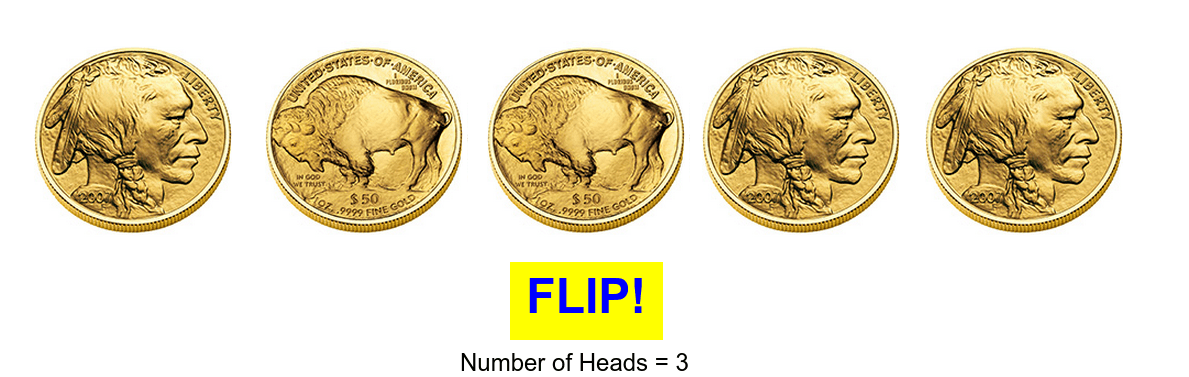
This example demonstrates simulating the tossing of 5 coins 10 times and tracking the number of heads, focusing on probability & statistics concepts like binomial distribution and frequency distribution. It uses GeoGebra commands such as Intersect, Random, Mod, and Sum. Suitable for high school students learning probability and statistics to understand frequency distribution patterns of random events.
GeoGebra Commands & Parameters
Intersect(xAxis, yAxis) → ARandom(1, 2) → A1Random(3, 4) → A2Random(5, 6) → A3Random(7, 8) → A4Random(9, 10) → A5Mod(A1, 2) → B1Mod(A2, 2) → B2Mod(A3, 2) → B3Mod(A4, 2) → B4Mod(A5, 2) → B5Sum(B1:B5) → B7
AI Drawing Prompt Reference
Simulate tossing 5 coins 10 times and count the number of heads each time. First, generate 5 random numbers between 1 and 2, take the modulus 2 to get 0 or 1 representing heads or tails, then sum up the number of heads in these 5 tosses.
The prompt above was compiled from the original drawing commands and is for reference only.