
Shifting Exponential Functions: Reading Base and Translations
Loading the math board and drawing, please wait…
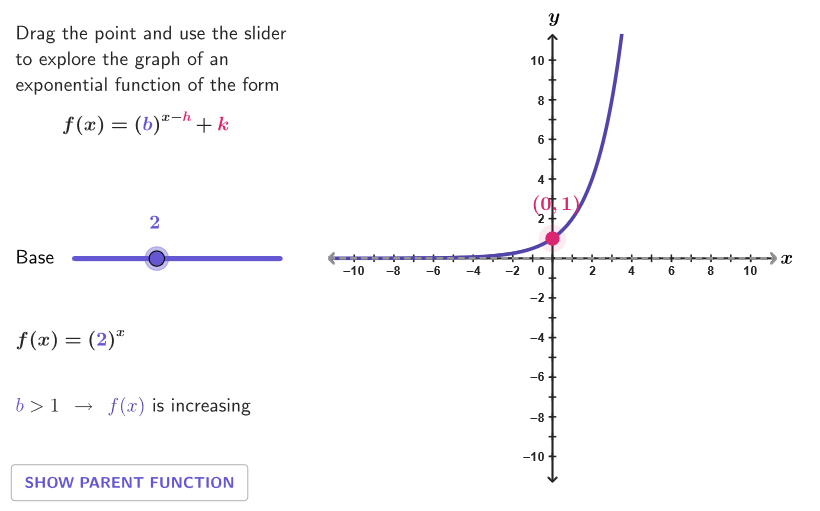
This example demonstrates how translating an exponential “parent function” changes the resulting equation and graph behavior as parameters vary. It focuses on key ideas: the exponential parent function, how the base determines growth (base > 1) or decay (0 < base < 1), and how to interpret horizontal shifts (inside the exponent) versus vertical shifts (outside the function, by adding/subtracting). Construction and interaction emphasize building visual references (grid/axes-like elements) and then linking parameter-driven objects to the transformed curves. From the provided build summary, the app uses commands such as Mirror and Sequence to generate structured reference elements, Point/Polygon/Segment/circle to create and organize geometric and graphical components, Element to manage derived objects, and text/label objects to display the current base and shift-related information. Buttons and display controls (btnShow, btnReset, showParent) support guided exploration. Suitable for grades 9–12 for identifying transformations on nonlinear parent functions using function notation, equations, or graphs.
GeoGebra Commands & Parameters
Mirror(P1, yAxis) → P2Mirror(P2, xAxis) → P3Sequence(Sequence[(j, k), j, -10, 10, 1], k, -10, 10, 1) → bigGrid, {{(-10, -10), (-9, -10), (-8, -10), (-7, -10), (-6, -10), (-5, -10), (-4, -10), (-3, -10), (-2, -10), (-1, -10), (0, -10), (1, -10), (2, -10), (3, -10), (4, -10), (5, -10), (6, -10), (7, -10), (8, -10), (9, -10), (10, -10)}, {(-10, -9), (-9, -9), (-8, -9), (-7, -9), (-6, -9), (-5, -9), (-4, -9), (-3, -9), (-2, -9), (-1, -9), (0, -9), (1, -9), (2, -9), (3, -9), (4, -9), (5, -9), (6, -9), (7, -9), (8, -9), (9, -9), (10, -9)}, {(-10, -8), (-9, -8), (-8, -8), (-7, -8), (-6, -8), (-5, -8), (-4, -8), (-3, -8), (-2, -8), (-1, -8), (0, -8), (1, -8), (2, -8), (3, -8), (4, -8), (5, -8), (6, -8), (7, -8), (8, -8), (9, -8), (10, -8)}, {(-10, -7), (-9, -7), (-8, -7), (-7, -7), (-6, -7), (-5, -7), (-4, -7), (-3, -7), (-2, -7), (-1, -7), (0, -7), (1, -7), (2, -7), (3, -7), (4, -7), (5, -7), (6, -7), (7, -7), (8, -7), (9, -7), (10, -7)}, {(-10, -6), (-9, -6), (-8, -6), (-7, -6), (-6, -6), (-5, -6), (-4, -6), (-3, -6), (-2, -6), (-1, -6), (0, -6), (1, -6), (2, -6), (3, -6), (4, -6), (5, -6), (6, -6), (7, -6), (8, -6), (9, -6), (10, -6)}, {(-10, -5), (-9, -5), (-8, -5), (-7, -5), (-6, -5), (-5, -5), (-4, -5), (-3, -5), (-2, -5), (-1, -5), (0, -5), (1, -5), (2, -5), (3, -5), (4, -5), (5, -5), (6, -5), (7, -5), (8, -5), (9, -5), (10, -5)}, {(-10, -4), (-9, -4), (-8, -4), (-7, -4), (-6, -4), (-5, -4), (-4, -4), (-3, -4), (-2, -4), (-1, -4), (0, -4), (1, -4), (2, -4), (3, -4), (4, -4), (5, -4), (6, -4), (7, -4), (8, -4), (9, -4), (10, -4)}, {(-10, -3), (-9, -3), (-8, -3), (-7, -3), (-6, -3), (-5, -3), (-4, -3), (-3, -3), (-2, -3), (-1, -3), (0, -3), (1, -3), (2, -3), (3, -3), (4, -3), (5, -3), (6, -3), (7, -3), (8, -3), (9, -3), (10, -3)}, {(-10, -2), (-9, -2), (-8, -2), (-7, -2), (-6, -2), (-5, -2), (-4, -2), (-3, -2), (-2, -2), (-1, -2), (0, -2), (1, -2), (2, -2), (3, -2), (4, -2), (5, -2), (6, -2), (7, -2), (8, -2), (9, -2), (10, -2)}, {(-10, -1), (-9, -1), (-8, -1), (-7, -1), (-6, -1), (-5, -1), (-4, -1), (-3, -1), (-2, -1), (-1, -1), (0, -1), (1, -1), (2, -1), (3, -1), (4, -1), (5, -1), (6, -1), (7, -1), (8, -1), (9, -1), (10, -1)}, {(-10, 0), (-9, 0), (-8, 0), (-7, 0), (-6, 0), (-5, 0), (-4, 0), (-3, 0), (-2, 0), (-1, 0), (0, 0), (1, 0), (2, 0), (3, 0), (4, 0), (5, 0), (6, 0), (7, 0), (8, 0), (9, 0), (10, 0)}, {(-10, 1), (-9, 1), (-8, 1), (-7, 1), (-6, 1), (-5, 1), (-4, 1), (-3, 1), (-2, 1), (-1, 1), (0, 1), (1, 1), (2, 1), (3, 1), (4, 1), (5, 1), (6, 1), (7, 1), (8, 1), (9, 1), (10, 1)}, {(-10, 2), (-9, 2), (-8, 2), (-7, 2), (-6, 2), (-5, 2), (-4, 2), (-3, 2), (-2, 2), (-1, 2), (0, 2), (1, 2), (2, 2), (3, 2), (4, 2), (5, 2), (6, 2), (7, 2), (8, 2), (9, 2), (10, 2)}, {(-10, 3), (-9, 3), (-8, 3), (-7, 3), (-6, 3), (-5, 3), (-4, 3), (-3, 3), (-2, 3), (-1, 3), (0, 3), (1, 3), (2, 3), (3, 3), (4, 3), (5, 3), (6, 3), (7, 3), (8, 3), (9, 3), (10, 3)}, {(-10, 4), (-9, 4), (-8, 4), (-7, 4), (-6, 4), (-5, 4), (-4, 4), (-3, 4), (-2, 4), (-1, 4), (0, 4), (1, 4), (2, 4), (3, 4), (4, 4), (5, 4), (6, 4), (7, 4), (8, 4), (9, 4), (10, 4)}, {(-10, 5), (-9, 5), (-8, 5), (-7, 5), (-6, 5), (-5, 5), (-4, 5), (-3, 5), (-2, 5), (-1, 5), (0, 5), (1, 5), (2, 5), (3, 5), (4, 5), (5, 5), (6, 5), (7, 5), (8, 5), (9, 5), (10, 5)}, {(-10, 6), (-9, 6), (-8, 6), (-7, 6), (-6, 6), (-5, 6), (-4, 6), (-3, 6), (-2, 6), (-1, 6), (0, 6), (1, 6), (2, 6), (3, 6), (4, 6), (5, 6), (6, 6), (7, 6), (8, 6), (9, 6), (10, 6)}, {(-10, 7), (-9, 7), (-8, 7), (-7, 7), (-6, 7), (-5, 7), (-4, 7), (-3, 7), (-2, 7), (-1, 7), (0, 7), (1, 7), (2, 7), (3, 7), (4, 7), (5, 7), (6, 7), (7, 7), (8, 7), (9, 7), (10, 7)}, {(-10, 8), (-9, 8), (-8, 8), (-7, 8), (-6, 8), (-5, 8), (-4, 8), (-3, 8), (-2, 8), (-1, 8), (0, 8), (1, 8), (2, 8), (3, 8), (4, 8), (5, 8), (6, 8), (7, 8), (8, 8), (9, 8), (10, 8)}, {(-10, 9), (-9, 9), (-8, 9), (-7, 9), (-6, 9), (-5, 9), (-4, 9), (-3, 9), (-2, 9), (-1, 9), (0, 9), (1, 9), (2, 9), (3, 9), (4, 9), (5, 9), (6, 9), (7, 9), (8, 9), (9, 9), (10, 9)}, {(-10, 10), (-9, 10), (-8, 10), (-7, 10), (-6, 10), (-5, 10), (-4, 10), (-3, 10), (-2, 10), (-1, 10), (0, 10), (1, 10), (2, 10), (3, 10), (4, 10), (5, 10), (6, 10), (7, 10), (8, 10), (9, 10), (10, 10)}}Point(bigGrid) → AMirror(P3, yAxis) → P4Polygon(P1, P2, P3, P4) → peep, p1, p1', p1'', p1'''Shuffle(Sequence[t, t, -18, 18]) → allA, {17, 5, 11, -6, 13, -18, 12, -12, 4, 15, 2, 10, -17, 1, -9, 0, 3, -16, -14, 16, -7, -8, -4, 18, -13, -11, 14, -2, 7, -1, 9, -3, 8, -15, -5, 6, -10}Element(allA, Mod[countQuestion, Length[allA]] + 1) → valAcirclePixels(A, 7 + (7 * pulsing), Corner[1], Corner[3], Corner[5]) → pulsingObjectSegment(AO1, AO2) → fakeAOSequence((k, 0), k, -10, 10, 1) → xGridSequence((0, k), k, -10, 10, 1) → yGridSegment((x(P1) + 0.05, 0), ((-x(P1)) - 0.05, 0)) → fakeXSegment((0, y(P1) + 0.05), (0, (-y(P1)) - 0.05)) → fakeY
AI Drawing Prompt Reference
Draw a coordinate grid from -10 to 10 with both horizontal and vertical grid lines. Place a quadrilateral formed by four points that are symmetric about the axes, creating a mirrored shape. Randomly select a point on the grid and draw a circle around it that pulses in size over time. Also draw two line segments on the axes as reference lines, one horizontal and one vertical, plus a segment connecting two specific points. The overall scene illustrates exponential function transformations with interactive controls for exploration.
The prompt above was compiled from the original drawing commands and is for reference only.