
Perimeter of Isosceles Triangle
Loading the math board and drawing, please wait…
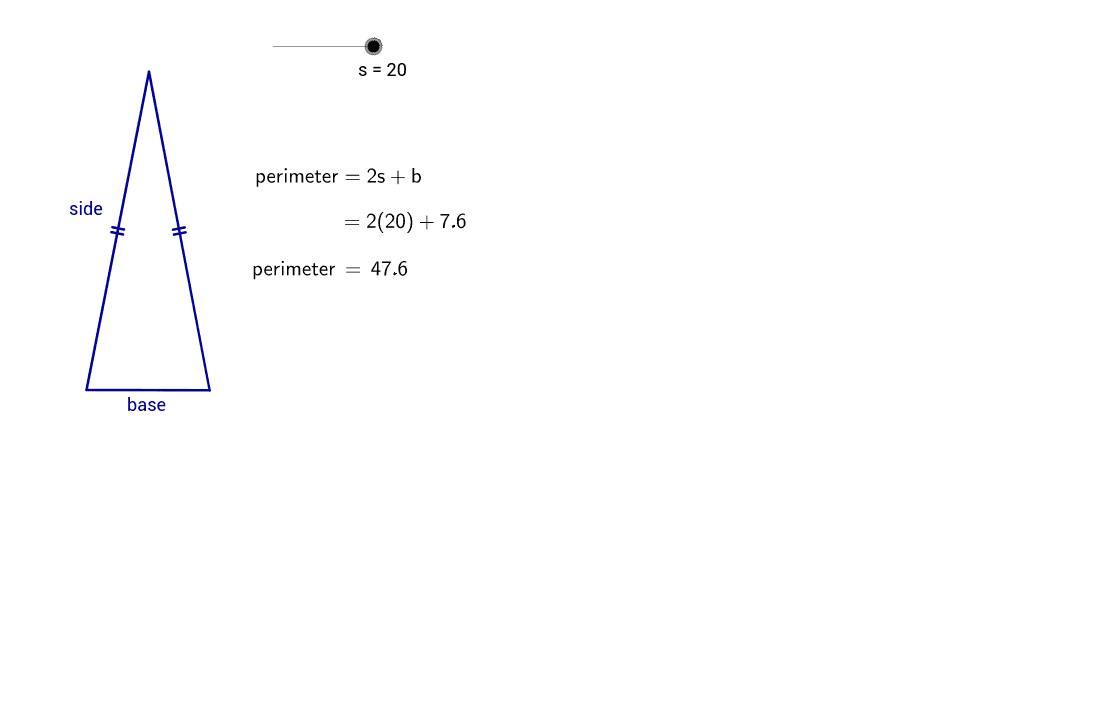
This example demonstrates how the perimeter of an isosceles triangle changes as the length of its legs varies. Key math concepts include isosceles triangle properties, perimeter calculation, and variable relationships. It is constructed using commands like Segment, Circle, Intersect, and LaTeX to draw the triangle, with a slider 's' to control leg length and display the perimeter, suitable for middle school and above to explore the impact of variables on geometric parameters.
GeoGebra Commands & Parameters
Segment(A, B) → baseCircle(A, s) → cCircle(B, Radius[c]) → dIntersect(c, d, 1) → CSegment(A, C) → sideSegment(C, B) → fLaTeX(perimeter, true, true) → text1