
Negative Numbers in Sequences
Loading the math board and drawing, please wait…
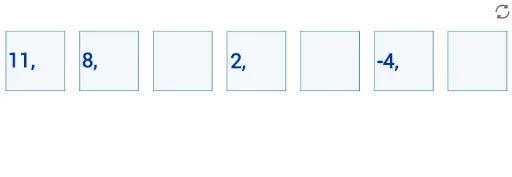
This example demonstrates the application of negative numbers in sequences, visualizing their patterns through geometric representation. Core math concepts include sequences, negative number operations, and geometric modeling. It uses GeoGebra commands like RandomElement, Random, and Polygon to construct random sequences and polygons. Suitable for high school mathematics education to understand sequence properties and geometric intuition.
GeoGebra Commands & Parameters
RandomElement(list1) → dRandom(-10, 20) → aPolygon(A, B, C, D) → poly1, a_1, b_1, c_1, d_1Polygon(E, F, G, H) → poly2, e_1, f_1, g_1, h_1Polygon(I, J, K, L) → poly3, i_1, j, k, lPolygon(M, N, O, P) → poly4, m, n, o, pPolygon(Q, R, S, T) → poly5, q, r, s, tPolygon(U, V, W, Z) → poly6, u, v, w, z_1Polygon(A_1, B_1, C_1, D_1) → poly7, a_2, b_2, c_2, d_2
AI Drawing Prompt Reference
Visualize the application of negative numbers in sequences through geometric representations. Generate multiple random negative numbers and use them to construct several quadrilaterals, with each polygon's position and size varying randomly, forming a series of geometric shapes to illustrate the negative number operations and geometric patterns in sequences.
The prompt above was compiled from the original drawing commands and is for reference only.