
Inequality Demonstration
Loading the math board and drawing, please wait…
In collections
Everything you want to know about inequalities without ever
Everything you Want to Know about Inequalities (D Mentrard)
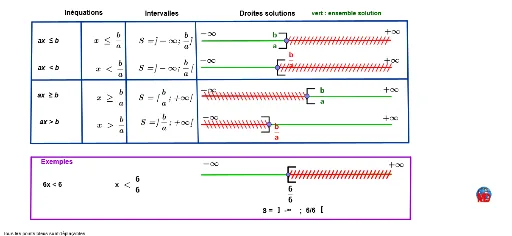
This example illustrates the representation and solution of inequalities in geometric figures. Key math concepts include inequalities, coordinate geometry, and geometric construction. It utilizes commands like Segment, Point, Sequence, If, Circle, OrthogonalLine, Intersect, Line in GeoGebra. Suitable for high school and above learners to understand the connection between inequalities and geometric shapes, as well as problem-solving techniques.
GeoGebra Commands & Parameters
Segment(U_1, V_1) → p_2Point(p_2) → W_1Segment(W_1, U_1) → t_2Segment(A, B) → aPoint(a) → CSegment(D, E) → bSegment(F, G) → cSegment(H, I) → dPoint(b) → JPoint(c) → KPoint(d) → LSegment(C, B) → eSequence(C + (i, 0), i, 0, e, n) → liste1Segment(J, E) → fSequence(J + (i, 0), i, 0, f, n) → liste2Segment(F, K) → gSequence(K - (i, 0), i, 0, g, n) → liste3Segment(L, H) → hSequence(L - (i, 0), i, 0, h, n) → liste4Sequence(C + (i, n), i, n, e, n) → liste5Sequence(C + (i, (-n)), i, 0, e, n) → liste6Sequence(Segment[Element[liste6, i], Element[liste5, i]], i, 0, e / n) → liste7Sequence(J + (i, n), i, n, f, n) → liste9Sequence(J + (i, (-n)), i, 0, f, n) → liste8Sequence(Segment[Element[liste8, i], Element[liste9, i]], i, 0, f / n) → liste10Sequence(K - (i, n), i, 0, g, n) → liste11Sequence(K - (i, (-n)), i, n, g, n) → liste12Sequence(Segment[Element[liste12, i], Element[liste11, i]], i, 0, g / n) → liste13Sequence(L - (i, (-n)), i, n, h, n) → liste14Sequence(L - (i, n), i, 0, h, n) → liste15Sequence(Segment[Element[liste14, i], Element[liste15, i]], i, 0, h / n) → liste16Segment(A, C) → iSegment(D, J) → jSegment(K, G) → kSegment(L, I) → lIf(sign ≟ 1, "≤", If[sign ≟ 2, "<", If[sign ≟ 3, "≥", ">"]]) → signinIf(sign ≟ 1, "]", If[sign ≟ 2, "[", If[sign ≟ 3, "[", "["]]) → croch2If(sign ≟ 1, "]", If[sign ≟ 2, "]", If[sign ≟ 3, "[", "]"]]) → croch1If(sign ≟ 1, "-∞", If[sign ≟ 2, " -∞", If[sign ≟ 3, "" + bb + " /" + aa, "" + bb + " /" + aa]]) → nomb1If(sign ≟ 1, " " + bb + " /" + aa, If[sign ≟ 2, " " + bb + "/" + aa, If[sign ≟ 3, "+∞", "+∞"]]) → nomb2Circle(C, (2 * n)) → pCircle(J, (2 * n)) → qCircle(K, (2 * n)) → rCircle(L, (2 * n)) → sOrthogonalLine(C, a) → tOrthogonalLine(J, b) → a_1OrthogonalLine(K, c) → b_1OrthogonalLine(L, d) → c_1Intersect(p, t) → M, NIntersect(q, a_1) → O, PIntersect(r, b_1) → Q, RIntersect(s, c_1) → S, TSegment(N, M) → d_1Segment(P, O) → e_1Segment(R, Q) → f_1Segment(T, S) → g_1Intersect(p, i) → U,Intersect(q, f) → V,Intersect(r, k) → W,Intersect(s, h) → Z,OrthogonalLine(U, a) → h_1OrthogonalLine(V, f) → i_1OrthogonalLine(W, k) → j_1OrthogonalLine(Z, h) → k_1Line(N, i) → l_1Line(M, i) → m_1Line(P, b) → n_1Line(O, b) → p_1Line(R, g) → q_1Line(Q, g) → r_1Line(T, l) → s_1Line(S, d) → t_1Intersect(l_1, h_1) → A_1Intersect(m_1, h_1) → B_1Intersect(n_1, i_1) → C_1Intersect(p_1, i_1) → D_1Intersect(j_1, q_1) → E_1Intersect(r_1, j_1) → F_1Intersect(s_1, k_1) → G_1Intersect(k_1, t_1) → H_1Segment(A_1, N) → a_2Segment(B_1, M) → b_2Segment(P, C_1) → c_2Segment(O, D_1) → d_2Segment(R, E_1) → e_2Segment(Q, F_1) → f_2Segment(T, G_1) → g_2Segment(S, H_1) → h_2Line(I_1, J_1) → i_2Line(K_1, L_1) → j_2Line(M_1, N_1) → k_2Point(i_2) → O_1Point(k_2) → P_1Line(O_1, P_1) → l_2Point(i_2) → Q_1Point(k_2) → R_1Line(Q_1, R_1) → m_2Point(i_2) → S_1Point(k_2) → T_1Line(S_1, T_1) → n_2Segment(U_1, W_1) → q_2Segment(W_1, V_1) → r_2If(sign ≟ 1, "]", If[sign ≟ 2, "[", If[sign ≟ 3, "[", "]"]]) → croch2droiteSequence(W_1 + (i, 0), i, 0, r_2, n) → liste17Sequence(W_1 + (i, n), i, n, r_2, n) → liste18Sequence(W_1 + (i, (-n)), i, 0, r_2, n) → liste19Sequence(Segment[Element[liste19, i], Element[liste18, i]], i, 0, r_2 / n) → liste20Sequence(W_1 - (i, n), i, 0, t_2, n) → liste22Sequence(W_1 - (i, 0), i, 0, q_2, n) → liste21Sequence(W_1 - (i, (-n)), i, n, t_2, n) → liste23Segment(W_1, V_1) → s_2Sequence(Segment[Element[liste22, i], Element[liste23, i]], i, 0, t_2 / n) → liste24Segment(O_1, P_1) → a_3Segment(Q_1, R_1) → b_3Segment(J_1, N_1) → c_3Segment(I_1, M_1) → d_3Intersect(j_2, d_3) → Z_1Intersect(c_3, j_2) → A_2Segment(I_1, J_1) → e_3Segment(Z_1, A_2) → f_3Segment(M_1, N_1) → g_3Segment(S_1, T_1) → h_3Circle(W_1, (2 * n)) → k_3OrthogonalLine(W_1, p_2) → i_3Intersect(k_3, i_3) → B_2, C_2Intersect(p_2, r_2) → D_2Intersect(k_3, r_2) → E_2,OrthogonalLine(E_2, r_2) → j_3Line(C_2, r_2) → l_3Line(B_2, p_2) → m_3Intersect(l_3, j_3) → F_2Intersect(j_3, m_3) → G_2Segment(F_2, C_2) → n_3Segment(G_2, B_2) → p_3Intersect(k_3, q_2) → H_2,OrthogonalLine(H_2, q_2) → q_3Intersect(l_3, q_3) → I_2Intersect(m_3, q_3) → J_2Segment(C_2, I_2) → r_3Segment(B_2, J_2) → s_3Segment(C_2, B_2) → t_3Segment(K_2, L_2) → a_4Segment(L_2, M_2) → b_4Segment(N_2, M_2) → c_4Segment(N_2, K_2) → d_4