
Geometric Representation of Sum of Cubes
Loading the math board and drawing, please wait…
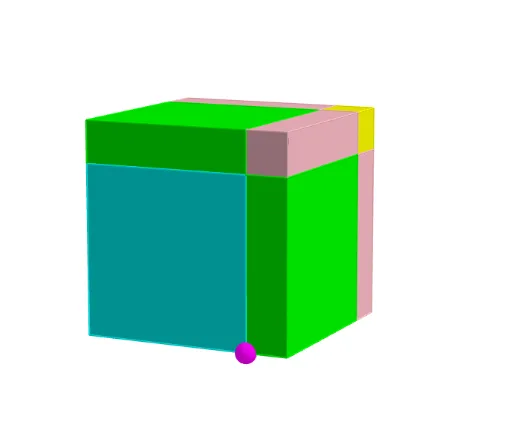
This example demonstrates the geometric representation of the sum of cubes. Key mathematical concepts include cubes, volume, and geometric construction. Using GeoGebra commands such as Point, Cube, Prism, and Translate, a cube and prism can be constructed. Suitable for middle school and above students to learn solid geometry and algebra.
GeoGebra Commands & Parameters
Point(Circle[(10, 0, 0), Distance[(0, 0, 0), (10, 0, 0)], Segment[(0, 0, 0), (10, 0, 0)]]) → ACube((0, 0, 0), (10, 0, 0), A) → a, B, faceABFE, faceCDEF, edge2, edge1, edge4, edgeAB, edge3, edgeBF, edgeCF, edgeCD, C, edge5, edgeDE, edgeAE, edgeEF, D, E, F, face1, face3, face2, face4Point(edge1) → GPoint(Circle[G, Distance[I, G], Segment[I, G]]) → KCube(I, G, K) → b, L, faceKLPO, faceMNOP, edgeIL, edgeGI, edgeGK, edgeKL, edgeIM, edgeLP, edgeMP, edgeMN, M, edgeGN, edgeNO, edgeKO, edgeOP, N, O, P, faceGILK, faceILPM, faceGIMN, faceGKONPoint(Circle[Q, Distance[O, Q], Segment[O, Q]]) → RCube(O, Q, R) → c, S, faceRSWV, faceTUVW, edgeOS, edgeOQ, edgeQR, edgeRS, edgeOT, edgeSW, edgeTW, edgeTU, T, edgeQU, edgeUV, edgeRV, edgeVW, U, V, W, faceOQRS, faceOSWT, faceOQUT, faceQRVUPrism(faceOQUT, Z) → d, A_1, edge6, edge7, edge8, edge9, edge11, edge12, edge10, B_1, C_1, face5, face6, face8, face7, face9, edgeQZPrism(faceOSWT, D_1) → e, E_1, edge13, edge14, edge16, edge17, edge19, edge20, edge18, F_1, G_1, face11, face10, face12, face13, face14, edge15Prism(faceOQRS, H_1) → f, I_1, edge21, edge22, edge23, edge25, edge27, edge28, edge26, J_1, K_1, face16, face15, face17, face18, face19, edge24Prism(faceGKON, J_1) → g, L_1, edge29, edge31, edge32, edge33, edge35, edge36, edge34, M_1, N_1, face20, face21, face23, face22, face24, edge30Prism(faceMNOP, C) → h, O_1, edge41, edge40, edge39, edge37, edge42, edge43, edge38, P_1, Q_1, face26, face29, face28, face25, face27, edgeCMPrism(faceKLPO, B) → i, R_1, edge46, edge47, edge48, edge44, edge49, edge50, edge45, S_1, T_1, face30, face33, face34, face31, face32, edgeBLTranslate(c, Vector[(explode, explode, explode)]) → c'Translate(d, Vector[(explode, 0, explode)]) → d'Translate(e, Vector[(0, explode, explode)]) → e'Translate(f, Vector[(explode, explode, 0)]) → f'Translate(g, Vector[(explode, 0, 0)]) → g'Translate(h, Vector[(0, 0, explode)]) → h'Translate(i, Vector[(0, explode, 0)]) → i'Point(Circle[G, Distance[(0, 0, 0), G], Segment[(0, 0, 0), G]]) → U_1Cube((0, 0, 0), G, U_1) → j, V_1, face39, face40, edge54, edge51, edge52, edge56, edge55, edge58, edge60, edge59, W_1, edge53, edge61, edge57, edge62, Z_1, A_2, B_2, face35, face38, face36, face37
AI Drawing Prompt Reference
Draw a cube on the x-axis and a prism whose base coincides with one side of the cube, extending upwards and sideways. Then translate the three prisms along the three coordinate axes to demonstrate the geometric relationship between the cube's volume and the sum of the volumes of the three smaller cubes.
The prompt above was compiled from the original drawing commands and is for reference only.