
GeoGebra Geometric Construction and Graph Analysis
Loading the math board and drawing, please wait…
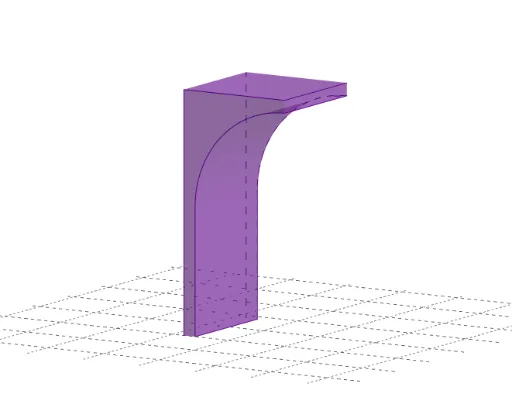
This example demonstrates how to use GeoGebra for geometric construction and analysis. Key mathematical concepts include polygons, circles, vectors, and coordinate geometry. Construction involves commands like Polygon, Segment, Line, CircleArc, and objects such as Point, Intersect. Suitable for middle or high school mathematics teaching to understand geometric transformations and properties.
GeoGebra Commands & Parameters
Polygon(A, C, D, B) → vierhoek1, a, c, d, bPolygon(E, P, Q, F) → vierhoek2, e, p, q, fPolygon(P, N, O, Q) → vierhoek3, p_1, n, o, q_1Segment(E, A) → gSegment(G, C) → hSegment(H, D) → iLine(L, M) → jCircleArc(L, N, G) → kCircleArc(M, O, H) → rSegment(G, H) → lPoint(k) → RPoint(k) → SPoint(k) → TPoint(k) → UPoint(k) → G_1Point(k) → H_1Point(k) → I_1Point(k) → J_1Line(R, l) → mLine(S, l) → sLine(T, j) → tLine(U, j) → f_1Line(J_1, j) → g_1Line(I_1, j) → h_1Line(H_1, j) → i_1Line(G_1, j) → j_1Intersect(j_1, r) → V,Intersect(i_1, r) → W,Intersect(h_1, r) → Z,Intersect(g_1, r) → A_1,Intersect(f_1, r) → B_1,Intersect(t, r) → C_1,Intersect(s, r) → D_1,Intersect(m, r) → E_1,Polygon(G, H, E_1, R) → vierhoek4, g_2, h_2, e_1, r_1Polygon(S, R, E_1, D_1) → vierhoek5, s_1, r_2, k_1, d_1Polygon(T, S, D_1, C_1) → vierhoek6, t_1, s_2, l_1, c_1Polygon(U, T, C_1, B_1) → vierhoek7, u, t_2, m_1, b_1Polygon(J_1, U, B_1, A_1) → vierhoek8, n_1, u_1, a_1, f_2Polygon(I_1, J_1, A_1, Z) → vierhoek9, i_2, j_2, k_2, z_1Polygon(H_1, I_1, Z, W) → vierhoek10, l_2, m_2, z_2, wPolygon(G_1, H_1, W, V) → vierhoek11, n_2, p_2, w_1, vPolygon(N, G_1, V, O) → vierhoek12, n_3, q_2, v_1, o_1Line(N, e) → a_2Line(G_1, e) → b_2Line(H_1, e) → c_2Line(I_1, e) → d_2Line(J_1, e) → e_2Line(U, e) → f_3Line(T, e) → g_3Line(S, e) → h_3Line(R, e) → i_3Line(G, e) → j_3Intersect(a_2, g) → F_1Intersect(g, c_2) → L_1Intersect(d_2, g) → M_1Intersect(g, e_2) → N_1Intersect(g, f_3) → O_1Intersect(g, g_3) → P_1Intersect(g, h_3) → Q_1Intersect(g, i_3) → R_1Intersect(g, j_3) → S_1Polygon(E, F_1, N, P) → vierhoek13, e_3, k_3, n_4, p_3Line(G_1, p_3) → l_3Intersect(l_3, g) → K_1Polygon(F_1, K_1, G_1, N) → vierhoek14, m_3, q_3, r_3, n_5Polygon(K_1, L_1, H_1, G_1) → vierhoek15, s_3, t_3, a_3, b_3Polygon(L_1, M_1, I_1, H_1) → vierhoek16, c_3, d_3, f_4, g_4Polygon(M_1, N_1, J_1, I_1) → vierhoek17, h_4, i_4, j_4, k_4Polygon(N_1, O_1, U, J_1) → vierhoek18, l_4, m_4, u_2, p_4Polygon(O_1, P_1, T, U) → vierhoek19, q_4, r_4, t_4, u_3Polygon(P_1, Q_1, S, T) → vierhoek20, s_4, a_4, s_5, t_5Polygon(Q_1, R_1, R, S) → vierhoek21, b_4, c_4, r_5, s_6Polygon(R_1, S_1, G, R) → vierhoek22, d_4, e_4, g_5, r_6Polygon(S_1, A, C, G) → vierhoek23, f_5, a_5, c_5, g_6Segment(F, B) → h_5Line(O, q) → i_5Line(V, q) → j_5Line(W, q) → k_5Line(Z, q) → l_5Line(A_1, q) → m_5Line(B_1, q) → p_5Line(C_1, q) → q_5Line(D_1, q) → b_5Line(E_1, q) → d_5Line(H, q) → e_5Intersect(h_5, i_5) → T_1Intersect(j_5, h_5) → U_1Intersect(k_5, h_5) → V_1Intersect(l_5, h_5) → W_1Intersect(m_5, h_5) → Z_1Intersect(h_5, p_5) → A_2Intersect(h_5, q_5) → B_2Intersect(h_5, b_5) → C_2Intersect(d_5, h_5) → D_2Intersect(h_5, e_5) → E_2Polygon(Q, O, T_1, F) → vierhoek24, q_6, o_2, f_6, f_7Polygon(O, V) → veelhoek1, o_3, v_2Polygon(O, V, U_1, T_1) → vierhoek25, o_4, v_3, h_6, i_6Polygon(V, W, V_1, U_1) → vierhoek26, v_4, w_2, j_6, k_6Polygon(W, Z, W_1, V_1) → vierhoek27, w_3, z_3, l_6, m_6Polygon(Z, A_1, Z_1, W_1) → vierhoek28, z_4, n_6, p_6, t_6Polygon(A_1, B_1, A_2, Z_1) → vierhoek29, a_6, b_6, c_6, d_6Polygon(B_1, C_1, B_2, A_2) → vierhoek30, e_6, g_7, h_7, i_7Polygon(C_1, D_1, C_2, B_2) → vierhoek31, j_7, k_7, l_7, m_7Polygon(D_1, E_1, D_2, C_2) → vierhoek32, n_7, p_7, q_7, r_7Polygon(E_1, H, E_2, D_2) → vierhoek33, s_7, h_8, t_7, a_7Polygon(G, C, D, H) → vierhoek34, g_8, c_7, d_7, h_9Polygon(D, B, E_2, H) → vierhoek35, d_8, b_7, e_7, h_{10}Polygon(B, A, E, F) → vierhoek36, b_8, a_8, e_8, f_8Segment(P, Q) → i_8Segment(P, E) → j_8Segment(N, O) → k_8Segment(C, D) → l_8Surface((0.8 * cos(tt)) + 1, hh, (0.8 * sin(tt)) + 1, tt, 0°, 180°, hh, -1, 1) → u_4Polygon((0.2, -1, 0), (0.2, 1, 0), (0.2, 1, 1), (0.2, -1, 1)) → vierhoek37, m_8, n_8, p_8, q_8Translate(vierhoek37, Vector[(1.6, 0, 0)]) → vierhoek37'Translate(q_8, Vector[(1.6, 0, 0)]) → r_8Translate(n_8, Vector[(1.6, 0, 0)]) → s_8Translate(m_8, Vector[(1.6, 0, 0)]) → t_8
AI Drawing Prompt Reference
Draw a complex geometric figure consisting of multiple quadrilaterals. The figure includes a rectangle, a parallelogram, and several triangles. These shapes are connected by line segments, arcs, and points to form a cohesive structure. The construction order starts with the rectangle, then adds the parallelogram, followed by introducing new points via line segments and arcs, and finally connecting these points to form triangles. Ensure the figure remains coherent and symmetric.
The prompt above was compiled from the original drawing commands and is for reference only.