
Fractions to Decimals: Randomly Generate and Visualize Rational Equivalence
Loading the math board and drawing, please wait…
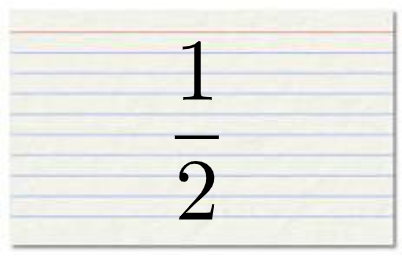
This example demonstrates how to convert fractions into their decimal representations and to visualize the equivalence of the same rational number under different forms. By randomly selecting numerator and denominator values, it shows how the resulting decimal value arises from the fraction and how the representation changes across cases. Key mathematical concepts include rational numbers, fraction-to-decimal conversion (including the finite vs. repeating intuition), and simplifying fractions using greatest common factor logic. Construction approach (from the given GeoGebra “construction summary”): RandomElement is used to pick parameters such as a, b, c, A, f, B, d, flip, C, and D; Random is employed to drive the random generation process; Simplify is applied to reduce expressions or fractions; numerator/denominator roles are represented by num and denom; and Text elements (text1, text2) are used to display the computed results, together with graphical/display objects like pic1. Suitable for middle-school math instruction and exploratory learning, supporting lessons on number representation, equivalence transformations, and basic computational reasoning.
GeoGebra Commands & Parameters
RandomElement(Sequence[u^(2), u, 2, 10]) → aRandomElement(Sequence[u, u, 2, 10]) → bSimplify(sqrt((a * b))) → fRandom(0, 1) → dRandom(2, 10) → denomRandom(1, denom - 1) → num
AI Drawing Prompt Reference
Create a set of randomized parameters that determine a rational number in two different forms: a fraction (numerator over denominator) and its decimal representation. Choose an integer-based numerator and denominator via random selection, apply simplification/normalization logic to express the fraction in reduced form, and compute the corresponding decimal value, reflecting how the representation changes across cases. Include the key computed component involving a square-root expression derived from the chosen integer parameters. Display the main values with clear text labels and present them together in a simple accompanying visual so the same rational number’s equivalence is evident.
The prompt above was compiled from the original drawing commands and is for reference only.