
Cubus simus and Tribonacci Numbers
Loading the math board and drawing, please wait…
In collections
Polyeder, whose coordinates are golden numbers
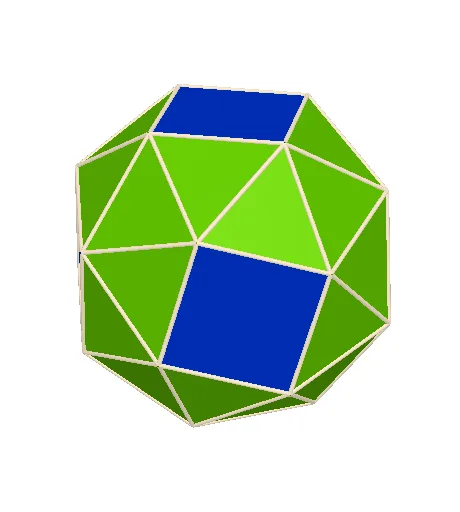
This example demonstrates the relationship between Cubus simus and Tribonacci numbers. Key mathematical concepts include sequences and geometric construction. Using the Polygon command, it illustrates the properties of sequences and the transformation of geometric shapes. Suitable for high school and above math enthusiasts and educators.
GeoGebra Commands & Parameters
Polygon(G_1, E_1, E, G) → v1, g_3, e_2, e_3, g_4Polygon(K, S, W, O) → v2, k_3, s_3, w, oPolygon(C, A, A_1, C_1) → v3, c_2, a_2, a_3, c_3Polygon(I, Q, U, M) → v4, i_3, q_3, u, m_3Polygon(T_1, L_1, K_1, S_1) → v5, t_2, l_3, k_4, s_4Polygon(R_1, J_1, I_1, Q_1) → v6, r_3, j_3, i_4, q_4Polygon(R, J, N, V) → v7, r_4, j_4, n_3, vPolygon(L, P, Z, T) → v8, l_4, p_3, z_1, t_3Polygon(M_1, N_1, V_1, U_1) → v9, m_4, n_4, v_1, u_1Polygon(O_1, P_1, Z_1, W_1) → v10, o_1, p_4, z_2, w_1Polygon(F, H, H_1, F_1) → v11, f_3, h_3, h_4, f_4Polygon(D, D_1, B_1, B) → v12, d_2, d_3, b_2, b_3Polygon(I_1, Q, I, A, A_1, Q_1) → Vieleck1, i_1, q, i, a, a_1, q_1Polygon(S_1, C_1, C, K, S, K_1) → Vieleck2, s_1, c_1, c, k, s_2, k_1Polygon(O_1, W, O, G, G_1, W_1) → Vieleck3, o_2, w_2, o_3, g, g_1, w_3Polygon(U_1, E_1, E, M, U, M_1) → Vieleck4, u_2, e_1, e, m, u_3, m_1Polygon(N, F, F_1, V_1, N_1, V) → Vieleck5, n, f, f_1, v_2, n_1, v_3Polygon(B, J, R, J_1, R_1, B_1) → Vieleck6, b, j, r, j_1, r_1, b_1Polygon(L, D, D_1, T_1, L_1, T) → Vieleck7, l, d, d_1, t_1, l_1, t_4Polygon(H, P, Z, P_1, Z_1, H_1) → Vieleck8, h, p, z_3, p_1, z_4, h_1Polygon(A, I, M, E, G, O, K, C) → Vieleck9, a_4, i_2, m_2, e_4, g_2, o_4, k_2, c_4Polygon(V_1, F_1, H_1, Z_1, W_1, G_1, E_1, U_1) → Vieleck10, v_4, f_2, h_2, z_5, w_4, g_5, e_5, u_4Polygon(R, V, N_1, M_1, U, Q, I_1, J_1) → Vieleck11, r_2, v_5, n_2, m_5, u_5, q_2, i_5, j_2Polygon(D_1, B_1, R_1, Q_1, A_1, C_1, S_1, T_1) → Vieleck12, d_4, b_4, r_5, q_5, a_5, c_5, s_5, t_5Polygon(Z, T, L_1, K_1, S, W, O_1, P_1) → Vieleck13, z_6, t_6, l_2, k_5, s_6, w_5, o_5, p_2Polygon(F, N, J, B, D, L, P, H) → Vieleck14, f_5, n_5, j_5, b_5, d_5, l_5, p_5, h_5Polygon(E_1, W_1, G) → d1, g_6, e_6, w_6Polygon(W_1, W, G) → d2, g_7, w_7, w_8Polygon(W_1, P_1, W) → d3, w_9, w_{10}, p_6Polygon(G, W, K) → d4, k_6, g_8, w_{11}Polygon(M, E_1, G) → d5, g_9, m_6, e_7Polygon(W_1, H_1, V_1, E_1) → v13, w_{12}, h_6, v_6, e_8Polygon(H_1, P_1, W_1) → d6, w_{13}, h_7, p_7Polygon(M_1, V_1, E_1) → d7, e_9, m_7, v_7Polygon(M_1, E_1, M) → d8, m_8, m_9, e_{10}Polygon(M, E_1, G) → d9, g_{10}, m_{10}, e_{11}Polygon(M_1, V, V_1) → d10, v_8, m_{11}, v_9Polygon(M, Q, M_1) → d11, m_{12}, m_{13}, q_6Polygon(Q, M_1, V, J_1) → v14, q_7, m_{14}, v_{10}, j_6Polygon(Q, M, A) → d12, a_7, q_8, m_{15}Polygon(J_1, Q, Q_1) → d13, q_9, j_7, q_{10}Polygon(Q_1, Q, A) → d14, a_8, q_{11}, q_{12}Polygon(A, M, G, K) → v15, a_9, m_{16}, g_{11}, k_7Polygon(C_1, Q_1, A) → d15, a_{10}, c_6, q_{13}Polygon(B_1, J_1, Q_1) → d16, q_{14}, b_7, j_8Polygon(B_1, Q_1, C_1, T_1) → v16, b_8, q_{15}, c_7, t_7Polygon(C_1, A, K) → d17, k_8, c_8, a_{11}Polygon(C_1, K_1, T_1) → d18, t_8, c_9, k_9Polygon(C_1, K, K_1) → d19, k_{10}, c_{10}, k_{11}Polygon(W, K_1, K) → d20, k_{12}, w_{14}, k_{13}Polygon(K_1, T, T_1) → d21, t_9, k_{14}, t_{10}Polygon(P_1, T, K_1, W) → v17, p_8, t_{11}, k_{15}, w_{15}Polygon(P_1, W, W_1) → d22, w_{16}, p_9, w_{17}Polygon(V, F, V_1) → d23, v_{11}, v_{12}, f_6Polygon(F, H_1, V_1) → d24, v_{13}, f_7, h_8Polygon(F, P, H_1) → d25, h_9, f_8, p_{10}Polygon(P, P_1, H_1) → d26, h_{10}, p_{11}, p_{12}Polygon(P, T, P_1) → d27, p_{13}, p_{14}, t_{12}Polygon(P, D, T) → d28, t_{13}, p_{15}, d_6Polygon(D, T_1, T) → d29, t_{14}, d_7, t_{15}Polygon(D, B_1, T_1) → d30, t_{16}, d_8, b_9Polygon(D, J, B_1) → d31, b_{10}, d_9, j_9Polygon(B_1, J, J_1) → d32, j_{10}, b_{11}, j_{11}Polygon(J_1, J, V) → d33, v_{14}, j_{12}, j_{13}Polygon(J, F, V) → d34, v_{15}, j_{14}, f_9Polygon(D, P, F, J) → v18, d_{10}, p_{16}, f_{10}, j_{15}
AI Drawing Prompt Reference
Draw a series of polygons to illustrate their geometric relationships and transformations. Start by creating polygons connected by four line segments, then sequentially draw more polygons using different points to show the evolution of the sequence. The polygons are interconnected through shared vertices and edges, forming a complex geometric structure that demonstrates the transformation between sequences and geometric constructions.
The prompt above was compiled from the original drawing commands and is for reference only.