
Cube Net by Wilson
Loading the math board and drawing, please wait…
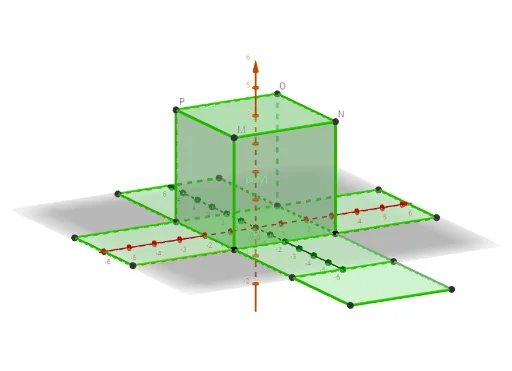
This example demonstrates the net of a cube and its folding process. Core math concepts include polygons, solid geometry, and spatial visualization. Construction highlights involve commands like Polygon, Prism, and Net, with objects such as A, B, poly1, and faceABFE. Suitable for high school solid geometry teaching or beginners in geometric modeling.
GeoGebra Commands & Parameters
Polygon(A, B, 4) → poly1, f, g, h, i, C, DPrism(poly1, 0) → a, E, edgeAE, edgeBF, edgeCG, edgeDH, edgeEF, edgeFG, edgeGH, edgeEH, F, G, H, faceABFE, faceBCGF, faceCDHG, faceADHE, faceEFGHPrism(faceEFGH, c) → d, M, edgeEM, edgeFN, edgeGO, edgeHP, edgeMN, edgeNO, edgeOP, edgeMP, N, O, P, faceEFNM, faceFGON, faceGHPO, faceEHPM, faceMNOPNet(d, b) → e, I, V, W, Z, A_1, B_1, faceIJKL, faceIJRQ, faceJKTS, faceKLVU, faceILWZ, J, face1, edgeIJ, edgeJK, edgeKL, edgeIL, edgeIQ, edgeQR, edgeJR, edgeJS, edgeST, K, edgeKT, edgeKU, edgeUV, edgeLV, edgeLW, edgeWZ, edgeIZ, edge2, edge3, edge1, L, Q, R, S, T, U
AI Drawing Prompt Reference
Draw a cube net and its folding process. Start with a square base, construct a cube from it, then extend another cube above the top face, creating a two-layer structure. Finally, unfold the upper cube so all its six faces lie flat on the plane, showing the connections between faces, including the base, side faces, and top face, along with all edges. The figure should include multiple polygonal faces, illustrating spatial visualization and the concept of a net in solid geometry.
The prompt above was compiled from the original drawing commands and is for reference only.