
Calculating Perimeter of Polygons
Loading the math board and drawing, please wait…
GeoGebra Commands & Parameters
Shuffle(Sequence[t, t, 4, 9, 0.5]) → allSides, {4.5, 6, 7, 8, 5, 8.5, 9, 7.5, 4, 5.5, 6.5}Element(allSides, Mod[countQuestion, Length[allSides]] + 1) → sideLenShuffle(Sequence[t, t, 1, 3.5, 0.5]) → allSidesRec, {2, 1, 3, 2.5, 1.5, 3.5}Element(allSidesRec, Mod[countQuestion, Length[allSidesRec]] + 1) → sideRecLenShuffle({{3, 4, 5}, {5, 12, 13}, {7, 24, 25}, {8, 15, 17}}) → allTriSides, {{5, 12, 13}, {3, 4, 5}, {8, 15, 17}, {7, 24, 25}}Element(allTriSides, Mod[countQuestion, Length[allTriSides]] + 1) → triSidesShuffle(Sequence[t, t, 1, 7, 1]) → allCases, {3, 1, 5, 7, 4, 2, 6}Element(allCases, Mod[countQuestion, Length[allCases]] + 1) → caseNumPolygon(F, GP, 8) → octa, e, P, Q, R, S, T, f_1, g_1, h_1, i_1, j_1, k_1, l_1, OPolygon(F, G, 5) → pent, m, n, p, q, r, H, I, JPolygon(F, G, 6) → hex, s, N, t, a, b, c, d, K, L, MPolygon(A, B, 3) → regTri, f, g, h, CPolygon(A, B, 4) → squa, i, j, k, l, D, ECircle(V, rag) → d_1Polygon(U, V, V1, U1) → rect, u_1, v_1, v1, u1Semicircle(U, V) → c_1Intersect(c_1, d_1) → VV, , ,Polygon(U, V, VV) → tri, vv, u, vPoint(allPoly(caseNum)) → ANIPPathParameter(ANIP) → pathParSequence(Random[0, 99] / 100, A, 1, 200) → allRandomSeeds, {0.43, 0.26, 0.38, 0.39, 0.32, 0.46, 0.81, 0.53, 0.25, 0.11, 0.64, 0.96, 0.8, 0.14, 0.48, 0.17, 0.93, 0.13, 0.09, 0.28, 0.74, 0.39, 0.84, 0.41, 0.62, 0.18, 0.74, 0.37, 0.01, 0.62, 0.24, 0.96, 0.56, 0.31, 0.64, 0.29, 0.52, 0.31, 0.59, 0.64, 0.62, 0.62, 0.77, 0.78, 0.06, 0.07, 0.73, 0.2, 0.49, 0.48, 0.92, 0, 0.74, 0.39, 0.25, 0.36, 0.63, 0.35, 0.99, 0.61, 0.02, 0.66, 0.95, 0.42, 0.26, 0.84, 0.92, 0.67, 0.33, 0.22, 0.81, 0.55, 0.61, 0.46, 0.54, 0.9, 0.82, 0.59, 0.15, 0.28, 0.4, 0.49, 0.31, 0.65, 0.16, 0.21, 0.88, 0.61, 0.49, 0.64, 0.29, 0.93, 0.98, 0.38, 0.93, 0.25, 0.47, 0.3, 0.86, 0.45, 0.01, 0.78, 0.99, 0.63, 0.15, 0.92, 0.34, 0.82, 0.47, 0.96, 0.07, 0.53, 0.86, 0.93, 0.29, 0.28, 0.36, 0.63, 0.26, 0.16, 0.08, 0.84, 0, 0.87, 0.36, 0.38, 0.59, 0.58, 0.45, 0.81, 0.18, 0.19, 0.78, 0.42, 0.65, 0.62, 0.99, 0.91, 0.36, 0.88, 0.37, 0.96, 0.51, 0.92, 0.09, 0.55, 0.2, 0.53, 0.1, 0.44, 0.79, 0.02, 0.07, 0.88, 0.03, 0.84, 0.47, 0.1, 0.96, 0.55, 0.4, 0.4, 0.72, 0.24, 0.95, 0.6, 0.44, 0.07, 0.1, 0.84, 0.7, 0.3, 0.48, 0.22, 0.62, 0.19, 0.55, 0.72, 0.54, 0.56, 0.99, 0.28, 0.09, 0.53, 0.55, 0.31, 0.04, 0.4, 0.08, 0.14, 0, 0.51, 0.7, 0.64, 0.68, 0.73, 0.64, 0.59, 0, 0.39}Take(allRandomSeeds, randIndex, randIndex + numRandoms - 1) → currentRandomSeedsTextfield(input1) → InputBox1Textfield(input2) → InputBox2If(pathPar < 1 / 3, PolyLine[{U, ANIP}], 1 / 3 ≤ pathPar < 2 / 3, PolyLine[{U, V, ANIP}], PolyLine[{U, V, VV, ANIP}]) → fullPath1If(pathPar < 1 / 3, PolyLine[{A, ANIP}], 1 / 3 ≤ pathPar < 2 / 3, PolyLine[{A, B, ANIP}], PolyLine[{A, B, C, ANIP}]) → fullPath2If(pathPar < 1 / 4, PolyLine[{A, ANIP}], 1 / 4 ≤ pathPar < 2 / 4, PolyLine[{A, B, ANIP}], 2 / 4 ≤ pathPar < 3 / 4, PolyLine[{A, B, D, ANIP}], PolyLine[{A, B, D, E, ANIP}]) → fullPath3If(pathPar < 0.25, PolyLine[{U, ANIP}], 0.25 ≤ pathPar < 0.5, PolyLine[{U, V, ANIP}], 0.5 ≤ pathPar < 0.75, PolyLine[{U, V, V1, ANIP}], PolyLine[{U, V, V1, U1, ANIP}]) → fullPath4If(pathPar < 1 / 5, PolyLine[{F, ANIP}], 1 / 5 ≤ pathPar < 2 / 5, PolyLine[{F, G, ANIP}], 2 / 5 ≤ pathPar < 3 / 5, PolyLine[{F, G, H, ANIP}], 3 / 5 ≤ pathPar < 4 / 5, PolyLine[{F, G, H, I, ANIP}], PolyLine[{F, G, H, I, J, ANIP}]) → fullPath5If(pathPar < 1 / 6, PolyLine[{F, ANIP}], PolyLine[{F, G, K, L, M, N, ANIP}], 1 / 6 ≤ pathPar < 2 / 6, PolyLine[{F, G, ANIP}], 2 / 6 ≤ pathPar < 3 / 6, PolyLine[{F, G, K, ANIP}], 3 / 6 ≤ pathPar < 4 / 6, PolyLine[{F, G, K, L, ANIP}], 4 / 6 ≤ pathPar < 5 / 6, PolyLine[{F, G, K, L, M, ANIP}]) → fullPath6If(pathPar < 1 / 8, PolyLine[{F, ANIP}], 5 / 8 ≤ pathPar < 6 / 8, PolyLine[{F, GP, O, P, Q, R, ANIP}], 6 / 8 ≤ pathPar < 7 / 8, PolyLine[{F, GP, O, P, Q, R, S, ANIP}], PolyLine[{F, GP, O, P, Q, R, S, T, ANIP}], 1 / 8 ≤ pathPar < 2 / 8, PolyLine[{F, GP, ANIP}], 2 / 8 ≤ pathPar < 3 / 8, PolyLine[{F, GP, O, ANIP}], 3 / 8 ≤ pathPar < 4 / 8, PolyLine[{F, GP, O, P, ANIP}], 4 / 8 ≤ pathPar < 5 / 8, PolyLine[{F, GP, O, P, Q, ANIP}]) → fullPath7Zip(A / B, A, allPaths, B, allFacts) → allStudPathsCorner(5) → layoutAppSizeSegment(PMoveA, PMoveB) → displaySegmentexpandSegment(PMoveA, PMoveB, (pulsing * 7), Corner[1], Corner[3], Corner[5]) → pulsingObjectonboardingTextOffset(Corner[onboardingText, 1], Corner[onboardingText, 3], onboardingCase, Corner[1], Corner[3], Corner[5]) → OnboardingTextOffsetSegment(U, V) → m_1PolyLine({U, V, VV, U}) → fakePath1PolyLine({A, B, C, A}) → fakePath2PolyLine({A, B, D, E, A}) → fakePath3PolyLine({U, V, V1, U1, U}) → fakePath4PolyLine({F, G, H, I, J, F}) → fakePath5PolyLine({F, G, K, L, M, N, F}) → fakePath6PolyLine({F, GP, O, P, Q, R, S, T, F}) → fakePath7
AI Drawing Prompt Reference
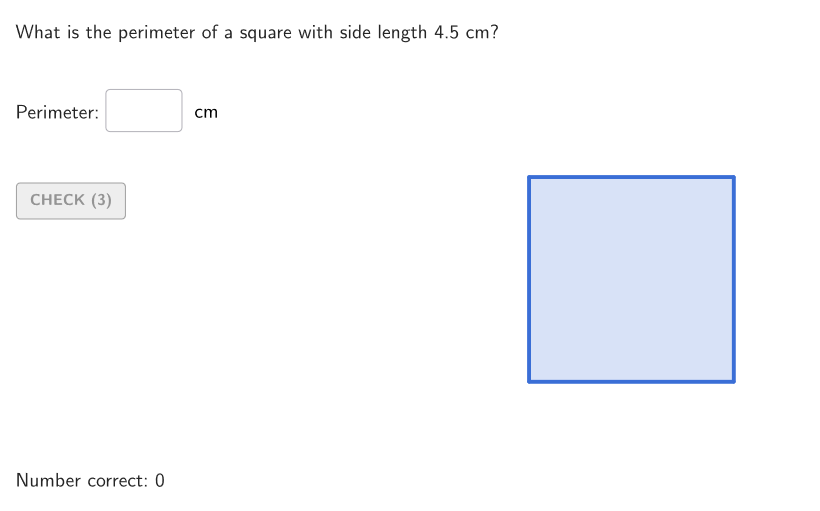
Draw a composite figure containing various polygons and circles, including an equilateral triangle, square, regular pentagon, regular hexagon, regular octagon, rectangle, semicircle, and a circle. All shapes share some vertices and are arranged around a central point. Inside each polygon, draw a path from a starting vertex along the edges to an ending vertex, with the path length controlled by a slider. Place input boxes next to the shapes for entering perimeter answers, and show animated paths. The overall layout is clear and suitable for educational demonstration.
The prompt above was compiled from the original drawing commands and is for reference only.