
Buildings Logic Game
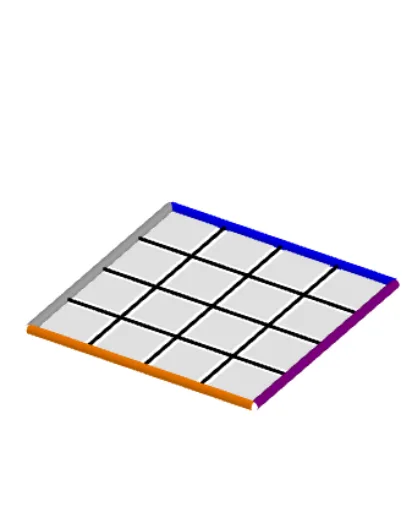
Loading the math board and drawing, please wait…
This example demonstrates geometric constructions and transformations, revealing properties of parallelograms, reflections, etc. Core concepts include vectors, polygons, reflections, and geometric transformations. It uses commands like Intersect, Polygon, Midpoint, Segment, Vector, Translate, Prism, Line in GeoGebra. Suitable for high school mathematics teaching, focusing on geometric construction and logical reasoning.
GeoGebra Commands & Parameters
Intersect(xAxis, yAxis) → APolygon(A, B, 4) → poly_{frame}, f_2, g_2, h_2, i_2, C, DMidpoint(A, B) → EMidpoint(B, C) → FMidpoint(C, D) → GMidpoint(D, A) → HMidpoint(A, E) → IMidpoint(E, B) → JMidpoint(B, F) → KMidpoint(F, C) → LMidpoint(C, G) → MMidpoint(G, D) → NMidpoint(D, H) → OMidpoint(H, A) → PSegment(N, I) → j_2Segment(G, E) → k_2Segment(M, J) → l_1Segment(O, L) → m_1Segment(H, F) → n_1Segment(P, K) → p_1Polygon(Q, R, 4) → poly1, q, r, s, t, S, TVector(D, N) → uVector(D, O) → vTranslate(poly1, u) → poly2Translate(poly2, u) → poly3Translate(poly3, u) → poly4Translate(poly1, v) → poly5Translate(poly5, v) → poly9Translate(poly9, v) → poly13Translate(poly2, v) → poly6Translate(poly6, v) → poly10Translate(poly10, v) → poly14Translate(poly3, v) → poly7Translate(poly7, v) → poly11Translate(poly11, v) → poly15Translate(poly4, v) → poly8Translate(poly8, v) → poly12Translate(poly12, v) → poly16Prism(poly1, (0.6 * a_1)) → a, U, edgeQU, edgeRV, edgeSW, edgeTZ, edgeUV, edgeVW, edgeWZ, edgeUZ, V, W, Z, face1_a, face3_a, face4_a, face2_a, face5_aSegment(G, E) → e_1Segment(N, I) → f_1Segment(M, J) → g_1Segment(O, L) → h_1Segment(H, F) → i_1Segment(P, K) → j_1Prism(poly2, (0.6 * a_2)) → b, A_1, edge1, edge2, edge3, edge4, edge5, edge7, edge8, edge6, B_1, C_1, D_1, face1_b, face3_b, face4_b, face2_b, face5_bPrism(poly3, (0.6 * a_3)) → c, E_1, edge9, edge10, edge11, edge12, edge13, edge15, edge16, edge14, F_1, G_1, H_1, face1_c, face3_c, face4_c, face2_c, face5_cPrism(poly4, (0.6 * a_4)) → d, K_1, edge17, edge18, edge19, edge20, edge21, edge23, edge24, edge22, L_1, M_1, N_{17}, face1_d, face2_d, face4_d, face3_d, face5_dTranslate(N_5, u) → N_6Translate(N_6, u) → N_7Translate(N_7, u) → N_8Translate(N_1, v') → N_2Translate(N_2, v') → N_3Translate(N_3, v') → N_4Translate(N_9, v) → N_{10}Translate(N_{10}, v) → N_{11}Translate(N_{16}, u) → N_{15}Translate(N_{15}, u) → N_{14}Translate(N_{14}, u) → N_{13}Translate(N_{11}, v) → N_{12}Line(O_1, h_1) → k_1Prism(poly5, (0.6 * a_5)) → e, P_1, edge25, edge26, edge27, edge28, edge29, edge31, edge32, edge30, Q_1, R_1, S_1, face4_e, face2_e, face3_e, face1_e, face5_ePrism(poly6, (0.6 * a_6)) → f, T_1, edge33, edge34, edge35, edge36, edge37, edge39, edge40, edge38, U_1, V_1, W_1, face4_f, face2_f, face3_f, face1_f, face5_fPrism(poly7, (0.6 * a_7)) → g, Z_1, edge41, edge42, edge43, edge44, edge45, edge47, edge48, edge46, A_2, B_2, C_2, face1_g, face3_g, face4_g, face2_g, face5_gPrism(poly9, (0.6 * a_9)) → i, D_2, edge49, edge50, edge51, edge52, edge53, edge55, edge56, edge54, E_2, F_2, G_2, face1_i, face3_i, face4_i, face2_i, face5_iPrism(poly8, (0.6 * a_8)) → h, H_2, edge57, edge58, edge59, edge60, edge61, edge63, edge64, edge62, I_2, J_2, K_2, face1_h, face3_h, face4_h, face2_h, face5_hPrism(poly10, (0.6 * a_{10})) → j, L_2, edge65, edge66, edge67, edge68, edge69, edge71, edge72, edge70, M_2, O_2, P_2, face1_j, face3, face4, face2_j, face5_jPrism(poly11, (0.6 * a_{11})) → k, Q_2, edge73, edge74, edge75, edge76, edge77, edge79, edge80, edge78, R_2, S_2, T_2, face4_k, face2_k, face3_k, face1_k, face5_kPrism(poly12, (0.6 * a_{12})) → l, U_2, edge81, edge82, edge83, edge84, edge85, edge87, edge88, edge86, V_2, W_2, Z_2, face1, face1_l, face2_l, face2, face5_lPrism(poly13, (0.6 * a_{13})) → m, A_3, edge89, edge90, edge91, edge92, edge93, edge95, edge96, edge94, B_3, C_3, D_3, face2_m, face3_m, face4_m, face1_m, face5_mPrism(poly14, (0.6 * a_{14})) → n, E_3, edge97, edge98, edge99, edge100, edge101, edge103, edge104, edge102, F_3, G_3, H_3, face1_n, face3_n, face4_n, face2_n, face5_nPrism(poly15, (0.6 * a_{15})) → o, I_3, edge105, edge106, edge107, edge108, edge109, edge111, edge112, edge110, J_3, K_3, L_3, face4_o, face2_o, face3_o, face1_o, face5_oPrism(poly16, (0.6 * a_{16})) → p, M_3, edge113, edge114, edge115, edge116, edge117, edge119, edge120, edge118, O_3, P_3, Q_3, face1_p, face3_p, face4_p, face2_p, face5_p
AI Drawing Prompt Reference
Draw a parallelogram frame with four points A, B, C, and D, then construct four midpoints E, F, G, and H inside the frame. Connect these midpoints to form a new parallelogram frame. Use vector and translation commands to shift the original and new frames to the right three times and up three times, creating a series of parallelograms. Finally, use the prism command to build a series of prisms based on each frame, extending 0.6 times the edge length upwards.
The prompt above was compiled from the original drawing commands and is for reference only.