
Buffon's Needle Problem Simulation
Loading the math board and drawing, please wait…
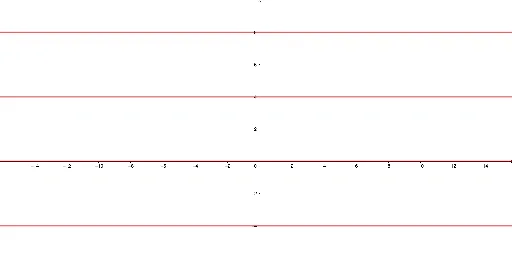
This example simulates Buffon's Needle Problem, a classic probability experiment. It involves geometric probability and randomness. By rotating the needle and calculating the probability of it crossing a line, one can estimate the value of π. The construction uses Circle, RandomUniform, Rotate, Angle, and Segment commands in GeoGebra. Suitable for high school mathematics education and probability statistics learning.
GeoGebra Commands & Parameters
Circle(A, 1) → cRandomUniform(a - 1, a + 1) → xvalueRotate(B, 180°, A) → B'Angle(B, A, B') → αSegment(B, B') → i
AI Drawing Prompt Reference
Draw a circle with center A and radius 1. Choose a random position parameter uniformly from the interval from (a−1) to (a+1) to determine the point B on the circle. Rotate B by 180° around A to obtain the point B′. Construct the segment connecting B and B′, labeled i, and measure the angle between BA and B′A, labeled α. Display the circle, the rotated points B and B′, the connecting segment, and the measured angle to represent one geometric setup used in the simulation.
The prompt above was compiled from the original drawing commands and is for reference only.