
Area and Perimeter of Polygons by Wahid Yunianto
Loading the math board and drawing, please wait…
This example demonstrates how to calculate the area and perimeter of polygons using geometric construction. It involves concepts of polygons, linear functions, and basic geometry. Using the Polygon command in GeoGebra, users can draw polygons and calculate their perimeters by summing the lengths of their sides, and use geometric formulas to find the area. Suitable for middle and high school students learning about polygons.
GeoGebra Commands & Parameters
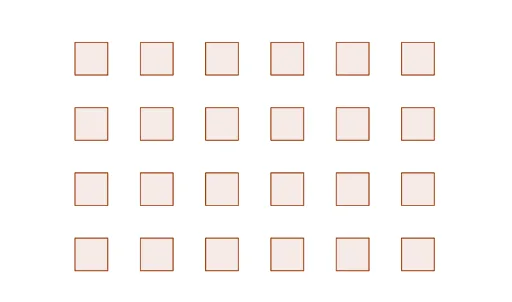
Polygon(A, B, 4) → poly1, a, b, c, d, C, DPolygon(A_1, B_1, 4) → poly1_1, a_1, b_1, c_1, d_1, C_1, D_1Polygon(A_2, B_2, 4) → poly1_2, a_2, b_2, c_2, d_2, C_2, D_2Polygon(A_3, B_3, 4) → poly1_3, a_3, b_3, c_3, d_3, C_3, D_3Polygon(A_4, B_4, 4) → poly1_4, a_4, b_4, c_4, d_4, C_4, D_4Polygon(A_5, B_5, 4) → poly1_5, a_5, b_5, c_5, d_5, C_5, D_5Polygon(A_6, B_6, 4) → poly1_6, a_6, b_6, c_6, d_6, C_6, D_6Polygon(A_7, B_7, 4) → poly1_7, a_7, b_7, c_7, d_7, C_7, D_7Polygon(A_8, B_8, 4) → poly1_8, a_8, b_8, c_8, d_8, C_8, D_8Polygon(A_9, B_9, 4) → poly1_9, a_9, b_9, c_9, d_9, C_9, D_9Polygon(A_{10}, B_{10}, 4) → poly1_{10}, a_{10}, b_{10}, c_{10}, d_{10}, C_{10}, D_{10}Polygon(A_{11}, B_{11}, 4) → poly1_{11}, a_{11}, b_{11}, c_{11}, d_{11}, C_{11}, D_{11}Polygon(A_{12}, B_{12}, 4) → poly1_{12}, a_{12}, b_{12}, c_{12}, d_{12}, C_{12}, D_{12}Polygon(A_{13}, B_{13}, 4) → poly1_{13}, a_{13}, b_{13}, c_{13}, d_{13}, C_{13}, D_{13}Polygon(A_{14}, B_{14}, 4) → poly1_{14}, a_{14}, b_{14}, c_{14}, d_{14}, C_{14}, D_{14}Polygon(A_{15}, B_{15}, 4) → poly1_{15}, a_{15}, b_{15}, c_{15}, d_{15}, C_{15}, D_{15}Polygon(A_{16}, B_{16}, 4) → poly1_{16}, a_{16}, b_{16}, c_{16}, d_{16}, C_{16}, D_{16}Polygon(A_{17}, B_{17}, 4) → poly1_{17}, a_{17}, b_{17}, c_{17}, d_{17}, C_{17}, D_{17}Polygon(A_{18}, B_{18}, 4) → poly1_{18}, a_{18}, b_{18}, c_{18}, d_{18}, C_{18}, D_{18}Polygon(A_{19}, B_{19}, 4) → poly1_{19}, a_{19}, b_{19}, c_{19}, d_{19}, C_{19}, D_{19}Polygon(A_{20}, B_{20}, 4) → poly1_{20}, a_{20}, b_{20}, c_{20}, d_{20}, C_{20}, D_{20}Polygon(A_{21}, B_{21}, 4) → poly1_{21}, a_{21}, b_{21}, c_{21}, d_{21}, C_{21}, D_{21}Polygon(A_{22}, B_{22}, 4) → poly1_{22}, a_{22}, b_{22}, c_{22}, d_{22}, C_{22}, D_{22}Polygon(A_{23}, B_{23}, 4) → poly1_{23}, a_{23}, b_{23}, c_{23}, d_{23}, C_{23}, D_{23}
AI Drawing Prompt Reference
Draw a polygon by connecting points A and B as two vertices, then sequentially connect points C, D, E, F, G, H, I, J, K, L, M, N, O, P, Q, R, S, T, U, V, W, X, Y, Z, and finally return to point A to form a closed shape. Calculate and display the perimeter and area of the polygon.
The prompt above was compiled from the original drawing commands and is for reference only.