
变量部件视角下的几何相似性
几何画板及绘图内容加载中,请稍等……
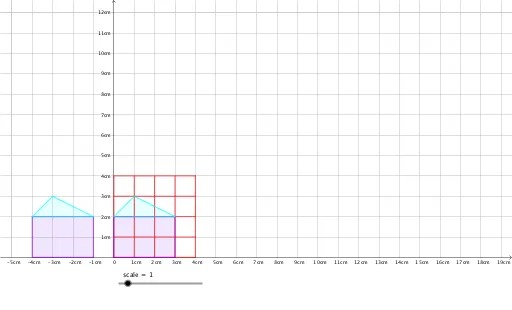
①本范例演示了从变量部件视角理解几何相似性的概念;②涉及的核心数学概念包括相似变换、线性回归、概率统计(正态分布);③作图要点——使用了Point, Polygon, Ray, Circle, Intersect, Line, Segment等GeoGebra命令和对象;④适合高中及以上数学学习者,用于理解几何变换与数据分析的结合。
GeoGebra 命令及参数
Point(xAxis) → APoint(xAxis) → DPolygon(A, B, C, D) → q1, a, b, c, dPolygon(B, E, C) → t1, c_1, b_1, ePoint(yAxis) → FPoint(xAxis) → GRay(F, G) → gPoint(yAxis) → HRay(F, H) → hCircle(F, f) → kIntersect(g, xAxis) → IIntersect(g, xAxis) → JIntersect(g, xAxis) → KIntersect(k, g) → L,Intersect(k, h, 1) → MCircle(L, f) → pCircle(M, f) → qIntersect(q, h, 2) → NIntersect(p, g, 2) → OCircle(N, f) → rCircle(O, f) → sIntersect(r, h, 2) → PIntersect(s, g, 2) → QCircle(P, f) → tCircle(Q, f) → d_1Intersect(t, h, 2) → RIntersect(d_1, g, 2) → SLine(R, g) → iLine(P, i) → jLine(N, j) → lLine(M, l) → mLine(S, h) → nLine(Q, h) → f_1Line(O, h) → g_1Line(L, h) → h_1Intersect(i, h_1) → TIntersect(i, g_1) → UIntersect(i, f_1) → VIntersect(i, n) → WIntersect(j, n) → ZIntersect(l, n) → A_1Intersect(m, n) → B_1Segment(F, S) → i_1Segment(M, B_1) → j_1Segment(N, A_1) → k_1Segment(P, Z) → l_1Segment(R, W) → m_1Segment(F, R) → n_1Segment(L, T) → p_1Segment(O, U) → q_1Segment(Q, V) → r_1Segment(S, W) → s_1Intersect(k_1, r_1) → C_1Polygon(F, N, C_1, Q) → q2, f_2, n_2, c_2, q_2Intersect(l_1, p_1) → D_1Polygon(N, D_1, C_1) → t2, c_3, n_3, d_2