
变量部分视角下的几何相似性
几何画板及绘图内容加载中,请稍等……
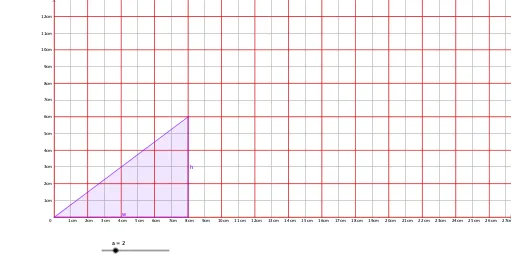
本范例通过变量部分视角展示了几何相似性。核心数学概念包括相似三角形和多边形的性质。通过使用GeoGebra命令如Intersect、Line、Circle等,可以动态地探索相似图形的变化规律。适合初中及以上学生或教师使用。
GeoGebra 命令及参数
Intersect(xAxis, yAxis) → ALine(A, xAxis) → fLine(A, yAxis) → gCircle(A, a) → cIntersect(c, g, 2) → CIntersect(c, f, 2) → DLine(D, g) → hLine(C, f) → iCircle(D, a) → dCircle(C, a) → eIntersect(e, g, 2) → EIntersect(d, f, 2) → FCircle(F, a) → kCircle(E, a) → pIntersect(p, g, 2) → GIntersect(k, f, 2) → HCircle(H, a) → qCircle(G, a) → rIntersect(r, g, 2) → IIntersect(q, f, 2) → JCircle(J, a) → sCircle(I, a) → tIntersect(s, f, 2) → KIntersect(t, g, 2) → LCircle(K, a) → c_1Circle(L, a) → d_1Intersect(c_1, f, 2) → MIntersect(d_1, g, 2) → NCircle(M, a) → e_1Circle(N, a) → f_1Intersect(e_1, f, 2) → OIntersect(f_1, g, 2) → PCircle(O, a) → g_1Circle(P, a) → h_1Intersect(g_1, f, 2) → QIntersect(h_1, g, 2) → RCircle(Q, a) → k_1Circle(R, a) → p_1Intersect(p_1, g, 2) → SIntersect(k_1, f, 2) → TCircle(T, a) → q_1Circle(S, a) → r_1Intersect(r_1, g, 2) → UIntersect(q_1, f, 2) → VCircle(V, a) → s_1Circle(U, a) → t_1Intersect(s_1, f, 2) → WCircle(W, a) → c_2Intersect(t_1, g, 2) → ZCircle(Z, a) → d_2Intersect(c_2, f, 2) → A_1Intersect(d_2, g, 2) → B_1Circle(A_1, a) → e_2Circle(B_1, a) → f_2Intersect(e_2, f, 2) → C_1Intersect(f_2, g, 2) → D_1Circle(C_1, a) → g_2Circle(D_1, a) → h_2Intersect(g_2, f, 2) → E_1Intersect(h_2, g, 2) → F_1Circle(E_1, a) → k_2Circle(F_1, a) → p_2Intersect(k_2, f, 2) → G_1Intersect(p_2, g, 2) → H_1Circle(G_1, a) → q_2Circle(H_1, a) → r_2Intersect(q_2, f, 2) → I_1Intersect(r_2, g, 2) → J_1Circle(I_1, a) → s_2Circle(J_1, a) → t_2Intersect(s_2, f, 2) → K_1Intersect(t_2, g, 2) → L_1Circle(K_1, a) → c_3Circle(L_1, a) → d_3Intersect(c_3, f, 2) → M_1Intersect(d_3, g, 2) → N_1Circle(M_1, a) → e_3Circle(N_1, a) → f_3Intersect(e_3, f, 2) → O_1Intersect(f_3, g, 2) → P_1Circle(O_1, a) → g_3Circle(P_1, a) → h_3Intersect(g_3, f, 2) → Q_1Intersect(h_3, g, 2) → R_1Circle(Q_1, a) → k_3Circle(R_1, a) → p_3Intersect(k_3, f, 2) → S_1Intersect(p_3, g, 2) → T_1Circle(S_1, a) → q_3Circle(T_1, a) → r_3Intersect(q_3, f, 2) → U_1Intersect(r_3, g, 2) → V_1Circle(U_1, a) → s_3Circle(V_1, a) → t_3Intersect(s_3, f, 2) → W_1Intersect(t_3, g, 2) → Z_1Circle(W_1, a) → c_4Circle(Z_1, a) → d_4Intersect(c_4, f, 2) → A_2Intersect(d_4, g, 2) → B_2Circle(A_2, a) → e_4Circle(B_2, a) → f_4Intersect(e_4, f, 2) → C_2Intersect(f_4, g, 2) → D_2OrthogonalLine(E, g) → jOrthogonalLine(G, g) → lOrthogonalLine(I, g) → mOrthogonalLine(L, g) → nOrthogonalLine(N, g) → bOrthogonalLine(P, g) → i_1OrthogonalLine(R, g) → j_1OrthogonalLine(S, g) → l_1OrthogonalLine(U, g) → m_1OrthogonalLine(Z, g) → n_1OrthogonalLine(B_1, g) → a_1OrthogonalLine(D_1, g) → b_1OrthogonalLine(F_1, g) → i_2OrthogonalLine(H_1, g) → j_2OrthogonalLine(J_1, g) → l_2OrthogonalLine(L_1, g) → m_2OrthogonalLine(N_1, g) → n_2OrthogonalLine(P_1, g) → a_2OrthogonalLine(R_1, g) → b_2OrthogonalLine(T_1, g) → i_3OrthogonalLine(V_1, g) → j_3OrthogonalLine(Z_1, g) → l_3OrthogonalLine(B_2, g) → m_3OrthogonalLine(D_2, g) → n_3OrthogonalLine(F, f) → a_3OrthogonalLine(H, f) → b_3OrthogonalLine(J, f) → g_4OrthogonalLine(K, f) → h_4OrthogonalLine(M, f) → i_4OrthogonalLine(O, f) → j_4OrthogonalLine(Q, f) → k_4OrthogonalLine(T, f) → l_4OrthogonalLine(V, f) → m_4OrthogonalLine(W, f) → n_4OrthogonalLine(A_1, f) → p_4OrthogonalLine(C_1, f) → q_4OrthogonalLine(E_1, f) → r_4OrthogonalLine(G_1, f) → s_4OrthogonalLine(I_1, f) → t_4OrthogonalLine(K_1, f) → a_4OrthogonalLine(M_1, f) → b_4OrthogonalLine(O_1, f) → f_5OrthogonalLine(Q_1, f) → g_5OrthogonalLine(S_1, f) → h_5OrthogonalLine(U_1, f) → i_5OrthogonalLine(W_1, f) → j_5OrthogonalLine(A_2, f) → k_5OrthogonalLine(C_2, f) → l_5Intersect(h, n_3) → E_2Intersect(n_3, a_3) → F_2Intersect(n_3, b_3) → G_2Intersect(n_3, g_4) → H_2Intersect(n_3, h_4) → I_2Intersect(n_3, i_4) → J_2Intersect(n_3, j_4) → K_2Intersect(n_3, k_4) → L_2Intersect(n_3, l_4) → M_2Intersect(n_3, m_4) → N_2Intersect(n_3, n_4) → O_2Intersect(n_3, p_4) → P_2Intersect(n_3, q_4) → Q_2Intersect(n_3, r_4) → R_2Intersect(n_3, s_4) → S_2Intersect(n_3, t_4) → T_2Intersect(n_3, a_4) → U_2Intersect(b_4, n_3) → V_2Intersect(n_3, f_5) → W_2Intersect(n_3, g_5) → Z_2Intersect(n_3, h_5) → A_3Intersect(n_3, i_5) → B_3Intersect(n_3, j_5) → C_3Intersect(n_3, k_5) → D_3Intersect(n_3, l_5) → E_3Intersect(m_3, l_5) → F_3Intersect(l_3, l_5) → G_3Intersect(j_3, l_5) → H_3Intersect(i_3, l_5) → I_3Intersect(b_2, l_5) → J_3Intersect(a_2, l_5) → K_3Intersect(n_2, l_5) → L_3Intersect(m_2, l_5) → M_3Intersect(l_2, l_5) → N_3Intersect(j_2, l_5) → O_3Intersect(i_2, l_5) → P_3Intersect(b_1, l_5) → Q_3Intersect(a_1, l_5) → R_3Intersect(n_1, l_5) → S_3Intersect(m_1, l_5) → T_3Intersect(l_1, l_5) → U_3Intersect(j_1, l_5) → V_3Intersect(i_1, l_5) → W_3Intersect(b, l_5) → Z_3Intersect(n, l_5) → A_4Intersect(m, l_5) → B_4Intersect(l, l_5) → C_4Intersect(j, l_5) → D_4Intersect(i, l_5) → E_4Segment(A, D_2) → m_5Segment(D, E_2) → n_5Segment(F, F_2) → p_5Segment(H, G_2) → q_5Segment(J, H_2) → r_5Segment(K, I_2) → s_5Segment(M, J_2) → t_5Segment(O, K_2) → a_5Segment(Q, L_2) → b_5Segment(T, M_2) → c_5Segment(V, N_2) → d_5Segment(W, O_2) → e_5Segment(A_1, P_2) → f_6Segment(C_1, Q_2) → g_6Segment(E_1, R_2) → h_6Segment(G_1, S_2) → i_6Segment(I_1, T_2) → j_6Segment(K_1, U_2) → k_6Segment(M_1, V_2) → l_6Segment(O_1, W_2) → m_6Segment(Q_1, Z_2) → n_6Segment(S_1, A_3) → p_6Segment(U_1, B_3) → q_6Segment(W_1, C_3) → r_6Segment(A_2, D_3) → s_6Segment(C_2, E_3) → t_6Segment(D_2, E_3) → a_6Segment(B_2, F_3) → b_6Segment(Z_1, G_3) → c_6Segment(V_1, H_3) → d_6Segment(T_1, I_3) → e_6Segment(R_1, J_3) → f_7Segment(P_1, K_3) → g_7Segment(N_1, L_3) → h_7Segment(L_1, M_3) → i_7Segment(J_1, N_3) → j_7Segment(H_1, O_3) → k_7Segment(F_1, P_3) → l_7Segment(D_1, Q_3) → m_7Segment(B_1, R_3) → n_7Segment(Z, S_3) → p_7Segment(U, T_3) → q_7Segment(S, U_3) → r_7Segment(R, V_3) → s_7Segment(P, W_3) → t_7Segment(N, Z_3) → a_7Segment(L, A_4) → b_7Segment(I, B_4) → c_7Segment(G, C_4) → d_7Segment(E, D_4) → e_7Segment(C, E_4) → f_8Segment(A, C_2) → g_8Intersect(r_5, d_7) → F_4Polygon(A, J, F_4) → t1, f_9, a_8, j_8
AI 绘图提示语参考
绘制一个以点A为中心的圆c,然后通过点C和D分别与y轴和x轴的交点绘制两条线h和i,接着以点D和C为圆心,半径为a分别绘制圆d和e,再通过点E和F与y轴和x轴的交点绘制两条线j和k,以此类推,最终形成一系列相似的三角形和圆,注意保持每个圆的半径相同。
以上提示语为根据原始绘图命令整理而来,仅供参考。