
Volumes and Surface Areas of Similar 3D Figures by Alicia Chilton
Loading the math board and drawing, please wait…
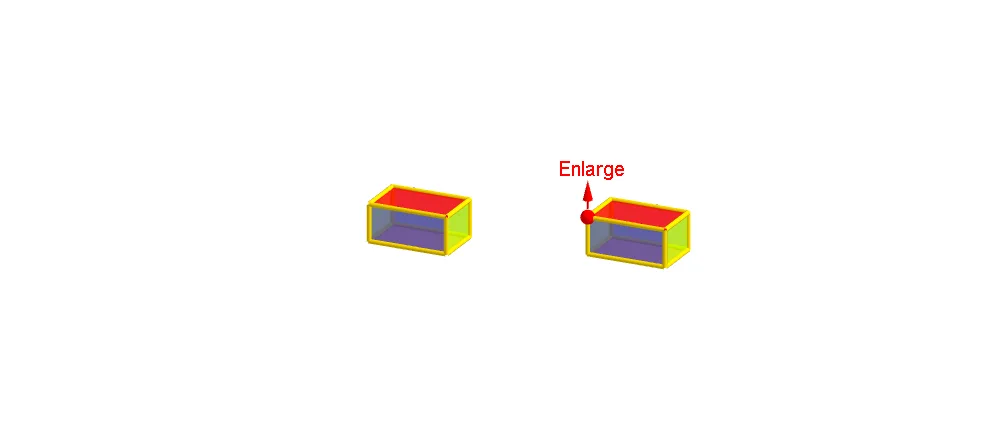
This example demonstrates the relationships between side lengths, surface areas, and volumes of similar three-dimensional figures, such as prisms. Key math concepts include similarity ratios, proportional relationships, and the formulas for calculating volume and surface area. It is constructed using GeoGebra commands like Polygon, Prism, Point, Segment, Rotate, Intersect, and Vector, with objects like A, l, w, h, B, C, D, E, poly1, a, b, c, d, e, F, G, H, faceABFE, faceBCGF, faceCDHG, faceADHE, faceEFGH, edgeAE, edgeBF, edgeCG, edgeDH, edgeEF, edgeFG, edgeGH, edgeEH, A', E', k, B', C', D', poly2, a', b', c'. Suitable for high school students learning solid geometry to understand the mathematical properties of similar figures and apply them to practical calculations.
GeoGebra Commands & Parameters
Polygon(A, B, C, D) → poly1, a, b, c, dPrism(poly1, E) → e, F, edgeBF, edgeCG, edgeDH, edgeEF, edgeFG, edgeGH, edgeEH, G, H, faceABFE, faceBCGF, faceCDHG, faceADHE, faceEFGH, edgeAEPoint(Segment[A' + (0, 0, h), A' + (0, 0, (2 * h))]) → E'Polygon(A', B', C', D') → poly2, a', b', c', d'Prism(poly2, E') → f, F', edgeB'I, edgeC'J, edgeD'K, edgeE'I, edgeIJ, edgeJK, edgeE'K, G', H', faceA'B'IE', faceB'C'JI, faceC'D'KJ, faceA'D'KE', faceE'IJK, edgeA'E'Segment(I, J) → gPoint(g) → KRotate(faceABFE, ((t * 90))°, a) → faceABFE'Rotate(faceBCGF, ((t * 90))°, b) → faceBCGF'Rotate(faceCDHG, ((t * 90))°, c) → faceCDHG'Rotate(faceADHE, ((t * 90))°, d) → faceADHE'Rotate(E, ((t * 90))°, a) → E'_1Rotate(F, ((t * 90))°, a) → F'_1Rotate(Rotate[faceEFGH, ((t * 90))°, a], ((t * 90))°, Segment[E'_1, F'_1]) → poly3Rotate(faceA'B'IE', ((t * 90))°, a') → faceA'B'IE''Rotate(faceB'C'JI, ((t * 90))°, b') → faceB'C'JI'Rotate(faceC'D'KJ, ((t * 90))°, c') → faceC'D'KJ'Rotate(faceA'D'KE', ((t * 90))°, d') → faceA'D'KE''Rotate(E', ((t * 90))°, a') → E''Rotate(F', ((t * 90))°, a') → F''Rotate(Rotate[faceE'IJK, ((t * 90))°, a'], ((t * 90))°, Segment[E'', F'']) → poly4Rotate(Segment[Midpoint[B', C'], Midpoint[F', G']], ((t * 90))°, b') → jRotate(Segment[Midpoint[B', F'], Midpoint[C', G']], ((t * 90))°, b') → iRotate(Segment[Midpoint[A', B'], Midpoint[E', F']], ((t * 90))°, a') → mRotate(Segment[Midpoint[A', E'], Midpoint[B', F']], ((t * 90))°, a') → nRotate(Segment[Midpoint[C', D'], Midpoint[G', H']], ((t * 90))°, c') → pRotate(Segment[Midpoint[C', G'], Midpoint[D', H']], ((t * 90))°, c') → qRotate(Segment[Midpoint[A', E'], Midpoint[D', H']], ((t * 90))°, d') → rRotate(Segment[Midpoint[A', D'], Midpoint[E', H']], ((t * 90))°, d') → sRotate(Rotate[Segment[Midpoint[E', F'], Midpoint[G', H']], ((t * 90))°, a'], ((t * 90))°, Segment[E'', F'']) → a_1Rotate(Rotate[Segment[Midpoint[E', H'], Midpoint[G', F']], ((t * 90))°, a'], ((t * 90))°, Segment[E'', F'']) → b_1Segment(Midpoint[A', B'], Midpoint[C', D']) → c_1Segment(Midpoint[A', D'], Midpoint[C', B']) → d_1Segment(Midpoint[F', C'], Midpoint[E', D']) → e_1Segment(Midpoint[F', A'], Midpoint[C', H']) → f_1Intersect(Line[E, E'], z = 0) → LSegment(L, E) → g_1Segment(L, H) → i_1Segment(L, F) → k_1Segment(L, G) → m_1Segment(H, H') → j_1Segment(G, G') → n_1Segment(E, E') → h_1Segment(F, F') → l_1Segment(L, A) → p_1Segment(A, A') → q_1Segment(L, B) → r_1Segment(B, B') → s_1Segment(L, C) → t_1Segment(C, C') → a_2Segment(L, D) → b_2Segment(D, D') → c_2Vector(E' + (0, 0, 0.3), E' + (0, 0, 1.3)) → uSegment(Midpoint[A', C'], Midpoint[E', G']) → d_2