
Vector Addition by RV'SMath
Loading the math board and drawing, please wait…
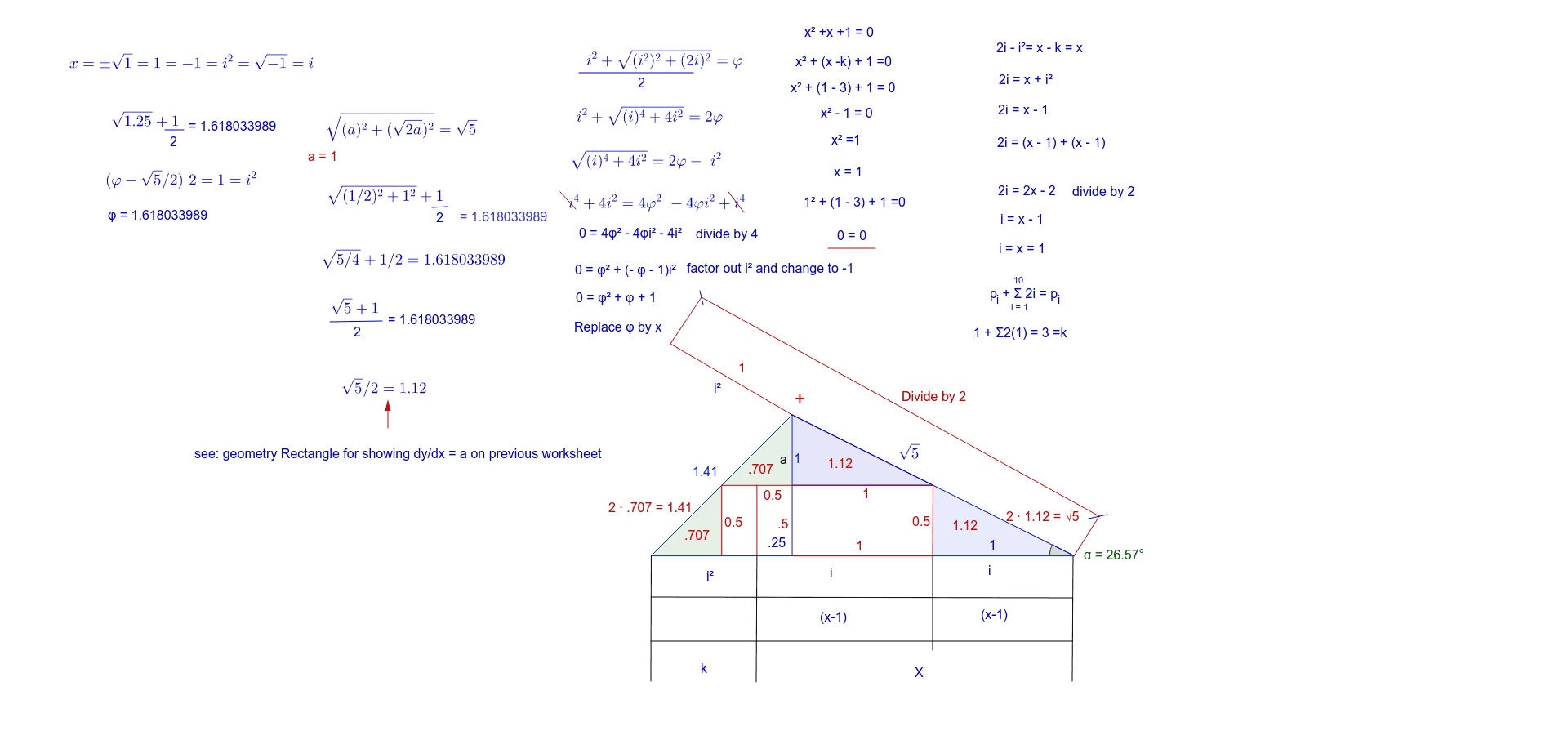
This example demonstrates the process of vector addition. Key mathematical concepts include the geometric representation and addition of vectors. Using GeoGebra commands such as Vector, Segment, and Polygon, the geometric meaning of vector addition is visually illustrated. Suitable for students at the middle school level and above to learn basic vector operations.
GeoGebra Commands & Parameters
Vector((1, 0), (1, b)) → cVector((0, 0), (1, b)) → dVector((1, b), ((3 * b), 0)) → eVector((0.5, 0), (0.5, b / 2)) → fPoint(e) → APoint(f) → BSegment(B, A) → gSegment(B, A) → iSegment(E, B) → jPoint(c) → GPoint(c) → FSegment(F, G) → kPoint(Circle[A, 0.5]) → DSegment(A, D) → hPoint(e) → HPoint(d) → ISegment(I, H) → lPoint(l) → JDistance(I, H) → distanceIHSegment(J, G) → mSegment(G, F) → nSegment(F, H) → pSegment(I, F) → qIntersect(i, k) → KPolygon(H, J, A) → poly1, a_1, h_1, j_1Polygon(A, K, F) → poly2, f_1, a_2, k_1Polygon(E, I, B) → poly3, b_1, e_1, i_1Polygon(K, B, F) → poly4, f_2, k_2, b_2Segment(K, A) → rSegment(K, B) → sPoint(Circle[F, 1]) → PSegment(F, P) → m_1Segment(Q, R) → n_1Angle(F, H, I) → αVector(Z, A_1) → uSegment(B_1, C_1) → r_1Segment(D_1, E_1) → s_1Point(l) → F_1Segment(F_1, G_1) → p_1Intersect(l, q) → H_1Segment(H_1, I_1) → q_1Intersect(l, r_1) → J_1Segment(J_1, K_1) → t_1Point(q_1) → L_1Point(p_1) → M_1Segment(L_1, M_1) → c_1Point(q_1) → N_1Point(p_1) → O_1Segment(N_1, O_1) → d_1Point(l) → P_1Segment(P_1, Q_1) → g_2Segment(R_1, S_1) → h_2Segment(T_1, U_1) → i_2Segment(V_1, W_1) → j_2Segment(Z_1, A_2) → l_2Segment(B_2, C_2) → g_1Point(m_1) → D_2Segment(D_2, E_2) → l_1Intersect(l, p) → F_2Segment(F_2, G_2) → m_2Segment(E_2, G_2) → n_2Segment(H_2, I_2) → p_2Segment(J_2, K_2) → q_2