
Transform Cube to Octahedron
Loading the math board and drawing, please wait…
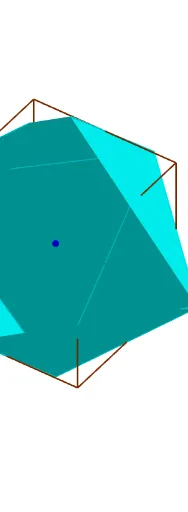
This example demonstrates how to transform a cube into an octahedron using geometric transformations. Key mathematical concepts include solid geometry. Commands used include Sphere, Segment, Intersect, Polygon, Midpoint, Line, Distance. Suitable for high school geometry lessons.
GeoGebra Commands & Parameters
Sphere(A, B) → aSegment(G, E) → bSegment(E, D) → cSegment(D, F) → dSegment(F, G) → eSegment(G, K) → fSegment(E, I) → gSegment(D, H) → hSegment(J, F) → iSegment(J, H) → jSegment(H, I) → kSegment(I, K) → lSegment(K, J) → mIntersect(c, a) → C, LIntersect(h, a) → M, NIntersect(g, a) → O, PIntersect(k, a) → Q, RIntersect(d, a) → S, TIntersect(i, a) → U, VIntersect(j, a) → W, ZIntersect(e, a) → A_1, B_1Intersect(m, a) → C_1, D_1Intersect(f, a) → E_1, F_1Intersect(b, a) → G_1, H_1Intersect(l, a) → I_1, J_1Polygon(T, V, A_1) → poly1, a_1, t, vPolygon(B_1, E_1, G_1) → poly2, g_1, b_1, e_1Polygon(O, H_1, C) → poly3, c_1, o, h_1Polygon(M, L, S) → poly4, s, m_1, l_1Polygon(Z, Q, N) → poly5, n, z_1, qPolygon(D_1, U, W) → poly6, w, d_1, uPolygon(C_1, J_1, F_1) → poly7, f_1, c_2, j_1Polygon(I_1, R, P) → poly8, p, i_1, rPolygon(J_1, I_1, P, O, H_1, G_1, E_1, F_1) → poly9, j_2, i_2, p_1, o_1, h_2, g_2, e_2, f_2Polygon(C, L, M, N, Q, R, P, O) → poly10, c_3, l_2, m_2, n_1, q_1, r_1, p_2, o_2Polygon(Z, N, M, S, T, V, U, W) → poly11, z_2, n_2, m_3, s_1, t_1, v_1, u_1, w_1Polygon(D_1, U, V, A_1, B_1, E_1, F_1, C_1) → poly12, d_2, u_2, v_2, a_2, b_2, e_3, f_3, c_4Polygon(B_1, A_1, T, S, L, C, H_1, G_1) → poly13, b_3, a_3, t_2, s_2, l_3, c_5, h_3, g_3Polygon(Q, Z, W, D_1, C_1, J_1, I_1, R) → poly14, q_2, z_3, w_2, d_3, c_6, j_3, i_3, r_2Midpoint(F, G) → K_1Midpoint(G, E) → L_1Midpoint(E, D) → M_1Midpoint(D, F) → N_1Midpoint(F, J) → O_1Midpoint(G, K) → P_1Midpoint(I, E) → Q_1Midpoint(D, H) → R_1Midpoint(H, J) → S_1Midpoint(J, K) → T_1Midpoint(K, I) → U_1Midpoint(I, H) → V_1Segment(Q_1, M_1) → k_2Segment(L_1, Q_1) → q_3Segment(L_1, M_1) → a_4Line(L_1, k_2) → k_1Segment(K_1, O_1) → k_3Line(N_1, k_3) → n_3Intersect(n_3, k_1) → W_1Line(M_1, W_1) → p_3Line(W_1, K_1) → r_3Segment(M_1, N_1) → s_3Line(R_1, s_3) → t_3Intersect(t_3, n_3) → Z_1Line(Z_1, O_1) → b_4Line(S_1, Z_1) → d_4Intersect(t_3, p_3) → A_2Line(Q_1, A_2) → e_4Line(A_2, V_1) → f_4Intersect(b_4, r_3) → B_2Intersect(e_4, k_1) → C_2Intersect(d_4, f_4) → D_2Segment(Z_1, B_2) → g_4Segment(B_2, C_2) → h_4Segment(C_2, A_2) → i_4Segment(A_2, Z_1) → j_4Segment(A_2, W_1) → k_4Segment(A_2, D_2) → l_4Segment(Z_1, W_1) → m_4Segment(Z_1, D_2) → n_4Segment(D_2, B_2) → p_4Segment(B_2, W_1) → q_4Segment(D_2, C_2) → r_4Segment(C_2, W_1) → s_4Sphere(A, B1) → o_3Intersect(m_4, o_3) → E_2, G_2Intersect(q_4, o_3) → H_2, I_2Intersect(s_4, o_3) → J_2, K_2Intersect(k_4, o_3) → L_2, M_2Intersect(n_4, o_3) → N_2, O_2Intersect(i_4, o_3) → P_2, Q_2Intersect(j_4, o_3) → R_2, S_2Intersect(p_4, g_4) → T_2Intersect(g_4, o_3) → U_2, V_2Intersect(h_4, o_3) → W_2, Z_2Intersect(p_4, o_3) → A_3, B_3Intersect(p_4, r_4) → C_3Intersect(r_4, o_3) → D_3, E_3Intersect(r_4, l_4) → F_3Intersect(l_4, o_3) → G_3, H_3Polygon(M_2, G_2, I_2, K_2) → poly15, m_5, g_5, i_5, k_5Polygon(S_2, N_2, U_2, E_2) → poly16, s_5, n_5, u_3, e_5Polygon(V_2, H_2, W_2, B_3) → poly17, v_3, h_5, w_3, b_5Polygon(E_3, Z_2, J_2, P_2) → poly18, e_6, z_4, j_5, p_5Polygon(G_3, Q_2, L_2, R_2) → poly19, g_6, q_5, l_5, r_5Polygon(H_3, D_3, A_3, O_2) → poly20, h_6, d_5, a_5, o_4Polygon(W_2, Z_2, J_2, K_2, I_2, H_2) → poly21, w_4, z_5, j_6, k_6, i_6, h_7Polygon(P_2, J_2, K_2, M_2, L_2, Q_2) → poly22, p_6, j_7, k_7, m_6, l_6, q_6Polygon(R_2, L_2, M_2, G_2, E_2, S_2) → poly23, r_6, l_7, m_7, g_7, e_7, s_6Polygon(U_2, E_2, G_2, I_2, H_2, V_2) → poly24, u_4, e_8, g_8, i_7, h_8, v_4Polygon(O_2, N_2, U_2, V_2, B_3, A_3) → poly25, o_5, n_6, u_5, v_5, b_6, a_6Polygon(D_3, A_3, B_3, W_2, Z_2, E_3) → poly26, d_6, a_7, b_7, w_5, z_6, e_9Polygon(H_3, D_3, E_3, P_2, Q_2, G_3) → poly27, h_9, d_7, e_{10}, p_7, q_7, g_9Polygon(O_2, H_3, G_3, R_2, S_2, N_2) → poly28, o_6, h_{10}, g_{10}, r_7, s_7, n_7Intersect(m_5, k_5) → F_2Intersect(m_7, g_8) → I_3Intersect(e_5, u_3) → J_3Distance(F_2, I_3) → distanceF2I3Distance(I_3, J_3) → distanceI3J3Intersect(v, s_1) → K_3Intersect(v, e) → L_3Intersect(l_1, d) → M_3Distance(M_3, K_3) → distanceM3K3Distance(K_3, L_3) → distanceK3L3