
Symmetry of an Isosceles Triangle
Loading the math board and drawing, please wait…
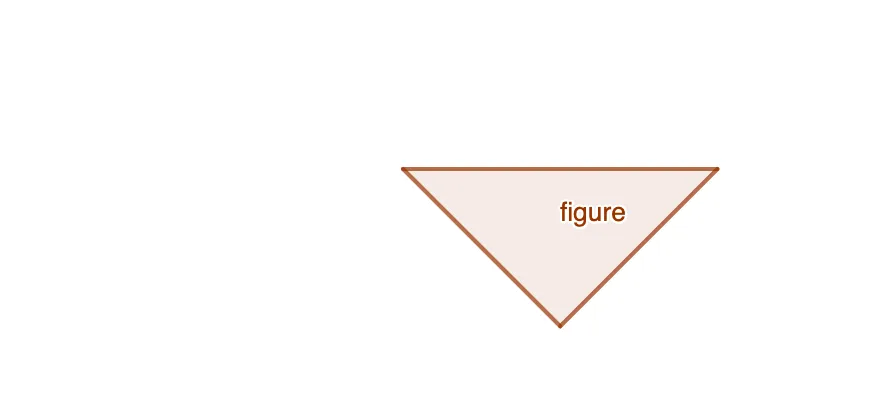
This example demonstrates that an isosceles triangle has a natural vertical line of symmetry, intuitively illustrating the concept of reflectional symmetry. The core mathematical concepts include the definition of axial symmetry, properties of the axis of symmetry, and the geometric feature that an isosceles triangle has two equal legs. Construction details: Use the Polygon command to draw isosceles triangle ABC with vertex A as the apex and B, C as base angles; use the Mirror command to create mirrored points A', B', D' across the vertical axis of symmetry, and verify that corresponding point segments are perpendicular bisected by the axis using horizontal auxiliary lines h and l. Suitable for middle school math classes introducing symmetry concepts or as interactive demo material for geometry transformation units.
GeoGebra Commands & Parameters
Polygon(A, B, D) → q1, f, g, iMirror(A, vertical) → A'Mirror(B, vertical) → B'Mirror(D, vertical) → D'Polygon(A', B', D') → q1', j, k, mMirror(A, horizontal) → A'_1Mirror(B, horizontal) → B'_1Mirror(D, horizontal) → D'_1Polygon(A'_1, B'_1, D'_1) → q1'_1, n, p, q
AI Drawing Prompt Reference
Draw an isosceles triangle ABC with equal sides AB and AC, and base BC. The triangle has a vertical line of symmetry that divides it into two identical halves. This axis is perpendicular to BC and bisects it. Mark corresponding points A' and B' on both sides to show symmetry.
The prompt above was compiled from the original drawing commands and is for reference only.