
Sine and Cosine: Positive and Negative Values
Loading the math board and drawing, please wait…
In collections
Sine and Cosine Functions
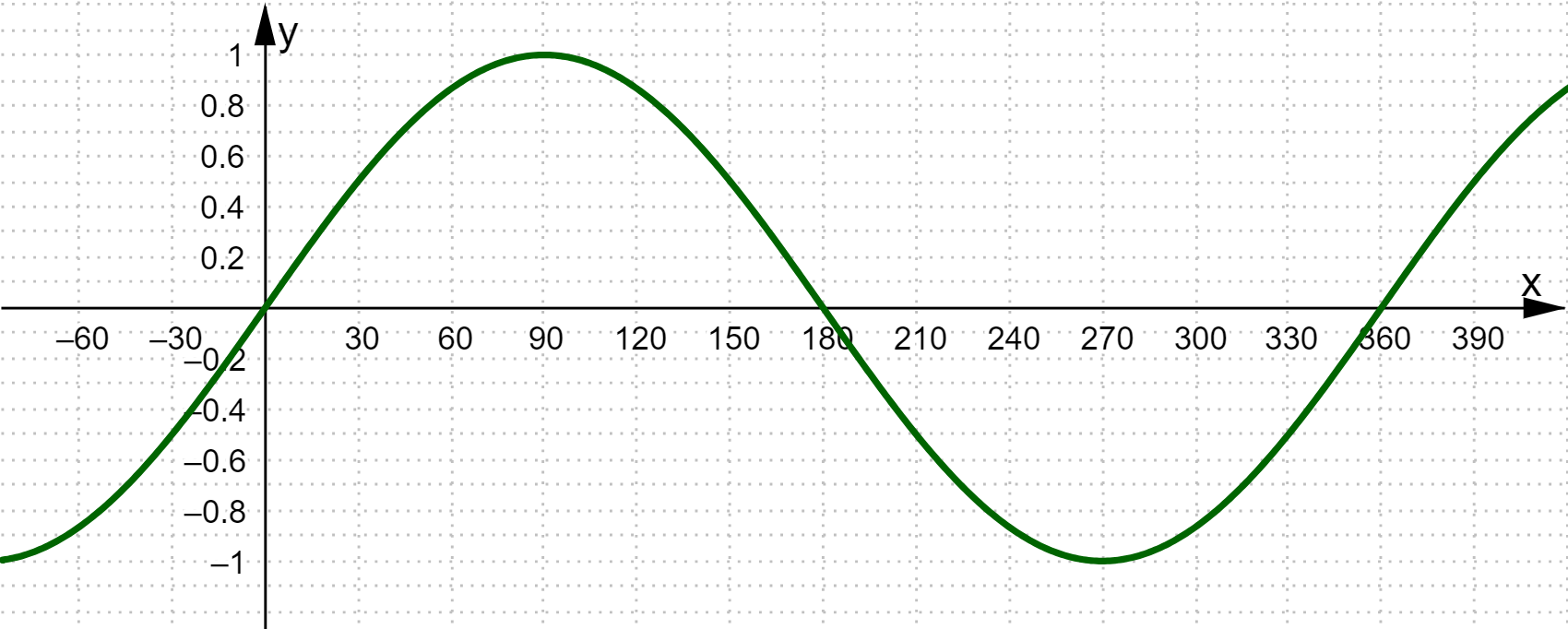
① This example dynamically illustrates how the sine and cosine functions take positive or negative values in different quadrants, helping learners grasp the sign changes of trigonometric functions on the unit circle. ② Core mathematical concepts include the definitions of sine and cosine, quadrant sign rules, periodicity, and the correspondence between the unit circle and function graphs. ③ Construction highlights: based on the summary, a slider (slide) controls the angle, while objects b, c, d, e, f, g, h, p are used to build the unit circle, axes, function curves, and dynamic points, possibly involving functions and geometric shapes (e.g., rhombus) with GeoGebra's slider and locus tools for animation. ④ Suitable for high school or pre-university trigonometry lessons, as well as independent student exploration of the sign patterns of sine and cosine across quadrants, deepening understanding of function graphs and unit circle symmetry.
GeoGebra Commands & Parameters
Boolean b(false)Boolean c(false)Boolean d(false)Boolean e(true)Numeric slide(0)f(x) = sin((x - slide)°)g(x) = (-sin((x - slide)°))h(x) = cos((x - slide)°)p(x) = (-cos((x - slide)°))