
Practice: Color Mixtures - Proportional Mixing with Geometry
Loading the math board and drawing, please wait…
In collections
Unit 2 Homework: Intro to Ratios
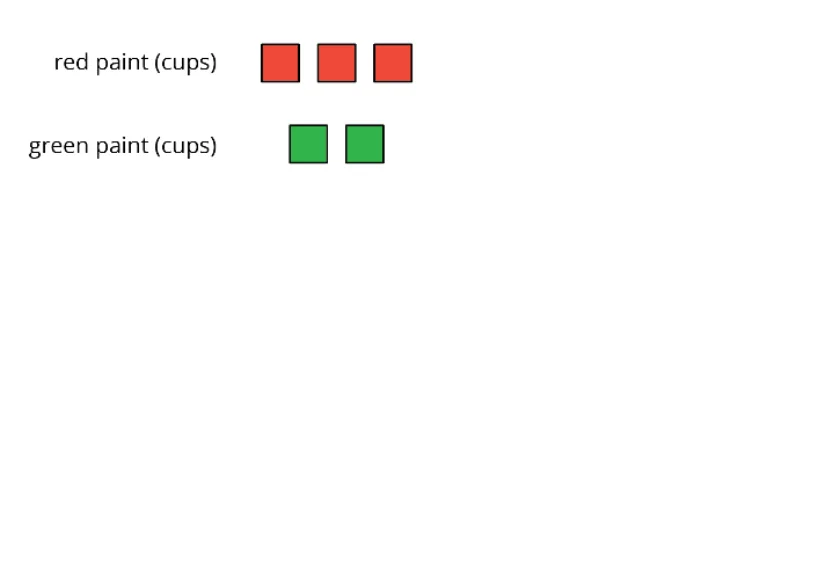
① This GeoGebra example demonstrates color mixing through proportional combinations, using visual geometric elements to show how different base colors blend into new shades. ② Core math concepts include arithmetic ratios, combinatorial counting of mixtures, and geometric representations such as cuboids or conic sections to model the mixing space. ③ Construction: The summary lists objects A, B, and pic1, suggesting interactive points or sliders control color components, with geometric shapes providing a visual framework; no explicit commands are detailed, implying a drag-and-drop or slider-based interface. ④ Suitable for upper elementary to middle school students, ideal for hands-on math practice or cross-disciplinary art-math lessons, reinforcing proportional reasoning and systematic combination skills.
GeoGebra Commands & Parameters
Point A(-11.50690283716977, 4.935286848886904)Point B(1.6516907335566668, 4.935286848886904)
AI Drawing Prompt Reference
Draw a horizontal line segment with one endpoint near coordinates (-11.5, 4.9) and the other near (1.7, 4.9). Place draggable control points along this segment to adjust the mixing ratio between two base colors, using color gradients to visually demonstrate the transition from one color to another, suitable as a mathematical visualization exercise for color mixing and proportional concepts.
The prompt above was compiled from the original drawing commands and is for reference only.