
IM 6.1.16 Practice: Distinguishing Between Surface Area and Volume
Loading the math board and drawing, please wait…
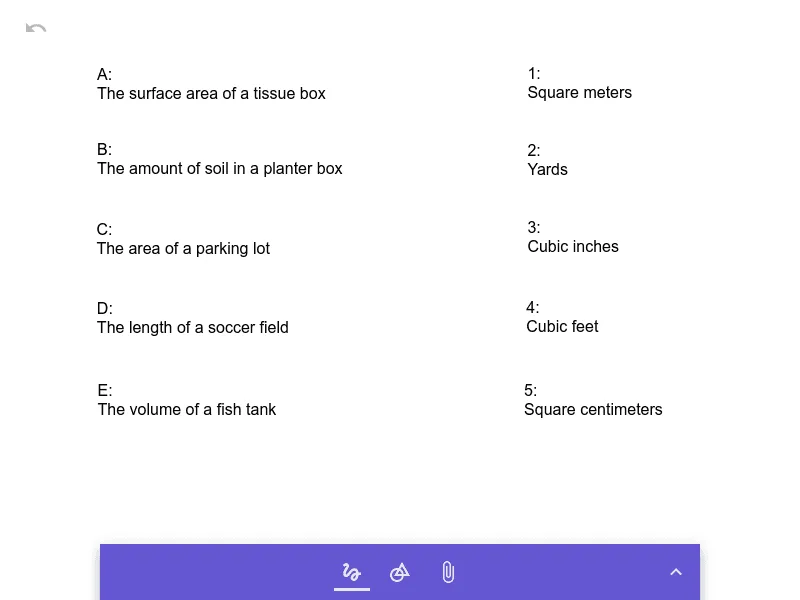
① This example uses a set of geometric objects (labeled a through j) to help students visually and conceptually distinguish between surface area and volume of solid figures. ② Core math concepts include surface area (total area of all faces) and volume (space occupied), with comparisons involving rectangular prisms and cubes, while also touching on parallelograms, percentages, and rational numbers as part of the integrated curriculum. ③ Construction highlights: based on the summary, multiple named objects (a, b, c, d, e, f, g, h, i, j) are used, likely representing different solids or dimension parameters, built in GeoGebra to show 3D shapes or nets, emphasizing the difference between square units and cubic units. ④ Suitable for upper elementary to early middle school (e.g., grade 6) practice, useful for classroom demonstration or independent student exploration to solidify understanding of geometric measurement.
GeoGebra Commands & Parameters
Inlinetext aInlinetext bInlinetext cInlinetext dInlinetext eInlinetext fInlinetext gInlinetext hInlinetext iInlinetext j
AI Drawing Prompt Reference
Draw a set of geometric objects including cubes and rectangular prisms, along with their nets and dimensions, color-coded to differentiate between surface area and volume, and labeled with units to illustrate the comparison and understanding of these concepts.
The prompt above was compiled from the original drawing commands and is for reference only.