
Geometric Construction via Substitution: Segment Lengths and Optimization Insigh
Loading the math board and drawing, please wait…
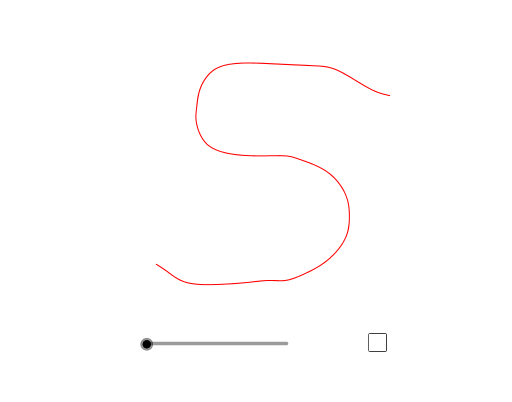
This example demonstrates how the substitution (substitution method) idea can rewrite several geometric quantities into an equivalent variable framework, making constraint-driven optimal or simplified relationships visible directly on a diagram. The key mathematical concepts include substitution to build equivalent expressions, a geometric-mean style proportional relationship, and an intuition for optimization under geometric constraints (often connected to linear/convex optimization viewpoints). In construction terms, it uses GeoGebra objects identified in the build summary—s1, l1, l2, l3, l4, n, l0, a—where l1–l4 represent the essential segment lengths (measurable geometric parts), l0 acts as a baseline/reference length for ratios or constraints, and n and a serve as variables/parameters involved in the substitution. s1 represents the substituted result or the geometric quantity computed from the re-parameterized relations. Suitable for high school through undergraduate learning, especially for teaching geometric construction combined with modeling and optimization intuition.
GeoGebra Commands & Parameters
PolyLine[(8.7277E-1,7.1193E-1), (8.1604E-1,7.3083E-1), (7.4041E-1,7.7495E-1), (6.8369E-1,8.0016E-1), (6.1436E-1,8.0646E-1), (4.8201E-1,8.1277E-1), (3.9378E-1,8.1277E-1), (3.2445E-1,7.9386E-1), (2.8033{Translate[s1, (0, 0)], Translate[s1, (2, 1)], Translate[s1, (1, 2)]}{Dilate[l1, 1 / 3], Translate[Dilate[l1, 1 / 3], (2, 1)], Translate[Dilate[l1, 1 / 3], (1, 2)]}{Dilate[l2, 1 / 3], Translate[Dilate[l2, 1 / 3], (2, 1)], Translate[Dilate[l2, 1 / 3], (1, 2)]}{Dilate[l3, 1 / 3], Translate[Dilate[l3, 1 / 3], (2, 1)], Translate[Dilate[l3, 1 / 3], (1, 2)]}Numeric n(0.0){Dilate[s1, 3]}Boolean a(false)
AI Drawing Prompt Reference
Draw a reference polyline in the plane. Then take one key segment-length measure, scale it by a fixed factor, and create three translated copies of the scaled result at three different positions, so the proportional relationship is visually compared. Do the same scaling-and-copying for another key segment-length, placing its three scaled copies at the corresponding translated locations to show both relationships together. Finally, display a scaled-up main substituted result at the original place, and include a numeric parameter value and a boolean state to indicate the adjustable conditions for subsequent variations.
The prompt above was compiled from the original drawing commands and is for reference only.