
Geometric Addition of Vectors: Translate and Connect
Loading the math board and drawing, please wait…
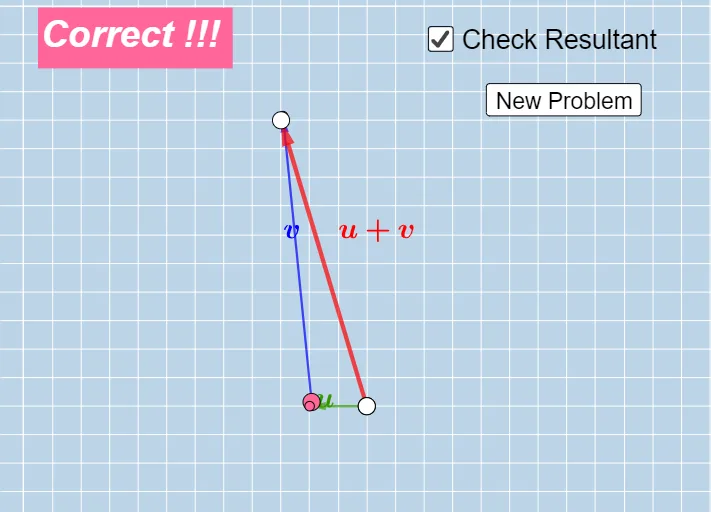
This GeoGebra example demonstrates how to add 2D vectors geometrically: by translating vectors and connecting them head-to-tail, the resulting (sum) vector’s direction and magnitude become visible in the diagram. Students can verify the addition rule visually, compare constructed components, and use the quiz-style setup to test whether a candidate resultant matches the geometric sum.
Key mathematics includes vectors in the plane, geometric vector addition (head-to-tail / parallelogram idea), vector translation (transforming positions while preserving direction and length), and determining critical points via intersections. The construction uses Vector to create the vectors, Translate to reposition them so their tails/heads align correctly, and Intersect to compute intersection points that serve as endpoints or constraint locations for the resultant. Sequence organizes stepwise/generated elements, and RandomElement supports variability (different instances of the quiz). The layout involves multiple points (e.g., A, B, C, D, E, F, G and primed counterparts like A' and E') together with UI objects (button and text) to guide and display the process.
Suitable for secondary school geometry/vector instruction and early university prep, especially for interactive visualization and practice quizzes.
GeoGebra Commands & Parameters
Intersect(xAxis, yAxis) → BSequence(Sequence[(i, j), i, -10, 10, 1], j, -10, 10, 1) → l2, {{(-10, -10), (-9, -10), (-8, -10), (-7, -10), (-6, -10), (-5, -10), (-4, -10), (-3, -10), (-2, -10), (-1, -10), (0, -10), (1, -10), (2, -10), (3, -10), (4, -10), (5, -10), (6, -10), (7, -10), (8, -10), (9, -10), (10, -10)}, {(-10, -9), (-9, -9), (-8, -9), (-7, -9), (-6, -9), (-5, -9), (-4, -9), (-3, -9), (-2, -9), (-1, -9), (0, -9), (1, -9), (2, -9), (3, -9), (4, -9), (5, -9), (6, -9), (7, -9), (8, -9), (9, -9), (10, -9)}, {(-10, -8), (-9, -8), (-8, -8), (-7, -8), (-6, -8), (-5, -8), (-4, -8), (-3, -8), (-2, -8), (-1, -8), (0, -8), (1, -8), (2, -8), (3, -8), (4, -8), (5, -8), (6, -8), (7, -8), (8, -8), (9, -8), (10, -8)}, {(-10, -7), (-9, -7), (-8, -7), (-7, -7), (-6, -7), (-5, -7), (-4, -7), (-3, -7), (-2, -7), (-1, -7), (0, -7), (1, -7), (2, -7), (3, -7), (4, -7), (5, -7), (6, -7), (7, -7), (8, -7), (9, -7), (10, -7)}, {(-10, -6), (-9, -6), (-8, -6), (-7, -6), (-6, -6), (-5, -6), (-4, -6), (-3, -6), (-2, -6), (-1, -6), (0, -6), (1, -6), (2, -6), (3, -6), (4, -6), (5, -6), (6, -6), (7, -6), (8, -6), (9, -6), (10, -6)}, {(-10, -5), (-9, -5), (-8, -5), (-7, -5), (-6, -5), (-5, -5), (-4, -5), (-3, -5), (-2, -5), (-1, -5), (0, -5), (1, -5), (2, -5), (3, -5), (4, -5), (5, -5), (6, -5), (7, -5), (8, -5), (9, -5), (10, -5)}, {(-10, -4), (-9, -4), (-8, -4), (-7, -4), (-6, -4), (-5, -4), (-4, -4), (-3, -4), (-2, -4), (-1, -4), (0, -4), (1, -4), (2, -4), (3, -4), (4, -4), (5, -4), (6, -4), (7, -4), (8, -4), (9, -4), (10, -4)}, {(-10, -3), (-9, -3), (-8, -3), (-7, -3), (-6, -3), (-5, -3), (-4, -3), (-3, -3), (-2, -3), (-1, -3), (0, -3), (1, -3), (2, -3), (3, -3), (4, -3), (5, -3), (6, -3), (7, -3), (8, -3), (9, -3), (10, -3)}, {(-10, -2), (-9, -2), (-8, -2), (-7, -2), (-6, -2), (-5, -2), (-4, -2), (-3, -2), (-2, -2), (-1, -2), (0, -2), (1, -2), (2, -2), (3, -2), (4, -2), (5, -2), (6, -2), (7, -2), (8, -2), (9, -2), (10, -2)}, {(-10, -1), (-9, -1), (-8, -1), (-7, -1), (-6, -1), (-5, -1), (-4, -1), (-3, -1), (-2, -1), (-1, -1), (0, -1), (1, -1), (2, -1), (3, -1), (4, -1), (5, -1), (6, -1), (7, -1), (8, -1), (9, -1), (10, -1)}, {(-10, 0), (-9, 0), (-8, 0), (-7, 0), (-6, 0), (-5, 0), (-4, 0), (-3, 0), (-2, 0), (-1, 0), (0, 0), (1, 0), (2, 0), (3, 0), (4, 0), (5, 0), (6, 0), (7, 0), (8, 0), (9, 0), (10, 0)}, {(-10, 1), (-9, 1), (-8, 1), (-7, 1), (-6, 1), (-5, 1), (-4, 1), (-3, 1), (-2, 1), (-1, 1), (0, 1), (1, 1), (2, 1), (3, 1), (4, 1), (5, 1), (6, 1), (7, 1), (8, 1), (9, 1), (10, 1)}, {(-10, 2), (-9, 2), (-8, 2), (-7, 2), (-6, 2), (-5, 2), (-4, 2), (-3, 2), (-2, 2), (-1, 2), (0, 2), (1, 2), (2, 2), (3, 2), (4, 2), (5, 2), (6, 2), (7, 2), (8, 2), (9, 2), (10, 2)}, {(-10, 3), (-9, 3), (-8, 3), (-7, 3), (-6, 3), (-5, 3), (-4, 3), (-3, 3), (-2, 3), (-1, 3), (0, 3), (1, 3), (2, 3), (3, 3), (4, 3), (5, 3), (6, 3), (7, 3), (8, 3), (9, 3), (10, 3)}, {(-10, 4), (-9, 4), (-8, 4), (-7, 4), (-6, 4), (-5, 4), (-4, 4), (-3, 4), (-2, 4), (-1, 4), (0, 4), (1, 4), (2, 4), (3, 4), (4, 4), (5, 4), (6, 4), (7, 4), (8, 4), (9, 4), (10, 4)}, {(-10, 5), (-9, 5), (-8, 5), (-7, 5), (-6, 5), (-5, 5), (-4, 5), (-3, 5), (-2, 5), (-1, 5), (0, 5), (1, 5), (2, 5), (3, 5), (4, 5), (5, 5), (6, 5), (7, 5), (8, 5), (9, 5), (10, 5)}, {(-10, 6), (-9, 6), (-8, 6), (-7, 6), (-6, 6), (-5, 6), (-4, 6), (-3, 6), (-2, 6), (-1, 6), (0, 6), (1, 6), (2, 6), (3, 6), (4, 6), (5, 6), (6, 6), (7, 6), (8, 6), (9, 6), (10, 6)}, {(-10, 7), (-9, 7), (-8, 7), (-7, 7), (-6, 7), (-5, 7), (-4, 7), (-3, 7), (-2, 7), (-1, 7), (0, 7), (1, 7), (2, 7), (3, 7), (4, 7), (5, 7), (6, 7), (7, 7), (8, 7), (9, 7), (10, 7)}, {(-10, 8), (-9, 8), (-8, 8), (-7, 8), (-6, 8), (-5, 8), (-4, 8), (-3, 8), (-2, 8), (-1, 8), (0, 8), (1, 8), (2, 8), (3, 8), (4, 8), (5, 8), (6, 8), (7, 8), (8, 8), (9, 8), (10, 8)}, {(-10, 9), (-9, 9), (-8, 9), (-7, 9), (-6, 9), (-5, 9), (-4, 9), (-3, 9), (-2, 9), (-1, 9), (0, 9), (1, 9), (2, 9), (3, 9), (4, 9), (5, 9), (6, 9), (7, 9), (8, 9), (9, 9), (10, 9)}, {(-10, 10), (-9, 10), (-8, 10), (-7, 10), (-6, 10), (-5, 10), (-4, 10), (-3, 10), (-2, 10), (-1, 10), (0, 10), (1, 10), (2, 10), (3, 10), (4, 10), (5, 10), (6, 10), (7, 10), (8, 10), (9, 10), (10, 10)}}RandomElement(RandomElement[l2]) → CRandomElement(RandomElement[l2]) → DVector(B, D) → uVector(B, C) → vTranslate(A, v) → A'Vector(A, A') → wTranslate(E, u) → E'Vector(E, E') → aVector(F, G) → b
AI Drawing Prompt Reference
Draw a geometric illustration of vector addition in the plane. The figure should include points A, B, C, D, E, F, G and their translated points A' and E'. First, set B as the intersection of the x-axis and y-axis. Then randomly select two points C and D from a grid. Draw vector u from B to D, and vector v from B to C. Translate point A to obtain A', and draw vector w from A to A'. Translate point E to obtain E', and draw vector a from E to E'. Also draw vector b from F to G. Finally, connect the translated vectors to demonstrate the geometric sum: the endpoint of vector v and the start of vector u are linked, forming the resultant vector. The diagram should clearly show the directions, lengths, and positions of the vectors and their translations.
The prompt above was compiled from the original drawing commands and is for reference only.