
Function Transformations: Translation, Reflection, and Rotation of Graphs
Loading the math board and drawing, please wait…
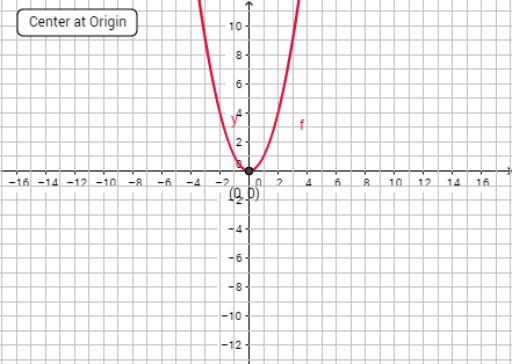
This GeoGebra example demonstrates dynamic function transformations, including translation, reflection, and rotation of function graphs in the coordinate plane. Core mathematical concepts covered include function transformations, geometric transformations, reflection, vector operations, and function graphing. The construction employs GeoGebra commands such as Intersect to generate intersection points and Vector to define directional movement, with objects including functions f, g_1, g_2, g_3, f_1, points A, B, C, D, E, D_1, E_1, vectors u and v, and interactive elements like button1 and descriptive text fields. It is suitable for high school mathematics instruction and introductory college calculus or precalculus courses, supporting inquiry-based learning and visual understanding of how algebraic changes affect graphical behavior.
GeoGebra Commands & Parameters
Intersect(f, g_3) → CVector(B, C) → uVector(C, A) → v
AI Drawing Prompt Reference
Create a coordinate plane visualization demonstrating dynamic function transformations, including translation, reflection, and rotation of function graphs. The construction should feature multiple function curves and their intersection points. Based on these intersections and specific points, define two vectors to represent directional movement. The final graphic should include the function graphs, key intersection points, directional vectors, and descriptive text fields to illustrate how algebraic changes affect the graphical behavior of the functions.
The prompt above was compiled from the original drawing commands and is for reference only.