
Flatland View of Polygons
Loading the math board and drawing, please wait…
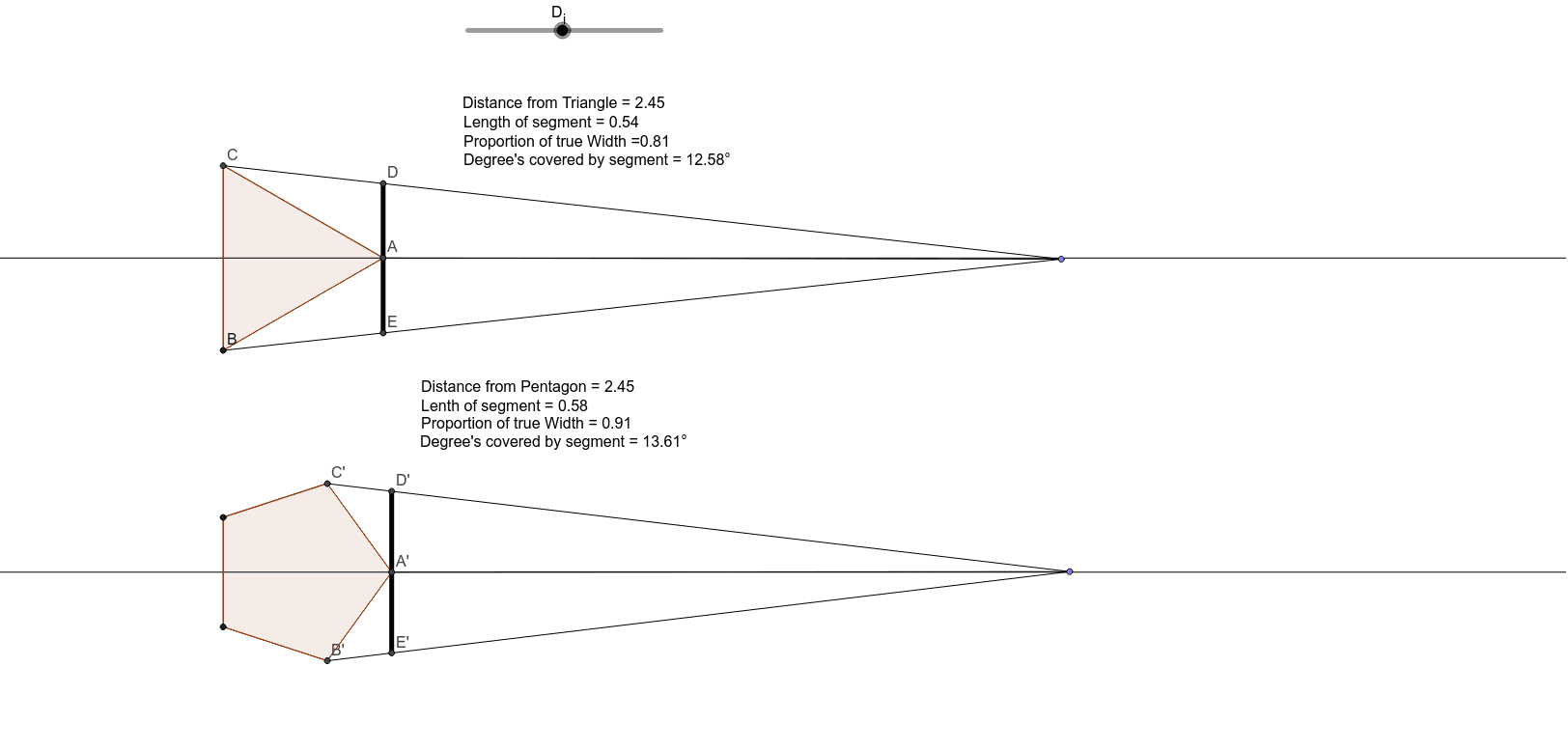
This example demonstrates the perspective of polygons in a flatland. Key mathematical concepts include polygons, orthocenter, root, matrices, and complex numbers. It is constructed using GeoGebra commands such as Point, Polygon, Segment, Line, etc. Suitable for high school mathematics education and learning.
GeoGebra Commands & Parameters
Point(yAxis) → EPoint(yAxis) → DPolygon(D, E, 5) → poly2, P_S, e, f, g, h, F, G, HSegment(H, F) → kLine(J, F) → pLine(J, H) → nLineBisector(P_S) → jOrthogonalLine(G, j) → rIntersect(p, r) → NIntersect(n, r) → MSegment(M, N) → L_PPoint(yAxis) → BPoint(yAxis) → APolygon(A, B, 3) → poly1, T_S, b, c, CLineBisector(T_S) → iLine(A, I) → lLine(B, I) → mOrthogonalLine(C, i) → qIntersect(l, q) → KIntersect(m, q) → LSegment(C, I) → D_TSegment(G, J) → D_PSegment(K, L) → L_TSegment(O, P) → aSegment(Q, R) → dSegment(A, I) → sSegment(I, B) → tSegment(H, J) → a_1Segment(J, F) → b_1Point(yAxis) → UPoint(yAxis) → WPolygon(W, Z, 4) → poly3, c_1, d_1, e_1, f_1, A_1, B_1Line(W, A_1) → g_1Segment(B_1, C_1) → h_1Segment(Z, C_1) → i_1OrthogonalLine(A_1, g_1) → j_1Intersect(j_1, h_1) → D_1Intersect(j_1, i_1) → E_1Segment(D_1, E_1) → S_TSegment(A_1, C_1) → D_SPolygon(F_1, G_1, 6) → poly4, k_1, K_1, l_1, m_1, n_1, p_1, q_1, H_1, I_1, J_1Point(yAxis) → M_1Polygon(L_1, M_1, 7) → poly5, r_1, P_1, Q_1, R_1, s_1, t_1, a_2, b_2, c_2, d_2, N_1, O_1OrthogonalLine(P_1, r_1) → e_2Segment(G_1, I_1) → f_2LineBisector(f_2) → g_2Segment(I_1, T_1) → h_2Segment(G_1, T_1) → i_2OrthogonalLine(H_1, g_2) → j_2Intersect(j_2, h_2) → U_1Intersect(j_2, i_2) → V_1Segment(U_1, V_1) → k_2Segment(Q_1, S_1) → l_2Segment(O_1, S_1) → m_2Segment(R_1, S_1) → n_2Segment(S_1, N_1) → p_2Point(yAxis) → Z_1Polygon(W_1, Z_1, 8) → poly6, q_2, B_2, C_2, D_2, E_2, F_2, r_2, s_2, t_2, a_3, b_3, c_3, d_3, A_2Line(Z_1, D_2) → e_3Segment(E_2, G_2) → f_3Segment(G_2, C_2) → g_3Segment(B_2, G_2) → h_3Segment(F_2, G_2) → i_3Point(yAxis) → I_2Polygon(H_2, I_2, 9) → poly7, j_3, J_2, K_2, L_2, M_2, N_2, O_2, P_2, k_3, l_3, m_3, n_3, p_3, q_3, r_3, s_3LineBisector(j_3) → t_3Segment(N_2, Q_2) → a_4Segment(Q_2, L_2) → b_4Segment(K_2, Q_2) → c_4Segment(Q_2, O_2) → d_4
AI Drawing Prompt Reference
Draw a flatland view of polygons, including three polygons of different sizes. Start by drawing a pentagon, then a triangle, followed by a quadrilateral and a hexagon, and finally a heptagon. Each polygon has its vertices and sides, and some polygons are connected by line segments, forming specific geometric relationships.
The prompt above was compiled from the original drawing commands and is for reference only.