
Element G Transformations
Loading the math board and drawing, please wait…
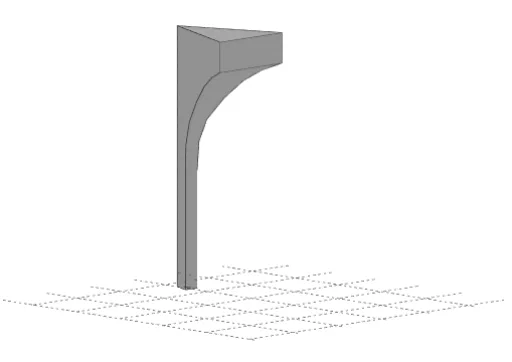
This example demonstrates the construction of geometric figure G through transformations like rotation, intersection, and mirroring. It involves core math concepts including geometric transformations, coordinate geometry, similar triangles, and function graphs. GeoGebra commands used are Rotate, Intersect, Mirror, Line, Circle, etc. Suitable for high school mathematics teaching to understand the integration of geometric transformations and coordinate geometry.
GeoGebra Commands & Parameters
Rotate(B, 67.5°, A) → B'Ray(A, B') → fIntersect(f, yAxis) → CSegment(C, A) → gSegment(C, B) → hCircle(C, 0.35) → cIntersect(c, g, 1) → DIntersect(c, h, 1) → ELine(A, yAxis) → iLine(B, yAxis) → jLine(D, E) → kIntersect(i, k) → FIntersect(k, j) → GDistance(F, A) → af1Mirror(F, H) → F'Segment(F, F') → lMirror(F', yAxis) → F''Mirror(H, yAxis) → H'Segment(F, G) → mSegment(F', F'') → nSegment(G, F'') → pCircleArc(M, Q, I) → dCircleArc(M, O, Q) → eCircleArc(N, P, R) → rCircleArc(N, R, J) → qLine(A, zAxis) → sIntersect(s, d) → S,Line(B, zAxis) → tIntersect(t, q) → T,Segment(S, T) → aSegment(S, A) → bSegment(T, B) → f_1Plane(D, A, K) → p_1Surface(l, (straal * cos(t)) + y(H), (straal * sin(t)) + z(ver), l, ((-v2)) / 2, v2 / 2, t, 0°, 180°) → oPointIn(p_1) → VPointIn(p_1) → WPointIn(p_1) → ZPointIn(p_1) → A_1PointIn(p_1) → B_1Segment(C, A) → g_1Segment(E_1, C_1) → h_1Segment(E_1, D_1) → i_1Segment(E_1, C) → j_1Segment(U, D) → k_1Polygon(G_1, A_1, Z, H_1) → vierhoek1, l_1, a_1, z_1, m_1Polygon(F_1, U, A_1, G_1) → vierhoek2, n_1, u, q_1, r_1Polygon(H_1, Z, W, I_1) → vierhoek3, s_1, z_2, w, t_1Polygon(I_1, W, V, J_1) → vierhoek4, b_1, w_1, v, c_1Polygon(J_1, V, B_1, K_1) → vierhoek5, d_1, v_1, e_1, f_2Polygon(K_1, B_1, S, L_1) → vierhoek6, g_2, h_2, s_2, i_2Polygon(L_1, S, C_1, E_1) → vierhoek7, j_2, s_3, k_2, l_2Polygon(C, D, U, F_1) → vierhoek8, c_2, d_2, u_1, m_2Plane(C, (-C), C + ver) → symMirror(vierhoek1, sym) → vierhoek1'Mirror(vierhoek2, sym) → vierhoek2'Mirror(vierhoek3, sym) → vierhoek3'Mirror(vierhoek4, sym) → vierhoek4'Mirror(vierhoek5, sym) → vierhoek5'Mirror(vierhoek6, sym) → vierhoek6'Mirror(vierhoek7, sym) → vierhoek7'Mirror(vierhoek8, sym) → vierhoek8'Mirror(vierhoek1, sym2) → vierhoek1'_1Mirror(vierhoek2, sym2) → vierhoek2'_1Mirror(vierhoek3, sym2) → vierhoek3'_1Mirror(vierhoek4, sym2) → vierhoek4'_1Mirror(vierhoek5, sym2) → vierhoek5'_1Mirror(vierhoek6, sym2) → vierhoek6'_1Mirror(vierhoek7, sym2) → vierhoek7'_1Mirror(vierhoek8, sym2) → vierhoek8'_1Mirror(vierhoek1', sym2) → vierhoek1''Mirror(vierhoek2', sym2) → vierhoek2''Mirror(vierhoek3', sym2) → vierhoek3''Mirror(vierhoek4', sym2) → vierhoek4''Mirror(vierhoek5', sym2) → vierhoek5''Mirror(vierhoek6', sym2) → vierhoek6''Mirror(vierhoek7', sym2) → vierhoek7''Mirror(vierhoek8', sym2) → vierhoek8''Segment(U, A_1) → n_2Segment(A_1, Z) → p_2Segment(Z, W) → q_2Segment(W, V) → r_2Segment(V, B_1) → t_2Segment(B_1, S) → b_2Segment(C_1, S) → e_2Polygon(S, T, D_1, C_1) → vierhoek9, s_4, t_3, f_3, g_3Mirror(B_1, sym) → M_1Mirror(V, sym) → V'Mirror(W, sym) → W'Mirror(Z, sym) → Z'Mirror(A_1, sym) → N_1Mirror(U, sym) → U'Polygon(D, E, U', U) → vierhoek10, d_3, e_3, u', u_2Polygon(B_1, M_1, T, S) → vierhoek11, h_3, i_3, t_4, s_5Polygon(B_1, V, V', M_1) → vierhoek12, j_3, v_2, v', k_3Polygon(V, W, W', V') → vierhoek13, v_3, w_2, w', l_3Polygon(W, Z, Z', W') → vierhoek14, w_3, z_3, z', m_3Polygon(Z, A_1, N_1, Z') → vierhoek15, z_4, n_3, p_3, q_3Point(p_3) → O_1Polygon(A_1, U, U', N_1) → vierhoek16, r_3, a_3, b_3, c_3Segment(T, M_1) → f_4Segment(M_1, V') → g_4Segment(V', W') → h_4Segment(W', Z') → i_4Segment(Z', O_1) → j_4Segment(O_1, U') → k_4Mirror(vierhoek11, sym2) → vierhoek11'Mirror(vierhoek12, sym2) → vierhoek12'Mirror(vierhoek13, sym2) → vierhoek13'Mirror(vierhoek14, sym2) → vierhoek14'Mirror(vierhoek15, sym2) → vierhoek15'Mirror(vierhoek16, sym2) → vierhoek16'Mirror(vierhoek10, sym2) → vierhoek10'Mirror(U, sym2) → U'_1Mirror(D, sym2) → D'Segment(U'_1, D') → l_4Mirror(B_1, sym2) → P_1Mirror(V, sym2) → V'_1Mirror(W, sym2) → W'_1Mirror(Z, sym2) → Z'_1Mirror(A_1, sym2) → Q_1Mirror(Z', sym2) → Z''Mirror(O_1, sym2) → R_1Mirror(U', sym2) → U''Mirror(E, sym2) → E'Mirror(C, sym2) → C'Mirror(E_1, sym2) → S_1Mirror(W', sym2) → W''Mirror(V', sym2) → V''Mirror(M_1, sym2) → T_1Segment(T, T_1) → m_4Segment(T_1, V'') → n_4Segment(V'', W'') → p_4Segment(W'', Z'') → q_4Segment(Z'', R_1) → r_4Segment(R_1, U'') → a_4Segment(U'', E') → b_4Segment(S_1, C') → c_4Segment(S_1, D_1) → d_4Segment(S_1, C_1) → e_4Segment(S, P_1) → f_5Segment(P_1, V'_1) → g_5Segment(V'_1, W'_1) → h_5Segment(W'_1, Z'_1) → i_5Segment(Z'_1, Q_1) → j_5Segment(Q_1, U'_1) → k_5Segment(D', C') → l_5Segment(C', E') → m_5Polygon(D_1, E_1, C_1) → driehoek1, n_5, p_5, q_5Polygon(D_1, C_1, S_1) → driehoek2, r_5, t_5, a_5Segment(C, D) → b_5Segment(D, E) → c_5Segment(E, C) → d_5
AI Drawing Prompt Reference
Draw a geometric figure constructed through transformations like rotation, intersection, and mirroring. Rotate a point, create a ray intersecting the y-axis, connect the intersection with the origin. Draw a circle centered at the intersection, intersect it with line segments. Connect intersections, draw perpendicular lines, and form new segments by connecting points. Mirror a point, connect mirrored points with the origin. Finally, add circular arcs and quadrilaterals to showcase the integration of geometric transformations and coordinate geometry.
The prompt above was compiled from the original drawing commands and is for reference only.