
Dijkstra Algorithm Demonstration
Loading the math board and drawing, please wait…
In collections
Shortest path
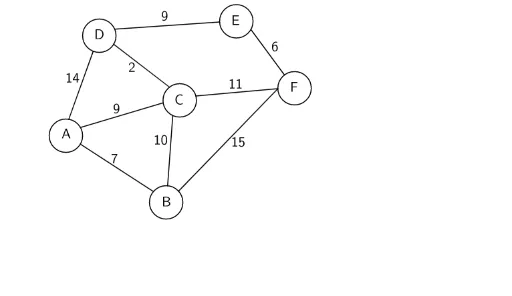
This example demonstrates the application of Dijkstra's algorithm in graph theory, visually showing the shortest path search process. Core math concepts include graph theory, shortest path, greedy algorithm, and distance calculation. Construction highlights involve GeoGebra commands/objects like Circle, Point, and Segment. Suitable for high school students and learners interested in algorithmics and mathematical visualization.
GeoGebra Commands & Parameters
ConstructionStep() → stapCircle(A, 0.5) → cCircle(B, 0.5) → dCircle(C, 0.5) → eCircle(D, 0.5) → fCircle(E, 0.5) → gCircle(F, 0.5) → hPoint(c) → GPoint(f) → HSegment(G, H) → iPoint(f) → IPoint(g) → JSegment(I, J) → jPoint(g) → KPoint(h) → LSegment(K, L) → kPoint(e) → MPoint(h) → NSegment(M, N) → lPoint(d) → OSegment(N, O) → mPoint(e) → PPoint(d) → QPoint(c) → RPoint(d) → SSegment(R, S) → pPoint(c) → TPoint(e) → USegment(T, U) → qPoint(e) → VPoint(f) → WSegment(V, W) → rSegment(P, Q) → bCircle(A, 0.5) → sCircle(B, 0.5) → tSegment(R, S) → aCircle(C, 0.5) → c_1Segment(T, U) → f_1Segment(T, U) → nCircle(F, 0.5) → d_1Circle(D, 0.5) → e_1Segment(V, W) → g_1Circle(E, 0.5) → h_1Segment(I, J) → i_1