
Demonstration of Non-Random Sampling Methods
Loading the math board and drawing, please wait…
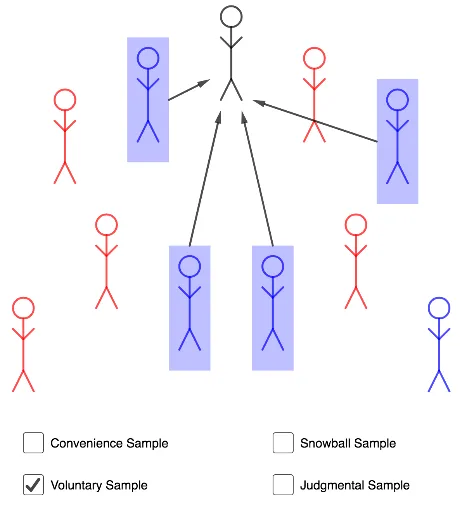
This example dynamically illustrates non-random sampling techniques and steps, involving core math concepts like statistics, step functions, trapezoids, logarithmic functions, hyperbolas, and upper/lower sums or Riemann sums. It is constructed using GeoGebra commands like Circle, Segment, Mirror, Polygon, and Vector. Suitable for high school and above students to understand statistical sampling and geometric representations of function graphs.
GeoGebra Commands & Parameters
Circle((0, 5), 0.125) → cSegment((0, 5 - 0.125), (0, 4.25)) → fSegment((0, 4.5 + 0.125), (-0.125, 4.75)) → gSegment((0, 4.5 + 0.125), (0.125, 4.75)) → hSegment((0, 4.25), (-0.125, 4)) → iSegment((0, 4.25), (0.125, 4)) → jCircle((-1, 4.5), 0.125) → dSegment((-1, 4.5 - 0.125), (-1, 3.75)) → kSegment((-1, 4 + 0.125), (-1 - 0.125, 4.25)) → lSegment((-1, 4 + 0.125), (-1 + 0.125, 4.25)) → mSegment((-1, 3.75), (-1 - 0.125, 3.5)) → nSegment((-1, 3.75), (-1 + 0.125, 3.5)) → pCircle((-2, 4), 0.125) → eCircle((-1.5, 2.5), 0.125) → qCircle((-0.5, 2), 0.125) → rCircle((-2.5, 1.5), 0.125) → sSegment((-0.5, 2 - 0.125), (-0.5, 1.25)) → tSegment((-1.5, 2.5 - 0.125), (-1.5, 1.75)) → aSegment((-2, 4 - 0.125), (-2, 3.25)) → bSegment((-2.5, 1.5 - 0.125), (-2.5, 0.75)) → f_1Segment((-0.5, 1.5 + 0.125), (-0.5 - 0.125, 1.75)) → g_1Segment((-0.5, 1.5 + 0.125), (-0.5 + 0.125, 1.75)) → h_1Segment((-1.5, 2 + 0.125), (-1.5 - 0.125, 2.25)) → i_1Segment((-1.5, 2 + 0.125), (-1.5 + 0.125, 2.25)) → j_1Segment((-2, 3.5 + 0.125), (-2 - 0.125, 3.75)) → k_1Segment((-2, 3.5 + 0.125), (-2 + 0.125, 3.75)) → l_1Segment((-2.5, 1 + 0.125), (-2.5 + 0.125, 1.25)) → m_1Segment((-2.5, 1 + 0.125), (-2.5 - 0.125, 1.25)) → n_1Segment((-0.5, 1.25), (-0.5 - 0.125, 1)) → p_1Segment((-0.5, 1.25), (-0.5 + 0.125, 1)) → q_1Segment((-1.5, 1.75), (-1.5 - 0.125, 1.5)) → r_1Segment((-1.5, 1.75), (-1.5 + 0.125, 1.5)) → s_1Segment((-2, 3.25), (-2 - 0.125, 3)) → t_1Segment((-2, 3.25), (-2 + 0.125, 3)) → a_1Segment((-2.5, 0.75), (-2.5 + 0.125, 0.5)) → b_1Segment((-2.5, 0.75), (-2.5 - 0.125, 0.5)) → c_1Mirror(d, d_1) → d'Mirror(k, d_1) → k'Mirror(m, d_1) → m'Mirror(l, d_1) → l'Mirror(n, d_1) → n'Mirror(p, d_1) → p'Mirror(e, d_1) → e'Mirror(l_1, d_1) → e_1Mirror(k_1, d_1) → f_2Mirror(b, d_1) → b'Mirror(a_1, d_1) → g_2Mirror(t_1, d_1) → h_2Mirror(r, d_1) → r'Mirror(h_1, d_1) → i_2Mirror(g_1, d_1) → j_2Mirror(t, d_1) → t'Mirror(q_1, d_1) → k_2Mirror(p_1, d_1) → l_2Mirror(q, d_1) → q'Mirror(a, d_1) → a'Mirror(j_1, d_1) → m_2Mirror(i_1, d_1) → n_2Mirror(s_1, d_1) → p_2Mirror(r_1, d_1) → q_2Mirror(f_1, d_1) → r_2Mirror(s, d_1) → s'Mirror(m_1, d_1) → s_2Mirror(n_1, d_1) → t_2Mirror(c_1, d_1) → a_2Mirror(b_1, d_1) → b_2Polygon(A, B, C, D) → q1, a_3, b_3, c_2, d_2Polygon(E, F, G, H) → q2, e_2, f_3, g_3, h_3Polygon(I, J, K, L) → q3, i_3, j_3, k_3, l_3Polygon(M, N, O, P) → q4, m_3, n_3, o, p_3Vector((0.25, 4.25), (0.75, 4)) → vPolygon(Q, R, S, T) → q5, q_3, r_3, s_3, t_3Vector((-0.25, 4.25), (-0.75, 4)) → uPolygon(U, V, W, Z) → q6, u_2, v_2, w_1, z_1Polygon(A_1, B_1, C_1, D_1) → q7, a_4, b_4, c_3, d_3Polygon(E_1, F_1, G_1, H_1) → q8, e_3, f_4, g_4, h_4Polygon(I_1, J_1, K_1, L_1) → q9, i_4, j_4, k_4, l_4Vector((-1.25, 4), (-1.75, 3.5)) → w_2Vector((1.25, 4), (1.75, 3.5)) → u_3Vector((-2, 2.75), (-2.5, 1.75)) → v_3Vector((2, 2.75), (2.5, 1.75)) → w_3Vector((-0.125, 3.75 + 0.125), (-0.5, 2.25)) → wVector((-0.25, 4), (-1.75, 3.5)) → v_1Vector((0.25, 4), (2.5, 1.75)) → u_4Vector((0.125, 3.75 + 0.125), (0.5, 2.25)) → u_1Vector((-0.75, 4), (-0.25, 4.25)) → v_4Vector((0.5, 2.25), (0.125, 3.75 + 0.125)) → w_4Vector((-0.5, 2.25), (-0.125, 3.75 + 0.125)) → c_4Vector((1.75, 3.5), (0.25, 4)) → d_4
AI Drawing Prompt Reference
Draw a figure with multiple concentric circles and segments, including 4 concentric circles each with a radius of 0.125, where each circle has a vertical segment intersecting at the center. Then, mirror these segments to another concentric circle to form a symmetrical figure. Finally, connect the endpoints of these segments to form a series of trapezoids and rectangles, illustrating non-random sampling methods.
The prompt above was compiled from the original drawing commands and is for reference only.