
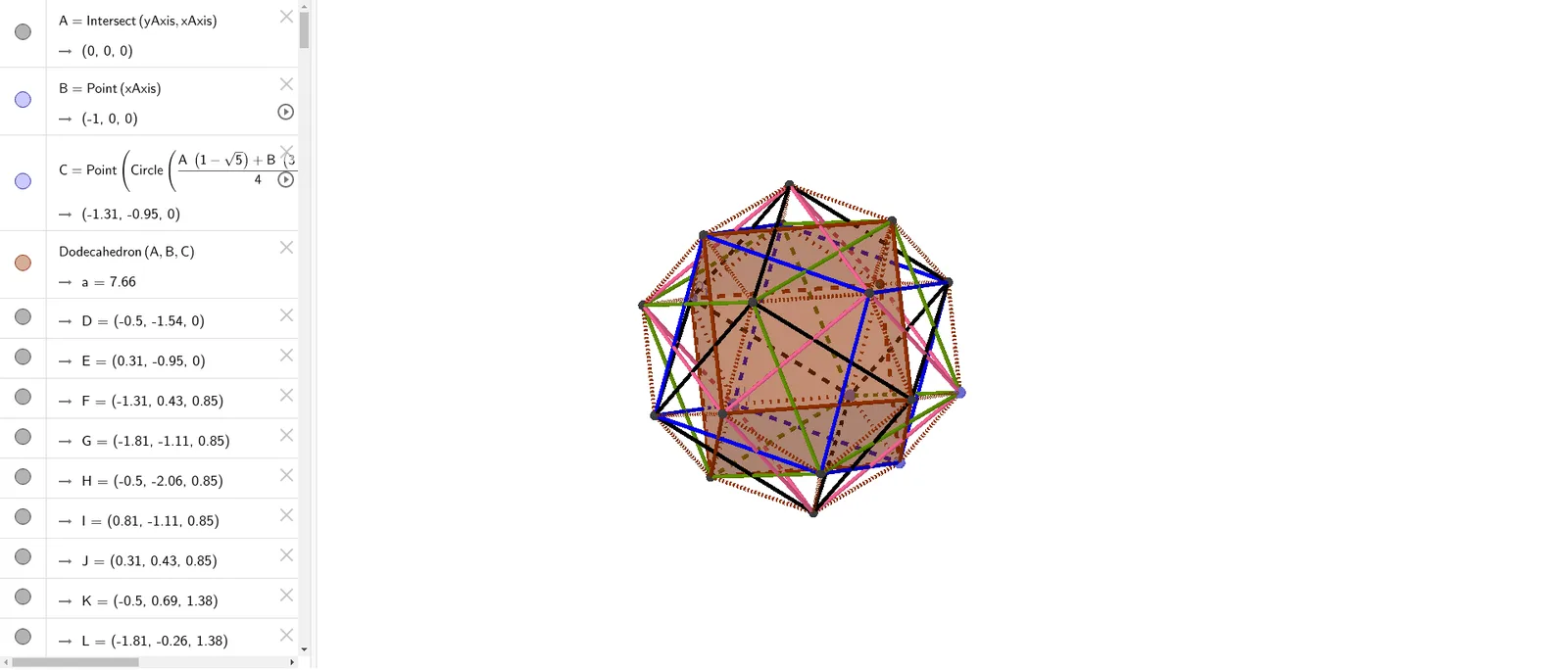
Cubes inside the dodecahedron
Loading the math board and drawing, please wait…
This example demonstrates the spatial relationship and construction of cubes embedded within a dodecahedron. Core math concepts include polyhedra, solid geometry, and spatial geometric relationships. Key GeoGebra commands/objects used from the construction summary are: Intersect, Point, Dodecahedron, and Cube. Suitable for high school and above students studying solid geometry, used to visualize the nesting of polyhedra and spatial geometric relationships.
GeoGebra Commands & Parameters
Intersect(yAxis, xAxis) → APoint(xAxis) → BPoint(Circle[((A * (1 - sqrt(5))) + (B * (3 + sqrt(5)))) / 4, (Distance[A, B] * sqrt(10 + (2 * sqrt(5))) / 4), Segment[A, B]]) → CDodecahedron(A, B, C) → a, D, M, N, O, P, Q, R, S, T, faceABCDE, faceAEIOJ, E, faceABFKJ, faceBCGLF, faceCDHMG, faceDEINH, faceINSTO, faceJKPTO, faceFKPQL, faceGLQRM, faceHMRSN, facePQRST, F, edgeAE, edgeAB, edgeBC, edgeCD, edgeDE, edgeAJ, edgeEI, edgeIO, edgeJO, edgeJK, G, edgeFK, edgeBF, edgeFL, edgeGL, edgeCG, edgeGM, edgeHM, edgeDH, edgeHN, edgeIN, H, edgeNS, edgeST, edgeOT, edgePT, edgeKP, edgePQ, edgeLQ, edgeQR, edgeMR, edgeRS, I, J, K, LPoint(Circle[B, Distance[J, B], Segment[J, B]]) → UCube(J, B, U) → b, V, face3, face4, edgeJV, edgeBJ, edgeBU, edgeUV, edgeJW, edge2, edge3, edgeWZ, W, edgeBZ, edge4, edge1, edge5, Z, A_1, B_1, faceBJVU, face2, faceBJWZ, face1Point(Circle[A, Distance[I, A], Segment[I, A]]) → C_1Cube(I, A, C_1) → c, D_1, face9, face10, edge8, edgeAI, edge6, edge10, edge9, edge12, edge14, edge13, E_1, edge7, edge15, edge11, edge16, F_1, G_1, H_1, face5, face8, face6, face7Point(Circle[J, Distance[E, J], Segment[E, J]]) → I_1Cube(E, J, I_1) → d, J_1, face15, face16, edge17, edgeEJ, edge19, edge21, edge18, edge23, edge25, edge24, K_1, edge20, edge26, edge22, edge27, L_1, M_1, N_1, face11, face13, face12, face14Point(Circle[G, Distance[B, G], Segment[B, G]]) → O_1Cube(B, G, O_1) → e, P_1, face21, face22, edge28, edgeBG, edge30, edge32, edge29, edge34, edge36, edge35, Q_1, edge31, edge37, edge33, edge38, R_1, S_1, T_1, face17, face19, face18, face20Point(Circle[A, Distance[T_1, A], Segment[T_1, A]]) → U_1Cube(T_1, A, U_1) → f, V_1, face27, face28, edge42, edge39, edge40, edge44, edge43, edge46, edge48, edge47, W_1, edge41, edge49, edge45, edge50, Z_1, A_2, B_2, face23, face26, face24, face25