
Calculating the Surface Area of Prisms Using Nets
Loading the math board and drawing, please wait…
This example demonstrates how to unfold nets and calculate the surface area of triangular and rectangular prisms through a step-by-step exploration activity. The math concepts involved include nets, surface area calculation, and polygon area. Construction highlights derived from the GeoGebra command summary: commands like Shuffle, Zip, Mod, If, Polygon, Prism, Net, Translate, Line, Text, Append, OrthogonalLine, Segment, TableText, Vector; objects such as selectedSurfaces, Bases2, Bases1, heights, labels, countQuestion, Case, expectedSurfaces, fold, Base1, Base2, RectBase, height, prism0, A, B, C, D, face1, face3, face4, face2, faceABCD, edge1, edge2, edge3, edge4, edgeAB, edgeBC, edgeCD, edgeAD, net0, V1, V2, V3, V4, V8, V7, V9, V10. Suitable for grades 6-8, used to learn how to find the surface area of prisms, pyramids, and cylinders using nets or formulas in numerical and word problems.
GeoGebra Commands & Parameters
Shuffle(Sequence[3, 4]) → Bases2, {4, 3}Shuffle(Sequence[3, 6]) → Bases1, {5, 4, 6, 3}Shuffle(Sequence[3, 5]) → heights, {5, 3, 4}Zip((("\textsf{" * TT) * "}"), TT, Flatten[{"", Zip[("Rectangle " * tt), tt, {"A", "B", "C", "D", "E", "F"}], {"Rectangle A", "Triangle B", "Rectangle C", "Rectangle D", "Triangle E"}}]) → labelsMod(countQuestion, 2) → CaseIf(countQuestion ≟ 0, 3, Element[Bases1, Mod[countQuestion, Length[Bases1]] + 1]) → Base1If(countQuestion ≟ 0, 3, Element[Bases2, Mod[countQuestion, Length[Bases2]] + 1]) → Base2Polygon({(((-Base1)) / 2, ((-Base2)) / 2), (Base1 / 2, ((-Base2)) / 2), (Base1 / 2, Base2 / 2), (((-Base1)) / 2, Base2 / 2)}) → RectBaseIf(countQuestion ≟ 0, 4, Min[Element[heights, Mod[countQuestion, Length[heights]] + 1], 8 - Base2]) → heightPrism(RectBase, height) → prism0, A, edge1, edge2, edge3, edge4, edgeAB, edgeBC, edgeCD, edgeAD, B, C, D, face1, face3, face4, face2, faceABCDNet(prism0, fold) → net0, V1, V12, V13, V14, V6, V5, face01, face05, face06, face03, face04, V2, face02, Edge3, Edge10, Edge4, Edge9, Edge12, Edge2, Edge13, Edge15, Edge11, V3, Edge17, Edge19, Edge5, Edge18, Edge16, Edge8, Edge14, Edge7, Edge1, Edge6, V4, V8, V7, V9, V10, V11Translate(V11, Vector[(1, 0, 0)]) → V11'Polygon({(((-Base1)) / 2, ((-Base2)) / 2), (Base1 / 2, ((-Base2)) / 2), Element[{(Base1 / 2, Base2 / 2), (0, Base2 / 2), (If[Base1 ≟ 2, 0, -1], Base2 / 2)}, PosVertex]}) → TrianBasePrism(TrianBase, height) → prism1, E, edge7, edgeEF, edgeFG, edgeEG, F, G, face5, face7, face6, faceEFG, edge5, edge6Net(prism1, fold) → net1, W1, W9, facet05, facet01, facet02, facet03, facet04, edget1, edget3, edget6, edget10, W2, edget2, edget11, edget12, edget4, edget13, edget14, edget8, edget9, edget5, edget7, W3, W10, W8, W4, W5, W6, W7Translate(W6, Vector[W7, W6] / Distance[W7, W6]) → W6'_{1}Translate(W3, Vector[W7, W6] / Distance[W7, W6]) → W3'Translate(V3, Vector[(1, 0, 0)]) → V3'_{2}Translate(V3, Vector[(1 + (fold * height), 0, 0)]) → V3'_{1}Translate(V2, Vector[(1 + (fold * height), 0, 0)]) → V2'Zip(Element[resultsPrism, kk], kk, selectedSurfaces) → resultsPrismOrderedZip(floor(nn), nn, resultsPrismOrdered) → resultsPrismOrderedFloorShuffle(Sequence[1, 3]) → posVerts, {2, 3, 1}Line(W8, W10) → line2Text(edget3, Midpoint[edget3], true, true) → text8Text(edget6, Midpoint[edget6], true, true) → text9Zip((If[nn ≟ expectedSurfaces + 1 ∧ calculate ≟ expectedSurfaces + 1, "+\;", "\phantom{+\;}"] * Element[formulas, kk]), kk, selectedSurfaces, nn, Sequence[expectedSurfaces + 1]) → formulasToShowZip((If[nn ≟ expectedSurfaces + 1 ∧ calculate ≟ expectedSurfaces + 1, "+\;", "\phantom{+\;}"] * Element[labels, kk]), kk, selectedSurfaces, nn, Sequence[expectedSurfaces + 1]) → labelsToShowText(Base1, (-1, ((-Base2)) / 2, -0.5 + fold / 2), true, true) → labelBase1foldedAppend("", Sequence["=", ii, 1, expectedSurfaces]) → equalListAppend("", Take[Zip[Text[nn], nn, resultsPrismOrdered], 2]) → resultsPrismToShowOrthogonalLine(W3, edget1, space) → heiLine1Segment(Intersect[OrthogonalLine[W3, line2, space], line2], W9) → heiSegment2Text(Base1, Midpoint[W1, W2], true, true) → text7Line(W1, W2) → line1Segment(Intersect[OrthogonalLine[W3, line1, space], line1], W3) → heiSegment1Text(height, Midpoint[Edge19] + (0, 1, 0), true, true) → labelheightfoldedText(height, Midpoint[W5, W3] + (0, 1.2, 0), true, true) → text10Text(Base2, (Base1 / 2, Base2 / 2, -0.5 + fold / 2), true, true) → labelBase2foldedTranslate(V6, Vector[(0, (-fold), 1 - fold)]) → V6'_{1}Translate(V5, Vector[(0, (-fold), 1 - fold)]) → V5'_{1}Translate(V14, Vector[((-fold), 0, 1 - fold)]) → V14'Translate(V13, Vector[((-fold), 0, 1 - fold)]) → V13'Translate(V3, Vector[(0, 1, 0)]) → V3'Translate(V10, Vector[(0, 1, 0)]) → V10'Zip(If[kk ≟ 0, "", Text[kk]], kk, resultsPrismOrderedFloor) → l1_{1}Zip(nn - floor(nn), nn, resultsPrismOrdered) → resultsPrismOrderedDecZip(Split[Text[dd], {"."}], dd, resultsPrismOrderedDec) → resultsPrismOrderedDecTextZip(If[Length[LL] ≥ 2, ("." * Element[LL, 2]), ""], LL, resultsPrismOrderedDecText) → l2_{1}Zip(Length[tt], tt, l2_{1}) → l3Zip(tt + (If[kk ≟ 0, "\phantom{.00}", kk ≟ 2, qq + "\phantom{0}", qq + ""]), kk, l3, tt, l1_{1}, qq, l2_{1}) → l4TableText(labelsToShow, Sequence[(("\hspace{" * If[Case ≟ 1, 0, 20]) * "}"), ii, 1, Length[labelsToShow]], formulasToShow, Take[equalList, 1, Max[calculate, 1]], Take[l4, 1, Max[calculate, 1]], "vlcrrr") → text11Vector(Midpoint[V2', V3'_{1}], V3'_{1}) → l1Vector(Midpoint[V2', V3'_{1}], V2') → l2Translate(W7, Vector[W1, W7] / height) → W7'Translate(W6, Vector[W1, W7] / height) → W6'Segment(W7', W6') → edget8'Vector(Midpoint[W7', W6'], W7') → c1Vector(Midpoint[W7', W6'], W6') → c2Text(("c=" * Length[edget7]), PosLabelc, true, true) → labelcTranslate(V1, Vector[(0, -1 - (fold * (Base2 + height)), 0)]) → V1'Translate(V2, Vector[(0, -1 - (fold * (Base2 + height)), 0)]) → V2'_{1}Segment(V1', V2'_{1}) → Edge3'Vector(Midpoint[V1', V2'_{1}], V1') → w1Vector(Midpoint[V2'_{1}, V1'], V2'_{1}) → w2Text(((If[Case ≟ 1, "b", "l"] * "=") * Base2), PointLabell, true, true) → labellText(((If[Case ≟ 1, "a", "w"] * "=") * Base1), (0, 0), true, true) → labelwVector(Corner[labelw, 1], Corner[labelw, 3]) → labelwsizeTranslate(Midpoint[V1', V2'_{1}], Vector[((-labelwsize)) / 2 - (0, 0, (1 - fold) / 2)]) → posLabelwVector(Corner[labell, 1], Corner[labell, 3]) → labellsizeTranslate(Midpoint[V2', V3'_{1}], Vector[(0.3, y(labellsize) / 2, 0)]) → posLabellText(labell, posLabell, true, true) → labellposText(("h=" * height), (0, 0), true, true, 0, 0) → labelhVector(Corner[labelh, 1], Corner[labelh, 3]) → labelhsizeIf(Case ≟ 0, V3'_{2}, W3') → EndPointh1If(Case ≟ 0, V11', W6'_{1}) → EndPointh2Vector(Midpoint[EndPointh1, EndPointh2], EndPointh2) → h1Vector(Midpoint[EndPointh1, EndPointh2], EndPointh1) → h2Translate(Midpoint[EndPointh1, EndPointh2], Vector[(0, (y(labelhsize) * If[Case ≟ 0 ∧ fold ≟ 1, 1 / 2, 1]), 0)]) → PosLabelhText(labelh, PosLabelh, true, true) → labelhPosText(("\hspace{6}" * labelw), posLabelw, true, true) → labelwposVector(Corner[labelc, 1], Corner[labelc, 3]) → labelcsizeTranslate(Midpoint[W7', W6'], Vector[((-x(labelcsize)), y(labelcsize), 0)]) → poslabelcText(labelc, poslabelc, true, true) → labelcposText(text3, (-4.5, Base2 / 2 + height + 4, 0), true, true) → onboardingSegmentsText(text5, (-6, Base2 / 2 + height + 4.2, 0), true, true) → onboardingSurfacesTableText({(("\color{" * colorBlue_{1}) * "}\rule{45mm}{0.5mm}"), "", (((((If[Case ≟ 0, "\hspace{12}", ""] * "\color{") * colorBlue_{1}) * "}\rule{") * If[Case ≟ 0, 50, 65]) * "mm}{0.5mm}")}, {(("\color{" * colorBlue_{1}) * "}\textsf{Surface Area =}"), "", (Sum[resultsPrismOrdered] * "\text{ sq. units}")}, "lcr") → text1Vector((0, 9.5, 0), (0, 7.5, 0)) → uText("B", Centroid[face04] - (0.55, -0.5), true, true) → labelRecBText("A", Centroid[face03] - (0.55, -0.5), true, true) → labelRecAText("C", Centroid[face01] - (0.55, -0.5), true, true) → labelRecCText("D", Centroid[face06] - (0.55, -0.5), true, true) → labelRecDText("E", Centroid[face05] - (0.55, -0.5), true, true) → labelRecEText("F", Centroid[face02] - (0.55, -0.5), true, true) → labelRecFText("A", Centroid[facet03] - (0.55, -0.5), true, true) → labelFaceAText("B", Centroid[facet05] - (0.55, -0.5), true, true) → labelFaceBText("C", Centroid[facet02] - (0.55, -0.5), true, true) → labelFaceCText("D", Centroid[facet01] - (0.55, -0.5), true, true) → labelFaceDText("E", Centroid[facet04] - (0.55, -0.5), true, true) → labelFaceFText(text6, Corner[text11, 2] + (-0.7, 0.5), true, true, -1, -1) → text14Text(text12, Corner[text11, 1] + (0, 0.5), true, true, 1, -1) → text13
AI Drawing Prompt Reference
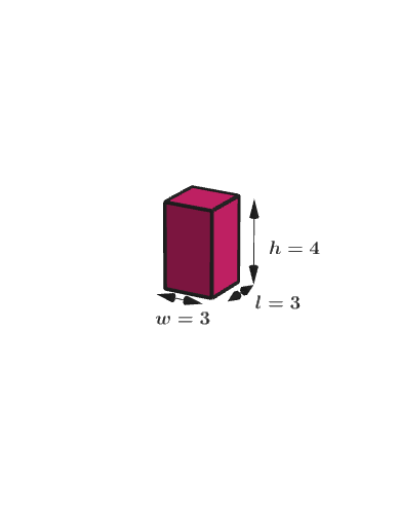
Draw the nets of a triangular prism and a square prism. First, draw a triangular prism with a triangular base, then draw a square prism with a square base. Next, unfold the nets of both prisms and label their bases, sides, and heights. Finally, ensure that each face in the nets is correctly connected to form complete nets.
The prompt above was compiled from the original drawing commands and is for reference only.